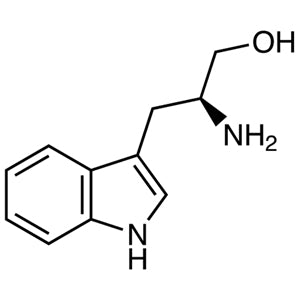
1-Methyl-D-tryptophan is a chemical compound widely used in scientific research, particularly in the fields of chemical biology and peptide chemistry. As an analog of the amino acid tryptophan, it features a methyl group at the indole ring, making it a valuable tool for synthetic applications. This compound plays a crucial role in laboratories where the development of complex molecules, such as peptides and bioactive substances, is required. Its structural modifications allow for the study of molecular interactions and biological mechanisms, contributing to advancements in various scientific disciplines.
The chemical properties of 1-Methyl-D-tryptophan make it a preferred choice for researchers. It exhibits stability under specific conditions, which simplifies handling and processing in laboratory settings. Additionally, its solubility in organic solvents facilitates its use in a wide range of chemical reactions. These characteristics ensure that it remains a reliable and versatile reagent for synthetic and analytical purposes. The compound’s consistent performance and predictable behavior further enhance its appeal in laboratory environments.
In Indonesian laboratories, 1-Methyl-D-tryptophan is commonly used in pharmacological, biochemical, and medicinal chemistry research. Its role in drug development and the study of biological effects makes it an essential component for researchers working on innovative projects. The compound’s availability and reliability make it a go-to material for those seeking precision and consistency in their experiments. Its application in both academic and industrial research settings underscores its importance in the scientific community.
TCI brochures (PDF)
- Amino Acids and Peptide Synthesis Reagents 2025-08-14 · p. 9
Related TCI products
- In pharmacological research, 1-Methyl-D-tryptophan is used to study drug interactions and biological activity due to its structural similarity to tryptophan.
- For biochemical studies, it serves as a building block in the synthesis of complex peptides and bioactive compounds, enabling the exploration of molecular mechanisms.
- In medicinal chemistry, it is utilized in the development of new therapeutic agents, supporting the design of molecules with specific biological functions.
- During analytical experiments, its solubility and stability allow for accurate quantification and characterization in various chemical assays.
- In peptide chemistry, it is a key reagent for the synthesis of modified amino acids, contributing to the creation of novel therapeutic and diagnostic compounds.
| Brand | TCI |
|---|---|
| CAS number | 110117-83-4 |
| Molecular formula | — |
| Purity | — |
| Category | Chemistry > Chemical Biology > Peptide Chemistry |
| Pack sizes | Available in various quantities as per supplier specifications |
| Physical form | Solid powder |
| Storage | Store in a cool, dry place away from light and moisture |
1-Methyl-D-tryptophan should be stored in a cool, dry environment to maintain its chemical stability. It is recommended to keep the compound in airtight containers to prevent moisture absorption and contamination. Due to its organic nature, it is best stored in a desiccator or a sealed container with a drying agent. Avoid exposure to direct sunlight or high humidity, as these conditions may affect its integrity. Proper labeling of containers is essential for safe handling and easy identification. In laboratory settings, always use appropriate personal protective equipment when handling this compound to ensure safety and compliance with standard operating procedures.
—
Product Categories
Produk Terkait
-
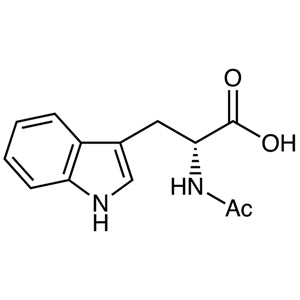
N-Acetyl-D-tryptophan TCI A0119
Regular price From Rp 769.650,00Regular price -
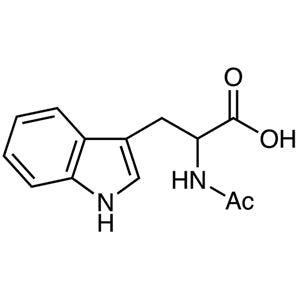
N-Acetyl-DL-tryptophan TCI A0120
Regular price From Rp 637.350,00Regular price -
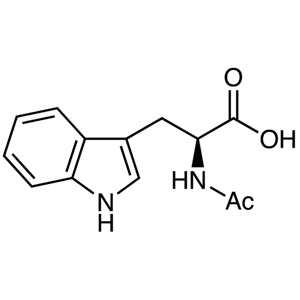
N-Acetyl-L-tryptophan TCI A0121
Regular price From Rp 477.750,00Regular price -
L-TryptophanEthylEsterHydrochloride TCI T2981
Regular price Rp 955.500,00Regular price -
D-TryptophanMethylEsterHydrochloride TCI T2442
Regular price From Rp 610.050,00Regular price -
L-TryptophanamideHydrochloride TCI T2312
Regular price From Rp 2.016.000,00Regular price -
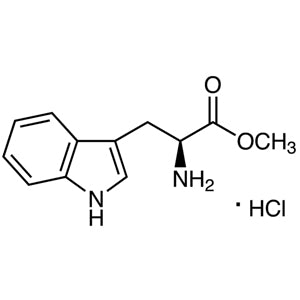
L-TryptophanMethylEsterHydrochloride TCI T1657
Regular price Rp 848.400,00Regular price -
L-(-)-Tryptophanol TCI T1537
Regular price Rp 2.121.000,00Regular price