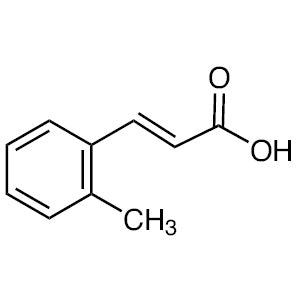
(E)-3-(o-Tolyl)acrylic Acid is an organic compound belonging to the substituted cinnamic acid family, and it serves as a building block or starting material for synthesis in the chemistry laboratory. The molecule combines a carboxyl group, a conjugated double bond, and an aromatic ring within a single structure, giving it a versatile profile for organic transformations. In laboratory practice, this compound is used as a starting point for assembling more complex molecules through esterification, amidation, cyclization, and transition-metal-catalyzed reactions. Its reactive carboxyl group readily couples with various nucleophiles, while its double bond opens opportunities for addition, hydrogenation, or controlled polymerization. As a result, it has become a dependable fundamental component in the design of new organic compounds in both research and development settings.
This compound stands out because of its trans (E) configuration at the double bond, which gives the molecule a more linear and stable geometry compared with its cis isomer. This configuration influences the ease of crystallization and the regularity of molecular packing, which is advantageous when the material is used to build rigid, well-defined frameworks. The combination of a free carboxylic acid, a conjugated alkene, and an o-tolyl aromatic substituent makes the compound reactive yet selective in a wide range of transformations. Its carboxyl group provides a reliable handle for conjugation with alcohols, amines, and other nucleophiles, while the conjugated double bond can participate in addition, hydrogenation, or controlled polymerization. These combined traits make it a preferred choice for researchers who need a stable, crystalline, and predictable starting material for constructing new molecules.
In Indonesian laboratories, this compound is typically used in organic synthesis research at universities, research institutes, and analytical testing facilities. It functions as a starting material for preparing ester and amide derivatives, which are often further explored as intermediates for pharmaceuticals, agrochemicals, and specialty fine chemicals. Researchers also employ it in method development for chromatographic analysis and in the preparation of calibration-related materials. Because it is a well-defined, commercially available building block supplied by a recognized brand, it fits comfortably into routine workflows where reproducibility and batch consistency matter. Laboratories commonly keep it on hand as a versatile reagent for both teaching exercises in advanced organic chemistry and ongoing research projects.
Related TCI products
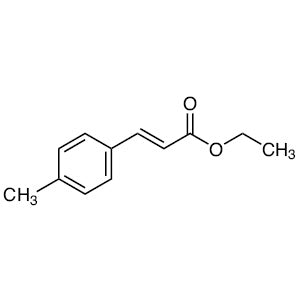
- TCI E1471 24393-49-5 Ethyl (E)-3-(p-Tolyl)acrylate
- TCI B4048 72707-66-5 2-(Bromomethyl)acrylic Acid
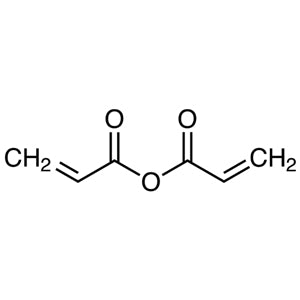
- TCI A3243 2051-76-5 Acrylic Anhydride (stabilized with MEHQ)
- TCI N0972 13026-12-5 3-(1-Naphthyl)acrylic Acid
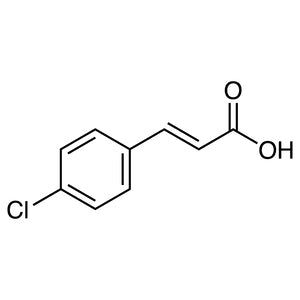
- TCI C3785 940-62-5 (E)-3-(4-Chlorophenyl)acrylic Acid
- TCI T4311 104-09-6 2-(p-Tolyl)acetaldehyde
- Esterification: The reactive carboxyl group readily reacts with alcohols under acid catalysis to form esters, making this compound a convenient starting material for building ester derivatives.
- Amidation: Because its carboxylic acid can be activated and coupled with amine nucleophiles, this compound supports the preparation of amide intermediates for more complex organic targets.
- Cyclization reactions: The combination of the carboxyl group and the conjugated double bond enables intramolecular cyclization pathways, allowing researchers to construct cyclic and heterocyclic frameworks from this single building block.
- Transition-metal-catalyzed coupling: The conjugated alkene and aromatic ring allow this compound to participate in metal-catalyzed transformations, such as cross-coupling and hydrogenation, expanding the range of accessible products.
- Controlled polymerization and addition studies: The carbon-carbon double bond offers a site for addition reactions or controlled polymerization, making this material useful for studying reactivity and building functional oligomers or polymers.
| Brand | TCI |
|---|---|
| CAS number | 939-57-1 |
| Molecular formula | — |
| Purity | — |
| Category | Chemistry > Building Blocks > Non-Heterocyclic Building Blocks |
| Pack sizes | available in standard TCI packaging options; confirm the exact pack size on the product label or catalog |
| Physical form | crystalline solid, consistent with the compound's noted ease of crystallization; store in a tightly closed container in a cool, dry place |
| Storage | — |
- Product name: TCI M3421 (E)-3-(o-Tolyl)acrylic Acid
Store this compound in a tightly closed, properly labeled container, preferably the original packaging, in a cool, dry and well-ventilated area away from direct sunlight, heat sources, and incompatible materials. Keep the container sealed when not in use to protect the material from moisture and contamination. Handle it in a fume hood or well-ventilated workspace while wearing appropriate personal protective equipment such as laboratory gloves, safety goggles, and a laboratory coat. Avoid inhaling dust and avoid contact with skin or eyes; wash hands thoroughly after handling. Follow standard laboratory waste disposal procedures for organic chemicals. Always consult the Safety Data Sheet supplied by the manufacturer before use.
—
Produk Terkait
-
Ethyl(E)-3-(p-Tolyl)acrylate TCI E1471
Regular price From Rp 1.696.800,00Regular price -
2-(Bromomethyl)acrylicAcid TCI B4048
Regular price From Rp 3.817.800,00Regular price -
AcrylicAnhydride(stabilizedwithMEHQ) TCI A3243
Regular price From Rp 1.140.300,00Regular price -
3-(1-Naphthyl)acrylicAcid TCI N0972
Regular price Rp 3.207.750,00Regular price -
(E)-3-(4-Chlorophenyl)acrylicAcid TCI C3785
Regular price Rp 1.510.950,00Regular price -
2-(p-Tolyl)acetaldehyde TCI T4311
Regular price From Rp 3.100.650,00Regular price -
3-Oxo-3-(p-tolyl)propanenitrile TCI T3700
Regular price Rp 1.273.650,00Regular price -
1-(p-Tolyl)-1-cyclohexanecarboxylicAcid TCI T3097
Regular price From Rp 1.644.300,00Regular price