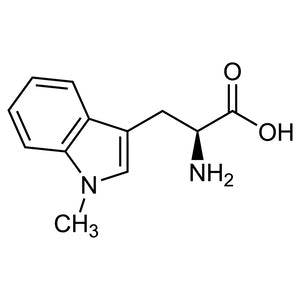
1-Methyl-L-tryptophan is a chemical compound widely used in chemical and biochemical experiments, particularly in peptide and protein research. As an analog of the amino acid tryptophan, it features an additional methyl group at a specific position, making it a valuable tool for synthetic chemistry. This compound is commonly utilized in laboratories for the synthesis of complex molecules, including peptides, neurotransmitter analogs, and pharmacological agents. Its role in scientific research spans across various disciplines, from biochemistry to medicinal chemistry, where it serves as a building block for more intricate chemical structures.
The stability of 1-Methyl-L-tryptophan and its controlled reactivity make it a preferred choice for many laboratory applications. Its well-defined molecular structure and predictable chemical properties facilitate efficient synthesis and manipulation in controlled environments. The compound’s solubility in organic solvents such as ethyl acetate and acetone enhances its utility in chemical reactions, allowing for faster and more effective synthesis processes. The presence of functional groups like amino and carbonyl further contributes to its versatility, enabling it to participate in a wide range of chemical and substitution reactions.
In Indonesian laboratories, 1-Methyl-L-tryptophan is frequently used in biochemical research and organic synthesis. It is a key component in studies related to peptide chemistry, drug development, and molecular biology. Its availability and reliability make it a standard material for academic and industrial research, supporting the advancement of scientific knowledge and innovation in the region.
TCI brochures (PDF)
- Amino Acids and Peptide Synthesis Reagents 2025-08-14 · p. 9
Related TCI products
- Peptide Synthesis: 1-Methyl-L-tryptophan is ideal for peptide chemistry due to its structural similarity to tryptophan, allowing for the creation of complex peptide sequences.
- Neurotransmitter Analog Research: The compound's functional groups enable the synthesis of neurotransmitter analogs, useful in studying neural signaling pathways.
- Pharmacological Compound Development: Its chemical versatility makes it suitable for the design of new pharmacological agents, supporting drug discovery efforts.
- Biochemical Assays: The compound is used in biochemical experiments to study enzyme activity and molecular interactions in biological systems.
- Organic Synthesis: Its solubility and reactivity make it a valuable reagent in the synthesis of various organic compounds and derivatives.
| Brand | TCI |
|---|---|
| CAS number | 21339-55-9 |
| Molecular formula | — |
| Purity | — |
| Category | Chemistry > Chemical Biology > Peptide Chemistry |
| Pack sizes | Available in standard laboratory quantities |
| Physical form | Solid powder |
| Storage | Store in a cool, dry place away from light |
1-Methyl-L-tryptophan should be stored in a cool, dry environment to maintain its chemical integrity and prevent degradation. It is recommended to keep the compound in a tightly sealed container to minimize exposure to moisture and air. Suitable storage containers include glass or high-density polyethylene (HDPE) vessels that are resistant to chemical reactions. In laboratory settings, it is important to handle the compound with appropriate personal protective equipment, such as gloves and safety goggles, to ensure safety during handling and use. Proper labeling of storage containers is also essential to prevent accidental misuse. The compound should be kept away from incompatible materials to avoid any potential chemical interactions. Regular monitoring of storage conditions ensures the compound remains in optimal condition for use in research applications.
—
Product Categories
Produk Terkait
-
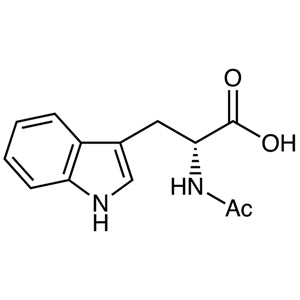
N-Acetyl-D-tryptophan TCI A0119
Regular price From Rp 769.650,00Regular price -
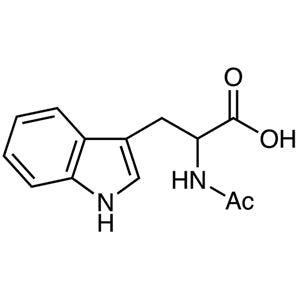
N-Acetyl-DL-tryptophan TCI A0120
Regular price From Rp 637.350,00Regular price -
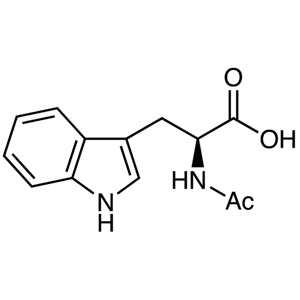
N-Acetyl-L-tryptophan TCI A0121
Regular price From Rp 477.750,00Regular price -
L-TryptophanEthylEsterHydrochloride TCI T2981
Regular price Rp 955.500,00Regular price -
D-TryptophanMethylEsterHydrochloride TCI T2442
Regular price From Rp 610.050,00Regular price -
L-TryptophanamideHydrochloride TCI T2312
Regular price From Rp 2.016.000,00Regular price -
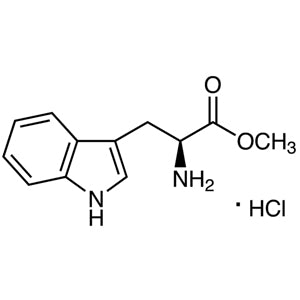
L-TryptophanMethylEsterHydrochloride TCI T1657
Regular price Rp 848.400,00Regular price -
L-(-)-Tryptophanol TCI T1537
Regular price Rp 2.121.000,00Regular price