TCI M3910 Methyl 4-(Chlorosulfonyl)benzoate is a bifunctional aromatic starting material that carries a sulfonyl chloride group and a methyl ester group positioned para to one another on the benzene ring. The compound is widely used as a linking reagent in organic synthesis because its two functional groups possess markedly different reactivity and can therefore be addressed in sequence. In the laboratory it serves as a principal entry point toward the preparation of substituted sulfonamides, sulfonate esters, and a broad range of molecules that require a rigid aromatic bridge with two points of attachment.
The main property that makes this reagent a preferred choice is the high reactivity of the sulfonyl chloride group, which reacts rapidly with both primary and secondary amines to form stable sulfonamide bonds, usually under mild conditions with the assistance of an acid-scavenging base. Meanwhile, the methyl ester group remains intact throughout that stage and can subsequently be hydrolysed to the corresponding carboxylic acid or converted into an amide in a following step. The para orientation keeps the molecular geometry linear, which suits the construction of well-defined frameworks.
The compound is a solid at room temperature and is sensitive to moisture. In Indonesian laboratories it is typically used in academic and industrial research settings where sequential functionalisation of an aromatic core is required, particularly in synthetic organic chemistry groups building sulfonamide libraries and intermediate scaffolds. Because the material is supplied under the TCI brand, it fits routine bench-scale synthesis work in university research laboratories, contract research units, and industrial R&D facilities handling building-block chemistry.
Related TCI products
- Sulfonamide synthesis: the sulfonyl chloride group couples rapidly with primary and secondary amines under mild conditions, giving stable sulfonamide bonds without disturbing the methyl ester.
- Sulfonate ester preparation: reaction of the sulfonyl chloride function with alcohols provides sulfonate esters while the para-positioned methyl ester remains available for later transformation.
- Bifunctional linker chemistry: the two groups of sharply different reactivity allow sequential processing, making this reagent a reliable connector between two distinct molecular fragments.
- Rigid aromatic bridge construction: the para orientation maintains a linear molecular geometry, which suits researchers building well-defined scaffolds requiring two fixed attachment points.
- Carboxylic acid and amide intermediates: the surviving methyl ester can be hydrolysed to the acid or converted to an amide in a subsequent synthetic step.
| Brand | TCI |
|---|---|
| CAS number | 69812-51-7 |
| Molecular formula | — |
| Purity | — |
| Category | Chemistry > Building Blocks > Non-Heterocyclic Building Blocks |
| Pack sizes | available in standard TCI catalogue pack sizes; please refer to the product listing for the options offered |
| Physical form | solid at room temperature |
| Storage | moisture-sensitive material requiring protection from humidity |
Store the container tightly closed in a cool, dry place away from moisture, since the sulfonyl chloride group is sensitive to humidity and will degrade on contact with atmospheric water. Original TCI packaging or a tightly sealed glass container with a chemically resistant closure is suitable; a desiccator or dry storage cabinet is recommended for opened material. Handle the solid in a fume hood using gloves, safety goggles, and a laboratory coat, and avoid inhaling dust. Weigh quantities quickly and reseal the container promptly to limit moisture uptake, and keep the material separate from amines, alcohols, and aqueous reagents during storage.
—
Produk Terkait
-
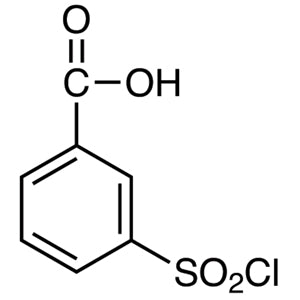
3-(Chlorosulfonyl)benzoicAcid TCI C3466
Regular price From Rp 1.113.000,00Regular priceRp 793.800,00Sale price From Rp 1.113.000,00 -
Methyl3,4,5-Tris(benzyloxy)benzoate TCI T1870
Regular price Rp 1.510.950,00Regular priceRp 1.072.050,00Sale price Rp 1.510.950,00 -
Methyl3-(Bromomethyl)benzoate TCI B2224
Regular price From Rp 1.908.900,00Regular priceRp 1.350.300,00Sale price From Rp 1.908.900,00 -
Methyl4-(Bromomethyl)benzoate TCI B2053
Regular price From Rp 1.405.950,00Regular priceRp 998.550,00Sale price From Rp 1.405.950,00 -
AllylBenzoate TCI B2041
Regular price Rp 2.702.700,00Regular priceRp 1.905.750,00Sale price Rp 2.702.700,00 -
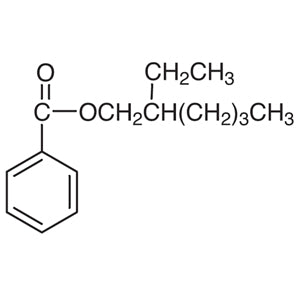
2-EthylhexylBenzoate TCI B1977
Regular price Rp 2.730.000,00Regular priceRp 1.924.650,00Sale price Rp 2.730.000,00 -
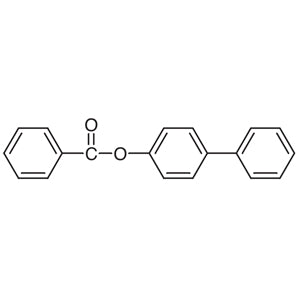
4-BiphenylBenzoate TCI B1866
Regular price From Rp 1.272.600,00Regular priceRp 905.100,00Sale price From Rp 1.272.600,00 -
3-Methyl-2-butenylBenzoate TCI B1409
Regular price Rp 2.121.000,00Regular priceRp 1.498.350,00Sale price Rp 2.121.000,00