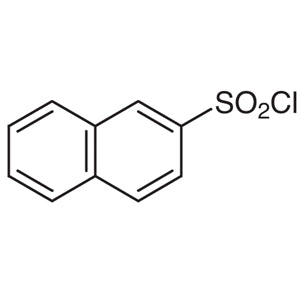
2-Naphthalenesulfonyl Chloride is a chemical compound widely used as a building block in various chemical reactions, particularly in the synthesis of heterocyclic compounds and complex organic molecules. Its reactive sulfonate chloride group enables substitution and other reactions under different conditions, making it a versatile reagent in organic chemistry. This compound is commonly found in laboratory settings where high reactivity and structural versatility are required. Its role extends to the development of pharmaceuticals, polymers, and other chemically complex substances.
The compound's unique molecular structure and reactive sulfonate chloride group make it a preferred choice for chemists. It exhibits stability under specific conditions while maintaining reactivity towards a variety of chemical reagents. Its relatively high melting point facilitates heating and separation processes in chemical reactions. The complex molecular structure also allows for the formation of new bonds, making it ideal for substitution and nucleophilic reactions. These properties contribute to its widespread use in both academic and industrial research environments.
In Indonesian laboratories, 2-Naphthalenesulfonyl Chloride is frequently used in organic chemistry research, especially in pharmaceutical and material science fields. It is a key reagent in the development of new drugs and advanced materials. Many research institutions and universities in Indonesia rely on this compound for its reliability and effectiveness in chemical synthesis. Its availability through AMI Scientific ensures that researchers have access to high-quality reagents for their experiments.
- Organic synthesis applications benefit from its reactivity and structural versatility, enabling the creation of complex molecules.
- Pharmaceutical research utilizes it for the development of new drug compounds due to its ability to participate in substitution reactions.
- Polymer science applications rely on its chemical reactivity to form stable bonds in synthetic materials.
- Material science experiments use it to create advanced chemical structures with high functional group reactivity.
- Analytical chemistry processes incorporate it as a reagent for specific chemical reactions and compound identification.
| Brand | TCI |
|---|---|
| CAS number | 93-11-8 |
| Molecular formula | — |
| Purity | — |
| Category | Chemistry > Building Blocks > Non-Heterocyclic Building Blocks |
| Pack sizes | Available in various quantities as per standard laboratory requirements |
| Physical form | Solid |
| Storage | Store in a cool, dry place away from moisture and direct sunlight |
This compound should be stored in a cool, dry place, away from moisture and direct sunlight to maintain its stability and reactivity. It is recommended to use airtight containers to prevent exposure to air and humidity, which may affect its chemical integrity. Due to its reactive nature, it should be handled in a well-ventilated area, preferably under a fume hood, to ensure safety. Avoid contact with incompatible substances such as strong bases or reducing agents. Proper personal protective equipment, including gloves and safety goggles, should be worn during handling to minimize risk. Regular monitoring of storage conditions is essential to ensure the compound remains suitable for use in laboratory applications.
—
Produk Terkait
-
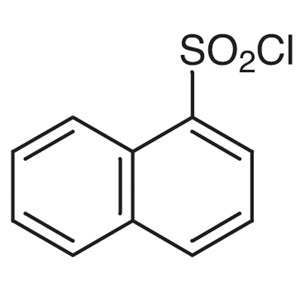
1-NaphthalenesulfonylChloride TCI N0017
Regular price From Rp 3.127.950,00Regular price -
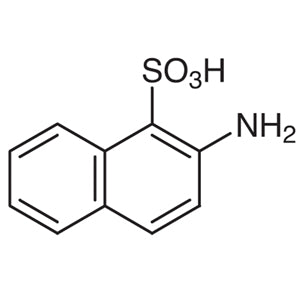
2-Amino-1-naphthalenesulfonicAcid TCI A0343
Regular price From Rp 477.750,00Regular price -
5-Amino-2-naphthalenesulfonicAcid TCI A0346
Regular price From Rp 717.150,00Regular price -
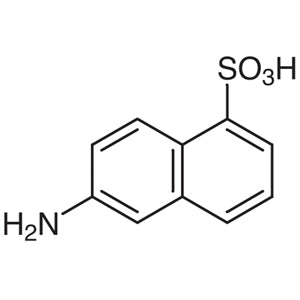
6-Amino-1-naphthalenesulfonicAcid TCI A0347
Regular price From Rp 955.500,00Regular price -
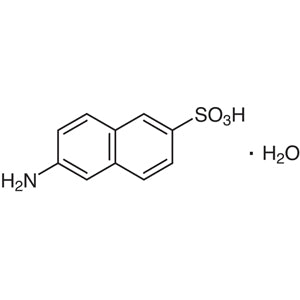
6-Amino-2-naphthalenesulfonicAcidMonohydrate TCI A0348
Regular price From Rp 1.405.950,00Regular price -
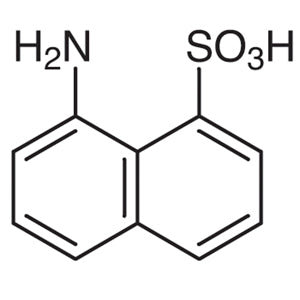
8-Amino-1-naphthalenesulfonicAcid TCI A0350
Regular price From Rp 1.008.000,00Regular price -
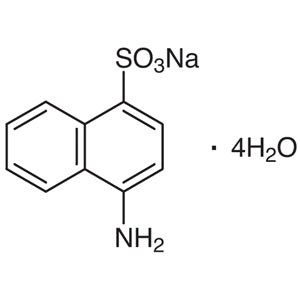
Sodium4-Amino-1-naphthalenesulfonateTetrahydrate TCI A0353
Regular price From Rp 769.650,00Regular price -
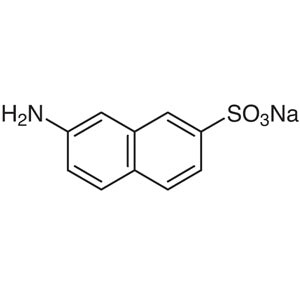
Sodium7-Amino-2-naphthalenesulfonate TCI A0355
Regular price From Rp 1.193.850,00Regular price