1-Naphthohydroxamic Acid is the hydroxamic acid derivative of 1-naphthoic acid, a compound in which the original carboxyl group has been converted into a hydroxamate function. This functional group is widely recognised as a powerful metal chelator, because it can bind a metal ion through two oxygen atoms at once and form a stable five-membered chelate ring. In the laboratory the material serves as an analytical reagent for the determination of metal ions, as a ligand in coordination chemistry research, and as a building block in the synthesis of compounds that target metal-dependent enzymes.
The main characteristic that makes this reagent a preferred choice is the high affinity of the hydroxamate group for highly charged metal ions such as iron and vanadium, combined with a naphthalene core that adds hydrophobic character and strong ultraviolet absorption. This combination produces metal complexes that are frequently coloured or that absorb strongly in the ultraviolet-visible region, so complex formation is easy to follow spectrophotometrically. The large aromatic framework also makes the resulting complexes easier to extract into organic solvents, a property that is useful in solvent extraction methods and in sample preconcentration before instrumental analysis.
In Indonesian laboratories this type of building block is typically held in university research groups, government analytical laboratories, and industrial quality control units working on trace metal determination and organic synthesis. It is normally purchased in small research quantities, weighed out on an analytical balance, and used in coordination chemistry studies, method development for metal analysis, and multi-step synthetic routes where a hydroxamate-bearing aromatic fragment is required.
- Spectrophotometric determination of metal ions: the hydroxamate group binds iron and other highly charged ions to give complexes that absorb strongly, allowing concentration to be measured directly by absorbance.
- Coordination chemistry research: the compound acts as a well-defined bidentate ligand whose five-membered chelate ring makes it suitable for studying complex stability and metal binding behaviour.
- Solvent extraction and sample preconcentration: the bulky naphthalene framework drives the metal complex into an organic phase, concentrating trace metals before instrumental analysis.
- Building block in organic synthesis: the material provides a ready-made aromatic hydroxamate fragment for multi-step routes toward compounds that target metal-dependent enzymes.
- Method development and analytical chemistry teaching: the strong ultraviolet absorption of both ligand and complex makes reaction progress easy to monitor, which suits comparative method studies.
| Brand | TCI |
|---|---|
| CAS number | 6953-61-3 |
| Molecular formula | — |
| Purity | — |
| Category | Chemistry > Building Blocks > Non-Heterocyclic Building Blocks |
| Pack sizes | available in standard research quantities; please confirm the pack sizes currently offered when ordering |
| Physical form | — |
| Storage | store in a tightly closed container in a cool, dry, well-ventilated place away from light |
- Catalogue code: N0023
Store the container tightly closed in a cool, dry and well-ventilated area, protected from direct sunlight and away from strong oxidising agents and sources of moisture. Keep the material in its original supplier container, or in a clean amber glass bottle with a chemically resistant cap if it must be transferred, and label the container clearly with the compound name and CAS number. Handle the solid inside a fume hood and wear a laboratory coat, safety glasses and chemical-resistant gloves to avoid contact with skin, eyes and the respiratory tract. Avoid generating dust when weighing, close the container immediately after use, and consult the supplier safety data sheet before handling, disposal or spill clean-up.
—
Produk Terkait
-
AcetohydroxamicAcid TCI A0051
Regular price From Rp 1.881.600,00Regular price -
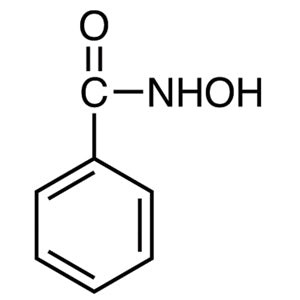
BenzohydroxamicAcid TCI B0061
Regular price From Rp 1.035.300,00Regular price -
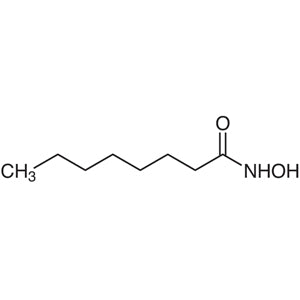
OctanohydroxamicAcid TCI C1232
Regular price From Rp 717.150,00Regular price -
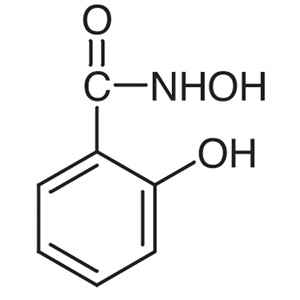
SalicylhydroxamicAcid TCI S0008
Regular price From Rp 717.150,00Regular price -
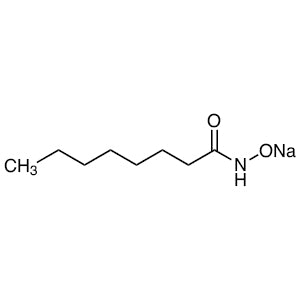
SodiumOctanohydroxamate TCI C0557
Regular price From Rp 2.254.350,00Regular price -
BenzenesulfohydroxamicAcid TCI H0203
Regular price From Rp 2.306.850,00Regular price