Salicylhydroxamic Acid (SHAM), with the CAS number 89-73-6, is a versatile chemical compound widely used in laboratory settings for its reactivity and functional group versatility. It serves as a building block in organic synthesis and is commonly employed in qualitative and quantitative analysis due to its ability to chelate metal ions. This compound plays a crucial role in various chemical reactions, particularly those involving metal detection and complexation. Its molecular structure, which includes a hydroxamic acid group and a phenyl group, contributes to its unique reactivity and selectivity in different chemical environments.
The compound's high reactivity towards metal ions makes it a preferred choice for applications requiring specificity and efficiency. Its solubility in organic solvents such as ethyl acetate and ethanol enhances its utility in synthetic processes and analytical techniques. Additionally, its stability under certain conditions ensures reliable performance in experimental setups. These properties make SHAM an essential tool for researchers and analysts working in chemical and environmental laboratories.
In Indonesian laboratories, Salicylhydroxamic Acid is widely used across multiple disciplines, including analytical chemistry, organic chemistry, and environmental research. Its availability and consistent performance make it a go-to reagent for a variety of experiments. The compound's ability to form complexes with heavy metals also supports its use in environmental monitoring and industrial applications. Its role in both research and practical applications underscores its importance in the scientific community.
TCI brochures (PDF)
- Metal Ion Analysis: Salicylhydroxamic Acid is ideal for detecting and quantifying heavy metals such as copper, silver, and lead due to its strong chelating properties.
- Organic Synthesis: Its reactivity and functional groups make it a valuable building block in the synthesis of complex organic molecules.
- Environmental Monitoring: The compound is used in analyzing water and soil samples for heavy metal contamination, offering reliable and sensitive detection.
- Qualitative Testing: SHAM is commonly used in qualitative analysis to identify the presence of specific metal ions in solution.
- Redox Reactions: Its ability to participate in redox processes makes it useful in studying oxidation and reduction reactions in chemical systems.
| Brand | TCI |
|---|---|
| CAS number | 89-73-6 |
| Molecular formula | — |
| Purity | — |
| Category | Chemistry > Building Blocks > Non-Heterocyclic Building Blocks |
| Pack sizes | Available in various sizes as per standard laboratory requirements |
| Physical form | Solid |
| Storage | Store in a cool, dry place away from moisture and direct sunlight |
Salicylhydroxamic Acid should be stored in a cool, dry place, away from moisture and direct sunlight to maintain its chemical integrity. It is recommended to use airtight containers to prevent exposure to air and humidity. As a solid, it should be kept in a sealed container to avoid contamination and degradation. In laboratory settings, it is important to handle the compound with care, using appropriate personal protective equipment such as gloves and safety goggles. Due to its reactivity with metal ions, it should be stored separately from strong oxidizing agents or reactive metals. Proper storage ensures the compound remains effective and safe for use in analytical and synthetic applications.
—
Produk Terkait
-
AcetohydroxamicAcid TCI A0051
Regular price From Rp 1.881.600,00Regular price -
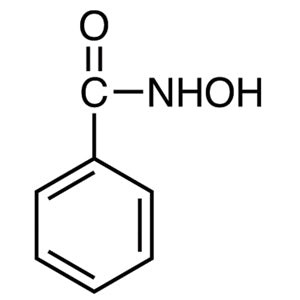
BenzohydroxamicAcid TCI B0061
Regular price From Rp 1.035.300,00Regular price -
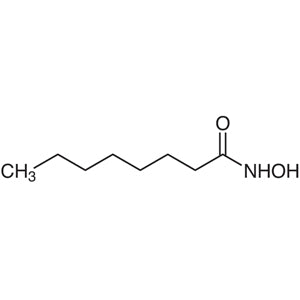
OctanohydroxamicAcid TCI C1232
Regular price From Rp 717.150,00Regular price -
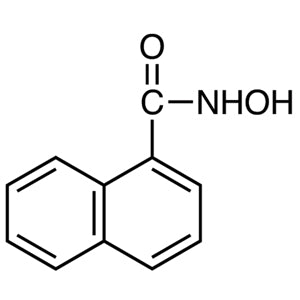
1-NaphthohydroxamicAcid TCI N0023
Regular price Rp 5.352.900,00Regular price -
N-IsopropylhydroxylamineHydrochloride TCI I0877
Regular price From Rp 1.565.550,00Regular price -
O-Tritylhydroxylamine TCI T3860
Regular price From Rp 980.700,00Regular price -
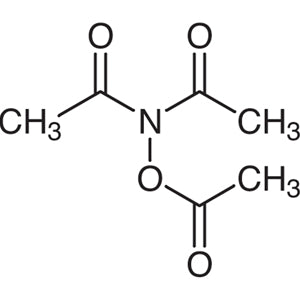
N,N,O-Triacetylhydroxylamine TCI T1202
Regular price Rp 3.446.100,00Regular price -
N-BenzylhydroxylamineHydrochloride TCI B4073
Regular price From Rp 2.625.000,00Regular price