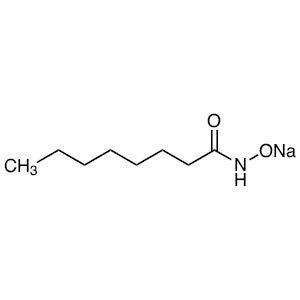
Benzohydroxamic Acid (BHA), with the CAS number 495-18-1, is a chemical compound widely used in laboratory settings for organic synthesis. As a non-heterocyclic building block, it plays a crucial role in the development of new compounds, particularly in pharmaceutical and organic chemistry research. Its reactivity makes it a valuable tool for various chemical reactions, including substitution and oxidation processes. BHA is a fundamental component in the synthesis of heterocyclic compounds and active pharmaceutical ingredients, contributing to the advancement of drug discovery and chemical innovation.
One of the key properties that make BHA a preferred choice is its molecular structure, which is simple yet highly reactive. This reactivity allows it to participate in a wide range of chemical transformations, making it versatile for different synthetic applications. Additionally, BHA exhibits stability under certain conditions, although it is sensitive to moisture and high temperatures. These characteristics require careful handling and storage to maintain its integrity and effectiveness in laboratory experiments.
In Indonesian laboratories, BHA is extensively used in chemical and pharmaceutical research. Researchers rely on this compound to develop new therapeutic agents and explore chemical reactions that lead to novel compounds. Its availability and reliability make it a sought-after reagent among scientists working in the fields of organic chemistry and drug development.
- Organic synthesis is a key application where BHA is used to create complex molecules through various chemical reactions.
- Pharmaceutical research benefits from BHA as it is a building block for the synthesis of active pharmaceutical ingredients.
- Heterocyclic compound development utilizes BHA due to its reactivity and ability to participate in diverse synthetic pathways.
- Oxidation and substitution reactions often employ BHA as a substrate, making it essential for functional group transformations.
- Drug discovery projects frequently incorporate BHA to explore new therapeutic compounds and chemical structures.
| Brand | TCI |
|---|---|
| CAS number | 495-18-1 |
| Molecular formula | — |
| Purity | — |
| Category | Chemistry > Building Blocks > Non-Heterocyclic Building Blocks |
| Pack sizes | Available in various quantities as per supplier specifications |
| Physical form | Solid |
| Storage | Requires dry and cool storage conditions to prevent degradation |
Benzohydroxamic Acid should be stored in a dry, cool, and well-ventilated area to maintain its chemical stability. It is recommended to use airtight containers to protect it from moisture and humidity, which can affect its reactivity and purity. Due to its sensitivity to high temperatures, it should be kept away from heat sources and direct sunlight. Proper labeling of containers is essential for safe handling and identification. Laboratory personnel should wear appropriate personal protective equipment, such as gloves and safety goggles, when handling this compound to ensure safety during experiments and storage.
—
Produk Terkait
-
AcetohydroxamicAcid TCI A0051
Regular price From Rp 1.934.100,00Regular priceRp 1.368.150,00Sale price From Rp 1.934.100,00 -
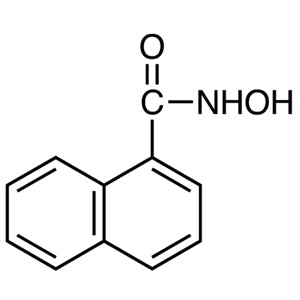
1-NaphthohydroxamicAcid TCI N0023
Regular price Rp 5.405.400,00Regular priceRp 3.795.750,00Sale price Rp 5.405.400,00 -
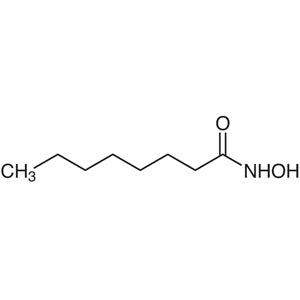
OctanohydroxamicAcid TCI C1232
Regular price From Rp 769.650,00Regular priceRp 553.350,00Sale price From Rp 769.650,00 -
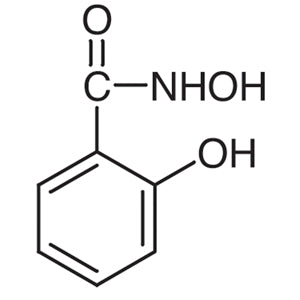
SalicylhydroxamicAcid TCI S0008
Regular price From Rp 769.650,00Regular priceRp 553.350,00Sale price From Rp 769.650,00 -
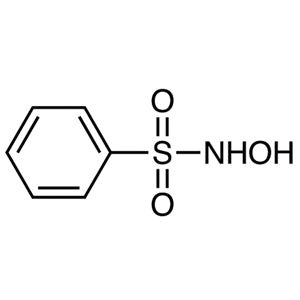
BenzenesulfohydroxamicAcid TCI H0203
Regular price From Rp 2.359.350,00Regular priceRp 1.665.300,00Sale price From Rp 2.359.350,00 -
3,4-Diaminobenzohydrazide TCI D4551
Regular price From Rp 848.400,00Regular priceRp 609.000,00Sale price From Rp 848.400,00 -
4-Cyanobenzohydrazide TCI C4160
Regular price From Rp 1.563.450,00Regular priceRp 1.108.800,00Sale price From Rp 1.563.450,00 -
SodiumOctanohydroxamate TCI C0557
Regular price From Rp 2.306.850,00Regular priceRp 1.628.550,00Sale price From Rp 2.306.850,00