3,4-Diaminobenzohydrazide is a chemical compound widely used in laboratory settings for its versatile reactivity and structural stability. It plays a crucial role in organic chemistry, particularly in the synthesis of heterocyclic compounds and their derivatives. This compound is commonly employed in hydrazinization reactions, where it acts as a hydrazine donor to form complex chemical structures. Its ability to participate in a variety of functional group reactions makes it an essential reagent for researchers working on synthetic pathways.
The compound's high reactivity and stable molecular structure make it a preferred choice in both academic and industrial research. Its capacity to react with different functional groups allows for the creation of a wide range of new compounds through various chemical mechanisms. This versatility is especially valuable in applications requiring both reactivity and structural integrity. Its consistent performance in laboratory conditions ensures reliable results, making it a trusted material for chemical synthesis and research.
In Indonesian laboratories, 3,4-Diaminobenzohydrazide is commonly used in organic chemistry, pharmacology, and industrial chemical research. Researchers from educational institutions and research organizations frequently utilize this compound for experiments involving complex chemical reactions and the synthesis of new compounds. Its applications span across multiple scientific disciplines, supporting innovation and discovery in the field of chemistry.
- Synthesis of heterocyclic compounds due to its ability to form complex chemical structures through hydrazinization reactions.
- Organic chemistry research as a versatile reagent for functional group reactions and compound synthesis.
- Pharmaceutical development for the creation of bioactive compounds through chemical modification.
- Industrial chemical processes requiring stable and reactive building blocks for compound synthesis.
- Analytical chemistry applications where reactivity and structural stability are essential for reaction control.
| Brand | TCI |
|---|---|
| CAS number | 103956-09-8 |
| Molecular formula | — |
| Purity | — |
| Category | Chemistry > Building Blocks > Non-Heterocyclic Building Blocks |
| Pack sizes | Available in various quantities as per standard laboratory supply specifications. |
| Physical form | Solid, typically in crystalline or powder form. |
| Storage | Store in a cool, dry place away from moisture and direct sunlight. |
3,4-Diaminobenzohydrazide should be stored in a cool, dry environment to maintain its chemical stability. It is recommended to keep the compound in airtight containers to prevent exposure to moisture and air, which could affect its reactivity. Handling should be done with appropriate personal protective equipment, including gloves and safety goggles, to ensure laboratory safety. The compound is generally non-hazardous under normal conditions but should be handled with care to avoid direct contact with skin or inhalation of vapors. Proper storage and handling protocols help preserve the compound's integrity and ensure safe usage in laboratory settings.
—
Produk Terkait
-
4-Cyanobenzohydrazide TCI C4160
Regular price From Rp 1.563.450,00Regular priceRp 1.108.800,00Sale price From Rp 1.563.450,00 -
3,4-Diaminobenzophenone TCI D1950
Regular price Rp 2.837.100,00Regular priceRp 1.983.450,00Sale price Rp 2.837.100,00 -
4-Aminobenzohydrazide TCI A1211
Regular price Rp 2.306.850,00Regular priceRp 1.628.550,00Sale price Rp 2.306.850,00 -
2,4-Dichlorobenzohydrazide TCI D4867
Regular price From Rp 689.850,00Regular priceRp 497.700,00Sale price From Rp 689.850,00 -
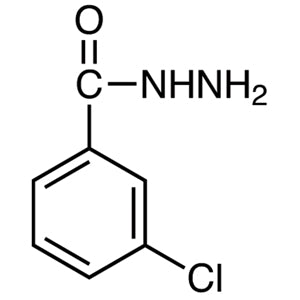
3-Chlorobenzohydrazide TCI C2648
Regular price From Rp 1.961.400,00Regular priceRp 1.387.050,00Sale price From Rp 1.961.400,00 -
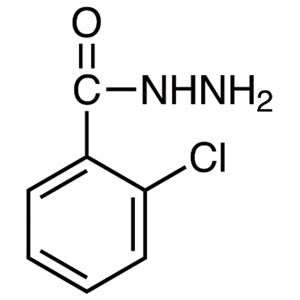
2-Chlorobenzohydrazide TCI C2116
Regular price Rp 1.326.150,00Regular priceRp 942.900,00Sale price Rp 1.326.150,00 -
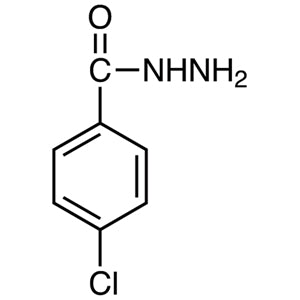
4-Chlorobenzohydrazide TCI C2060
Regular price From Rp 717.150,00Regular priceRp 516.600,00Sale price From Rp 717.150,00 -
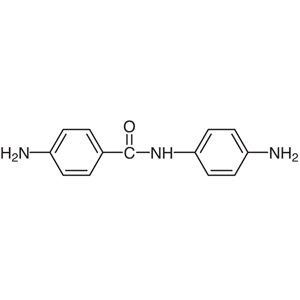
4,4'-Diaminobenzanilide TCI D2005
Regular price From Rp 955.500,00Regular priceRp 683.550,00Sale price From Rp 955.500,00