4-Chlorobenzohydrazide is a chemical compound widely used as a building block in the synthesis of complex organic compounds. It plays a crucial role in laboratory settings where the development of new molecules is essential for research in various scientific fields. This compound is particularly valuable for its ability to participate in a range of chemical reactions, including substitution and condensation, making it an essential tool for chemists. Its versatility allows it to be integrated into the creation of heterocyclic structures and hydrazide derivatives, which are fundamental in pharmaceutical and material sciences.
The chemical properties of 4-Chlorobenzohydrazide make it a preferred choice for laboratory applications. It exhibits good solubility in organic solvents such as ethyl acetate and acetone, which simplifies processing and application in experimental procedures. Its molecular structure provides stability and reactivity, enabling it to be used in multiple synthetic pathways. These characteristics ensure that it remains a reliable and effective component in organic synthesis, supporting the development of new compounds with specific functional properties.
In Indonesian laboratories, 4-Chlorobenzohydrazide is extensively used in organic chemistry research, particularly in pharmaceutical and material science applications. Local researchers frequently utilize this compound to construct complex molecular structures, contributing to advancements in drug development and material innovation. Its availability in various packaging options further supports its widespread use in diverse experimental needs.
- Organic synthesis is a key application where 4-Chlorobenzohydrazide is used to build complex molecular frameworks, especially in the development of pharmaceutical compounds.
- Heterocyclic compound synthesis benefits from this compound's ability to participate in reactions that form ring structures, which are common in drug molecules.
- Hydrazide derivatives are commonly synthesized using this reagent, making it a valuable tool in the production of bioactive compounds.
- Material science research utilizes this compound to develop new polymers and functional materials with specific chemical properties.
- Structural analysis experiments often involve this compound due to its predictable chemical behavior and solubility in organic solvents.
| Brand | TCI |
|---|---|
| CAS number | 536-40-3 |
| Molecular formula | — |
| Purity | — |
| Category | Chemistry > Building Blocks > Non-Heterocyclic Building Blocks |
| Pack sizes | Available in various packaging options to suit different experimental requirements |
| Physical form | Solid |
| Storage | Store in a cool, dry place away from moisture and direct sunlight |
4-Chlorobenzohydrazide should be stored in a cool, dry environment to maintain its chemical stability and prevent degradation. It is recommended to keep the compound in a tightly sealed container to avoid exposure to moisture and air, which can affect its integrity. Suitable storage containers include glass or high-density polyethylene (HDPE) bottles with airtight closures. In laboratory settings, it is important to handle the compound with care, using appropriate personal protective equipment such as gloves and safety goggles. Avoid contact with incompatible materials and ensure proper ventilation when working with this compound to minimize health risks. Regular monitoring of storage conditions ensures the compound remains in optimal condition for use in research applications.
—
Produk Terkait
-
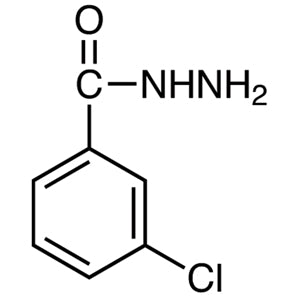
3-Chlorobenzohydrazide TCI C2648
Regular price From Rp 1.908.900,00Regular price -
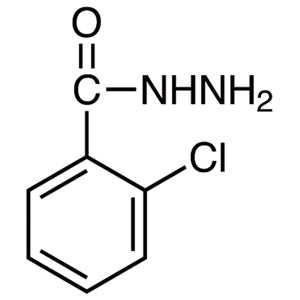
2-Chlorobenzohydrazide TCI C2116
Regular price Rp 1.273.650,00Regular price -
2,4-Dichlorobenzohydrazide TCI D4867
Regular price From Rp 637.350,00Regular price -
3-Bromobenzohydrazide TCI B4148
Regular price Rp 505.050,00Regular price -
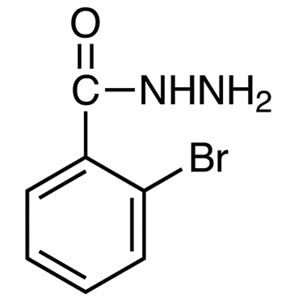
2-Bromobenzohydrazide TCI B4147
Regular price Rp 3.021.900,00Regular price -
4-Bromobenzohydrazide TCI B2067
Regular price From Rp 1.087.800,00Regular price -
4-Aminobenzohydrazide TCI A1211
Regular price Rp 2.254.350,00Regular price -
3,4-Diaminobenzohydrazide TCI D4551
Regular price From Rp 795.900,00Regular price