

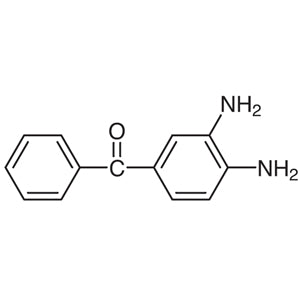
3,4-Diaminobenzophenone is a versatile organic compound widely used in laboratory settings for the synthesis of complex molecules. As a building block in chemical reactions, it plays a crucial role in the development of pharmaceuticals, industrial chemicals, and advanced materials. Its aromatic structure, combined with two amino groups at positions 3 and 4, makes it highly reactive and suitable for a variety of chemical transformations. This compound is particularly valuable in organic chemistry for its ability to participate in multiple reaction types, including condensation, substitution, and aromatic reactions.
The reactivity and stability of 3,4-Diaminobenzophenone make it a preferred choice in synthetic chemistry. Its predictable chemical behavior allows for precise control during laboratory processes, which is essential for achieving consistent results. The compound’s ability to form stable intermediates and its compatibility with various functional groups enhance its utility in complex synthesis pathways. These properties make it a reliable and efficient reagent for researchers working on intricate molecular structures.
In Indonesian laboratories, 3,4-Diaminobenzophenone is commonly used in organic chemistry, pharmaceutical research, and material science. Its role in the development of new drugs and advanced polymers underscores its importance in both academic and industrial settings. The compound’s availability and reliability make it a staple in many research laboratories across Indonesia, supporting a wide range of chemical investigations and innovations.
Related TCI products
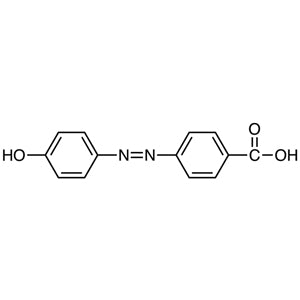
- TCI H1400 2497-38-3 4'-Hydroxyazobenzene-4-carboxylic Acid
- TCI T1888 480-66-0 2',4',6'-Trihydroxyacetophenone Monohydrate
- TCI B1018 20734-58-1 1,8-Bis(dimethylamino)naphthalene [for Dehydrohalogenation]
- TCI H0635 619-14-7 3-Hydroxy-4-nitrobenzoic Acid
- TCI H0267 537-98-4 trans-Ferulic Acid
- TCI D2933 490-79-9 2,5-Dihydroxybenzoic Acid [Matrix for MALDI-TOF/MS]
- Organic synthesis is a key application where 3,4-Diaminobenzophenone is used to create complex molecular structures through various reaction mechanisms.
- Pharmaceutical research benefits from this compound due to its ability to participate in reactions that form essential components of drug molecules.
- Polymer science utilizes this reagent for the development of advanced materials with specific functional properties.
- Material characterization studies often involve this compound to test its reactivity and compatibility with different chemical environments.
- Chemical education programs incorporate this substance to teach students about aromatic compounds and their synthetic applications.
| Brand | TCI |
|---|---|
| CAS number | 39070-63-8 |
| Molecular formula | — |
| Purity | — |
| Category | Chemistry > Building Blocks > Non-Heterocyclic Building Blocks |
| Pack sizes | Available in various quantities as per standard laboratory requirements |
| Physical form | Solid |
| Storage | Store in a cool, dry place away from direct sunlight |
3,4-Diaminobenzophenone should be stored in a cool, dry environment to maintain its chemical integrity. It is recommended to keep the compound in a sealed container to prevent moisture absorption and contamination. Proper ventilation is essential when handling this material to minimize exposure to vapors. Laboratory personnel should wear appropriate personal protective equipment, such as gloves and safety goggles, when working with this compound. Avoid direct contact with skin or inhalation of fumes. The compound should not be stored near incompatible materials, such as strong oxidizers or acids, to ensure safety in the laboratory setting.
—
Product Categories
Produk Terkait
-
4'-Hydroxyazobenzene-4-carboxylicAcid TCI H1400
Regular price Rp 2.782.500,00Regular price -
2',4',6'-TrihydroxyacetophenoneMonohydrate TCI T1888
Regular price From Rp 1.193.850,00Regular price -
1,8-Bis(dimethylamino)naphthalene[forDehydrohalogenation] TCI B1018
Regular price From Rp 928.200,00Regular price -
3-Hydroxy-4-nitrobenzoicAcid TCI H0635
Regular price Rp 1.803.900,00Regular price -
trans-FerulicAcid TCI H0267
Regular price From Rp 1.881.600,00Regular price -
2,5-DihydroxybenzoicAcid[MatrixforMALDI-TOF/MS] TCI D2933
Regular price From Rp 955.500,00Regular price -
3,5-Dimethoxy-4-hydroxycinnamicAcid[MatrixforMALDI-TOF/MS] TCI D2932
Regular price Rp 2.597.700,00Regular price -
2',5'-Dihydroxyacetophenone TCI D1955
Regular price From Rp 1.273.650,00Regular price

![20734-58-1 1,8-Bis(dimethylamino)naphthalene [for Dehydrohalogenation] - AMI Scientific](http://amiscientific.com/cdn/shop/files/TCI2510B1018_1ed1f360-c291-4dd0-9e2f-8717aa029c6e.jpg?v=1767230873&width=533)


![2,5-Dihydroxybenzoic Acid [Matrix for MALDI-TOF/MS] (CAS 490-79-9) - TCI D2933 - AMI Scientific](http://amiscientific.com/cdn/shop/files/TCI2510D2933.jpg?v=1767105578&width=533)
![3,5-Dimethoxy-4-hydroxycinnamic Acid [Matrix for MALDI-TOF/MS] (CAS 530-59-6) - TCI D2932 - AMI Scientific](http://amiscientific.com/cdn/shop/files/TCI2510D2932.jpg?v=1767105574&width=533)
