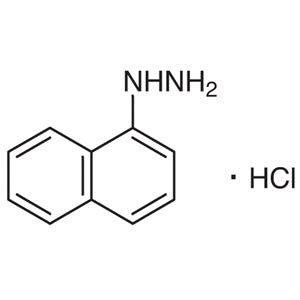
TCI N0064 1-Naphthylhydrazine Hydrochloride (CAS 2243-56-3) is the hydrochloride salt of an arylhydrazine in which the hydrazine group is attached to the alpha position of the naphthalene ring. As a non-heterocyclic building block, this compound serves as a key reagent for hydrazone formation and as a starting material for constructing indole rings through the Fischer indole synthesis. In organic synthesis laboratories, arylhydrazines represent one of the most direct routes for converting simple carbonyl compounds into complex heterocyclic systems, which is why this reagent appears frequently in synthetic plans targeting bioactive compounds and indole-based functional materials.
The most prominent characteristic of this material is the dual nucleophilicity of the hydrazine group, which permits rapid attack on aldehydes and ketones to form hydrazones that are generally crystalline and therefore easy to isolate. The hydrochloride salt form provides substantially better storage stability than the free hydrazine, which is highly susceptible to air oxidation, while simultaneously improving solubility in water and protic solvents. The large naphthalene core imparts strong chromophoric character to the resulting hydrazones, so derivatization products are readily detected with ultraviolet detectors.
In Indonesian laboratories, this reagent is typically used in organic synthesis groups at universities and research institutes, as well as in development laboratories working on indole-based compounds. The combination of storage stability in salt form and straightforward reactivity toward carbonyl compounds makes it a practical choice for benchtop work where a reliable arylhydrazine source is needed. Its chromophoric derivatives also support analytical workflows that rely on ultraviolet detection.
Related TCI products
- TCI M0341 302-15-8 Methylhydrazine Sulfate
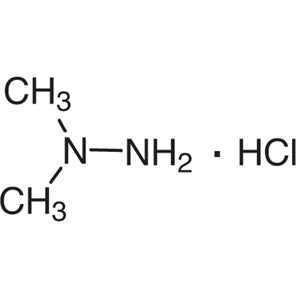
- TCI D0742 593-82-8 1,1-Dimethylhydrazine Hydrochloride
- TCI D0741 306-37-6 1,2-Dimethylhydrazine Dihydrochloride
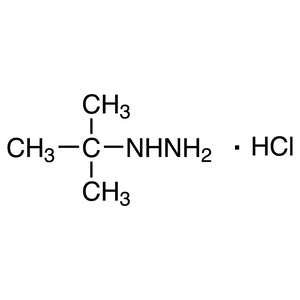
- TCI B1195 7400-27-3 tert-Butylhydrazine Hydrochloride
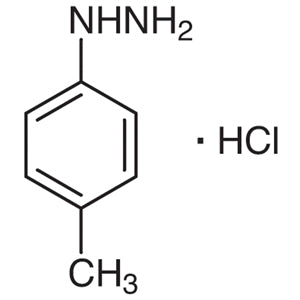
- TCI T0319 637-60-5 p-Tolylhydrazine Hydrochloride
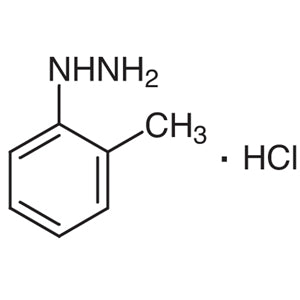
- TCI T0318 635-26-7 o-Tolylhydrazine Hydrochloride
- Fischer indole synthesis — serves as the arylhydrazine component for building the indole ring system directly from ketone or aldehyde substrates in a single well-established transformation.
- Hydrazone preparation — the dual nucleophilicity of the hydrazine group allows rapid condensation with aldehydes and ketones, and the resulting hydrazones are generally crystalline and easy to isolate.
- Carbonyl derivatization for analysis — the large naphthalene core gives the resulting hydrazones strong chromophoric character, making derivatized carbonyl compounds readily detectable with ultraviolet detectors.
- Synthesis of indole-based bioactive compounds — provides a direct route from simple carbonyl starting materials to the complex heterocyclic cores that appear throughout medicinal chemistry programmes.
- Preparation of indole-based functional materials — the naphthylhydrazine framework supports the construction of extended aromatic systems used in materials research and functional compound development.
| Brand | TCI |
|---|---|
| CAS number | 2243-56-3 |
| Molecular formula | — |
| Purity | — |
| Category | Chemistry > Building Blocks > Non-Heterocyclic Building Blocks |
| Pack sizes | available in the manufacturer's standard catalogue pack sizes; please confirm the required size when ordering. |
| Physical form | — |
| Storage | store as a hydrochloride salt in a closed container, protected from air, to preserve the stability advantage of the salt form. |
- Chemical form: hydrochloride salt of an arylhydrazine, offering better storage stability than the free hydrazine base.
Store the material in a tightly closed original container, kept in a cool, dry place away from direct light and sources of heat. Although the hydrochloride salt form is considerably more stable toward air oxidation than the corresponding free hydrazine, containers should still be closed promptly after use and headspace exposure minimised. Handle the solid in a fume hood using gloves, safety glasses, and a laboratory coat, and avoid generating dust during weighing and transfer. Use clean, dry spatulas to prevent moisture ingress, since the salt is soluble in water and protic solvents. Keep the material separated from strong oxidising agents, and consult the manufacturer's safety data sheet before first use and before disposal of residues.
—
Produk Terkait
-
MethylhydrazineSulfate TCI M0341
Regular price From Rp 1.008.000,00Regular price -
1,1-DimethylhydrazineHydrochloride TCI D0742
Regular price Rp 4.638.900,00Regular price -
1,2-DimethylhydrazineDihydrochloride TCI D0741
Regular price Rp 7.473.900,00Regular price -
tert-ButylhydrazineHydrochloride TCI B1195
Regular price Rp 664.650,00Regular price -
p-TolylhydrazineHydrochloride TCI T0319
Regular price Rp 3.419.850,00Regular price -
o-TolylhydrazineHydrochloride TCI T0318
Regular price From Rp 928.200,00Regular price -
m-TolylhydrazineHydrochloride TCI T0317
Regular price Rp 2.094.750,00Regular price -
1,1'-Binaphthyl-2,2'-diamine TCI B3923
Regular price Rp 3.896.550,00Regular price