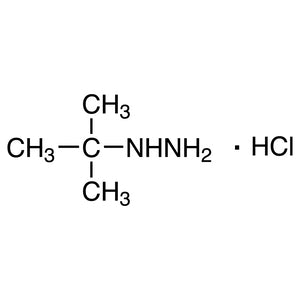
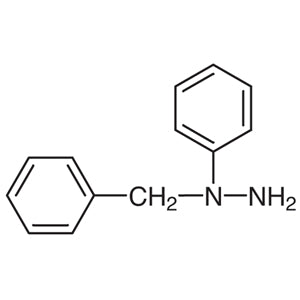
m-Tolylhydrazine Hydrochloride is a chemical compound widely used in laboratory settings for the synthesis of complex molecules. It serves as a key reagent in various chemical reactions, particularly in the formation of heterocyclic compounds and other structurally intricate substances. Its high reactivity makes it a valuable tool in organic chemistry, enabling the creation of new compounds with specific functional groups. This compound is essential for researchers aiming to explore chemical transformations and develop novel materials or pharmaceuticals.
The compound's reactivity and chemical versatility make it a preferred choice in laboratory applications. It is particularly effective in condensation and substitution reactions, where it can act as a nucleophile or participate in bond-forming processes. Despite its reactivity, m-Tolylhydrazine Hydrochloride exhibits chemical stability under controlled conditions, which allows for its use in a variety of synthetic pathways. However, it is sensitive to moisture and high temperatures, requiring careful handling and storage to maintain its integrity.
In Indonesian laboratories, m-Tolylhydrazine Hydrochloride is commonly used in both research and educational settings. It plays a crucial role in the development of new drugs and industrial chemicals, supporting advancements in pharmaceutical and chemical industries. Additionally, it is frequently employed in teaching laboratories to demonstrate complex chemical reactions and synthesis techniques to students. Its application spans across various scientific disciplines, making it an indispensable reagent in modern chemical research.
Related TCI products
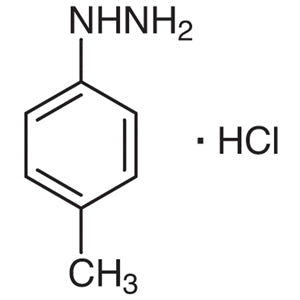
- TCI T0319 637-60-5 p-Tolylhydrazine Hydrochloride
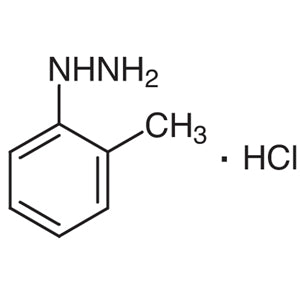
- TCI T0318 635-26-7 o-Tolylhydrazine Hydrochloride
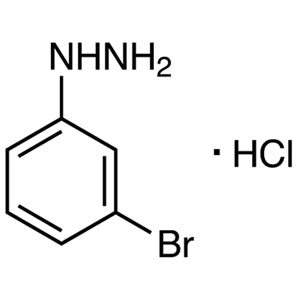
- TCI B3847 27246-81-7 3-Bromophenylhydrazine Hydrochloride
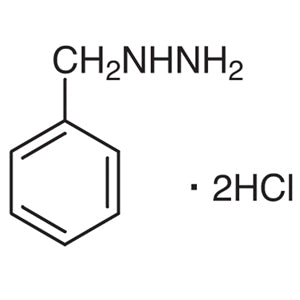
- TCI B3471 20570-96-1 Benzylhydrazine Dihydrochloride
- TCI B2147 50709-33-6 2-Bromophenylhydrazine Hydrochloride
- TCI B1396 1073-62-7 Benzylhydrazine Monohydrochloride
- Drug development research utilizes m-Tolylhydrazine Hydrochloride to synthesize novel compounds with potential therapeutic applications.
- Organic synthesis experiments benefit from its reactivity, enabling the formation of complex molecular structures through condensation and substitution reactions.
- Educational laboratories use it to teach students about chemical reactivity and the mechanisms of synthetic reactions.
- Industrial chemical production relies on its ability to participate in reactions that create functionalized compounds.
- Analytical chemistry applications employ it as a reagent for the detection and characterization of specific chemical groups in compounds.
| Brand | TCI |
|---|---|
| CAS number | 637-04-7 |
| Molecular formula | — |
| Purity | — |
| Category | Chemistry > Building Blocks > Non-Heterocyclic Building Blocks |
| Pack sizes | Available in various quantities as per supplier specifications |
| Physical form | Solid |
| Storage | Store in a cool, dry place away from moisture and high temperatures |
m-Tolylhydrazine Hydrochloride should be stored in a cool, dry environment to prevent degradation due to moisture and high temperatures. It is recommended to use airtight containers to minimize exposure to humidity and air. Due to its reactivity, it should be handled with care, using appropriate personal protective equipment such as gloves and safety goggles. Avoid contact with incompatible substances to prevent unwanted chemical reactions. Proper labeling and storage conditions are essential to ensure the safety of laboratory personnel and the integrity of the compound. Always follow standard laboratory safety protocols when working with this reagent.
—
Produk Terkait
-
p-TolylhydrazineHydrochloride TCI T0319
Regular price Rp 3.472.350,00Regular priceRp 2.443.350,00Sale price Rp 3.472.350,00 -
o-TolylhydrazineHydrochloride TCI T0318
Regular price From Rp 980.700,00Regular priceRp 701.400,00Sale price From Rp 980.700,00 -
3-BromophenylhydrazineHydrochloride TCI B3847
Regular price Rp 2.544.150,00Regular priceRp 1.794.450,00Sale price Rp 2.544.150,00 -
BenzylhydrazineDihydrochloride TCI B3471
Regular price Rp 1.670.550,00Regular priceRp 1.183.350,00Sale price Rp 1.670.550,00 -
2-BromophenylhydrazineHydrochloride TCI B2147
Regular price From Rp 2.332.050,00Regular priceRp 1.646.400,00Sale price From Rp 2.332.050,00 -
BenzylhydrazineMonohydrochloride TCI B1396
Regular price From Rp 3.815.700,00Regular priceRp 2.683.800,00Sale price From Rp 3.815.700,00 -
tert-ButylhydrazineHydrochloride TCI B1195
Regular price Rp 717.150,00Regular priceRp 516.600,00Sale price Rp 717.150,00 -
1-Benzyl-1-phenylhydrazine TCI B1157
Regular price Rp 2.835.000,00Regular priceRp 1.998.150,00Sale price Rp 2.835.000,00