1,1'-Binaphthyl-2,2'-diamine (Bn-Diamine) is a chemical compound widely used in the synthesis of complex molecules, particularly in the fields of organic chemistry and materials science. This compound features a unique structure composed of two naphthalene rings connected by two amine groups, which contributes to its high reactivity. In the laboratory, Bn-Diamine serves as a foundational building block for creating asymmetric structures, such as chiral ligands, catalysts, and active pharmaceutical ingredients. Its versatility makes it an essential tool for researchers aiming to design and synthesize advanced chemical compounds with specific functional properties.
The compound’s chemical properties make it a preferred choice for various synthetic applications. Its symmetric molecular structure and two amine groups provide a stable yet reactive platform for chemical modifications. Bn-Diamine exhibits reactivity towards nucleophilic and electrophilic reactions, enabling the formation of a wide range of derivatives. Its ability to participate in asymmetric synthesis is particularly valuable in the development of optically active compounds. These characteristics make it a sought-after material in both academic and industrial research settings.
In Indonesian laboratories, Bn-Diamine is commonly used in scientific research related to the synthesis of complex compounds. It is frequently found in studies involving pharmaceuticals, materials science, and catalysis. Researchers rely on this compound to construct intricate molecular structures with high precision, supporting advancements in various scientific disciplines. Its availability and reliability make it a key component in the chemical toolkit of Indonesian laboratories.
Related TCI products
- TCI T1436 4559-79-9 N,N,N',N'-Tetramethyl-2-butene-1,4-diamine
- TCI A3265 10303-95-4 Adamantane-1,3-diamine
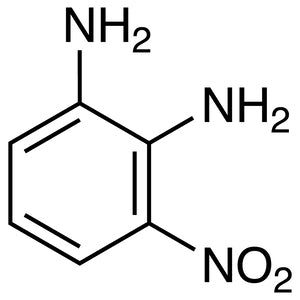
- TCI N1301 3694-52-8 3-Nitrobenzene-1,2-diamine
- TCI M1822 4760-34-3 N1-Methylbenzene-1,2-diamine
- TCI D6282 75389-89-8 2,4(or 4,6)-Diethyl-6(or 2)-methylbenzene-1,3-diamine (mixture of isomers)
- TCI D6240 N1-[3',5'-Di-tert-butyl-[1,1'-biphenyl]-2-yl]-N2-[2-(3,5-di-tert-butylphenyl)naphthalen-1-yl]benzene-1,2-diamine
- Asymmetric synthesis is a key application where Bn-Diamine is used to create chiral compounds, offering a stable and reactive platform for enantioselective reactions.
- Pharmaceutical research benefits from Bn-Diamine due to its ability to form optically active derivatives, which are essential in drug development and active pharmaceutical ingredients.
- Materials science utilizes Bn-Diamine for the synthesis of functional materials, including polymers and nanomaterials, due to its structural versatility and reactivity.
- Catalytic processes often incorporate Bn-Diamine as a ligand, enhancing the efficiency and selectivity of chemical reactions in industrial and academic settings.
- Organic synthesis relies on Bn-Diamine as a building block for constructing complex molecular frameworks, supporting the development of novel compounds with specific properties.
| Brand | TCI |
|---|---|
| CAS number | 4488-22-6 |
| Molecular formula | — |
| Purity | — |
| Category | Chemistry > Building Blocks > Non-Heterocyclic Building Blocks |
| Pack sizes | Available in various quantities as per supplier specifications |
| Physical form | Solid |
| Storage | Store in a cool, dry place away from light and moisture |
Bn-Diamine should be stored in a cool, dry environment, away from direct light and moisture to maintain its chemical stability. It is recommended to use airtight containers made of materials that do not react with the compound, such as glass or high-density polyethylene. In laboratory settings, proper ventilation should be ensured when handling the compound to minimize exposure. Personal protective equipment, including gloves and safety goggles, should be worn to prevent skin contact or inhalation. Due to its reactivity, it should be handled with care, and any unused portions should be stored securely to prevent contamination or unintended reactions. Regular monitoring of storage conditions is essential to ensure the compound remains in optimal condition for use in research applications.
—
Produk Terkait
-
N,N,N',N'-Tetramethyl-2-butene-1,4-diamine TCI T1436
Regular price Rp 3.710.700,00Regular priceRp 2.594.550,00Sale price Rp 3.710.700,00 -
Adamantane-1,3-diamine TCI A3265
Regular price From Rp 3.472.350,00Regular priceRp 2.443.350,00Sale price From Rp 3.472.350,00 -
3-Nitrobenzene-1,2-diamine TCI N1301
Regular price From Rp 1.008.000,00Regular priceRp 720.300,00Sale price From Rp 1.008.000,00 -
N1-Methylbenzene-1,2-diamine TCI M1822
Regular price From Rp 1.988.700,00Regular priceRp 1.390.200,00Sale price From Rp 1.988.700,00 -
2,4(or4,6)-Diethyl-6(or2)-methylbenzene-1,3-diamine(mixtureofisomers) TCI D6282
Regular price From Rp 1.670.550,00Regular priceRp 1.183.350,00Sale price From Rp 1.670.550,00 -
N1-[3',5'-Di-tert-butyl-[1,1'-biphenyl]-2-yl]-N2-[2-(3,5-di-tert-butylphenyl)naphthalen-1-yl]benzene-1,2-diamine TCI D6240
Regular price From Rp 2.464.350,00Regular priceRp 1.738.800,00Sale price From Rp 2.464.350,00 -
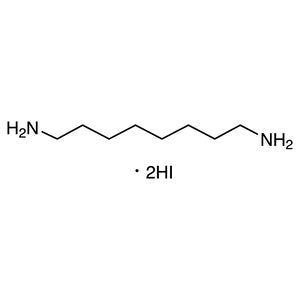
Octane-1,8-diamineDihydroiodide TCI D6069
Regular price From Rp 2.359.350,00Regular priceRp 1.649.550,00Sale price From Rp 2.359.350,00 -
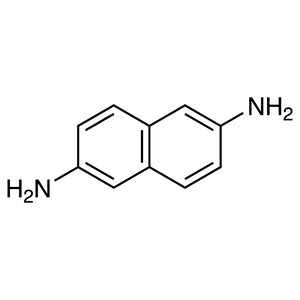
Naphthalene-2,6-diamine TCI D6067
Regular price Rp 4.001.550,00Regular priceRp 2.814.000,00Sale price Rp 4.001.550,00