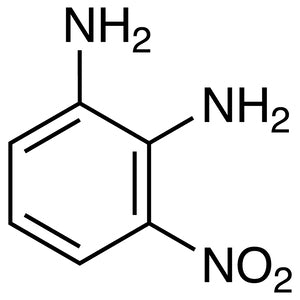
3-Nitrobenzene-1,2-diamine is a chemical compound widely used in organic synthesis reactions, particularly in the production of heterocyclic compounds and complex chemical structures. As a fundamental building block in chemistry, it plays a crucial role in laboratory settings by enabling the creation of a wide range of functional molecules. Its versatility makes it an essential component in both academic and industrial research environments. This compound is frequently employed in substitution and reduction reactions, contributing to the development of pharmaceuticals, industrial chemicals, and advanced materials.
The compound’s molecular structure is stable, and its high reactivity allows it to participate in various chemical transformations. Its chemical and physical properties make it suitable for use in both polar and non-polar reaction conditions, enhancing its applicability across different synthetic pathways. The ability to react under diverse conditions ensures that 3-Nitrobenzene-1,2-diamine remains a valuable reagent for chemists and researchers. Its consistent performance and reliability in laboratory experiments make it a preferred choice for those seeking to synthesize complex molecules.
In Indonesian laboratories, 3-Nitrobenzene-1,2-diamine is commonly used by chemists, pharmacologists, and material scientists for the development of new compounds. It is an integral part of research programs focused on the synthesis of bioactive molecules and the creation of advanced materials. Its widespread use in both academic and industrial research highlights its importance in the chemical sciences. The compound’s role in supporting innovation and discovery underscores its significance in the scientific community.
Related TCI products
- TCI T1436 4559-79-9 N,N,N',N'-Tetramethyl-2-butene-1,4-diamine
- TCI B3923 4488-22-6 1,1'-Binaphthyl-2,2'-diamine
- TCI A3265 10303-95-4 Adamantane-1,3-diamine
- TCI M1822 4760-34-3 N1-Methylbenzene-1,2-diamine
- TCI D6282 75389-89-8 2,4(or 4,6)-Diethyl-6(or 2)-methylbenzene-1,3-diamine (mixture of isomers)
- TCI D6240 N1-[3',5'-Di-tert-butyl-[1,1'-biphenyl]-2-yl]-N2-[2-(3,5-di-tert-butylphenyl)naphthalen-1-yl]benzene-1,2-diamine
- Organic synthesis is a key application where 3-Nitrobenzene-1,2-diamine is used to create complex molecules and heterocyclic structures.
- Pharmaceutical research benefits from this compound as it is involved in the development of new drugs and bioactive compounds.
- Material science applications rely on this reagent for the synthesis of advanced materials and functional polymers.
- Chemical reaction optimization uses this compound due to its reactivity and stability in various reaction conditions.
- Industrial chemical production incorporates this material for the manufacture of specialty chemicals and intermediates.
| Brand | TCI |
|---|---|
| CAS number | 3694-52-8 |
| Molecular formula | — |
| Purity | — |
| Category | Chemistry > Building Blocks > Non-Heterocyclic Building Blocks |
| Pack sizes | Available in various quantities as per supplier specifications |
| Physical form | Solid, typically in crystalline or powder form |
| Storage | Store in a cool, dry place away from direct sunlight and moisture |
3-Nitrobenzene-1,2-diamine should be stored in a cool, dry environment to maintain its chemical stability. It is recommended to keep the compound in airtight containers to prevent moisture absorption and contamination. Due to its reactivity, it should be handled in a well-ventilated laboratory setting to minimize exposure. Proper personal protective equipment, such as gloves and safety goggles, should be worn when handling this material. Avoid contact with skin and eyes, and ensure that spillage is cleaned up promptly. The compound is generally stable under normal laboratory conditions, making it suitable for routine use in chemical synthesis and research applications.
—
Produk Terkait
-
N,N,N',N'-Tetramethyl-2-butene-1,4-diamine TCI T1436
Regular price Rp 3.710.700,00Regular price -
1,1'-Binaphthyl-2,2'-diamine TCI B3923
Regular price Rp 3.896.550,00Regular price -
Adamantane-1,3-diamine TCI A3265
Regular price From Rp 3.419.850,00Regular price -
N1-Methylbenzene-1,2-diamine TCI M1822
Regular price From Rp 1.988.700,00Regular price -
2,4(or4,6)-Diethyl-6(or2)-methylbenzene-1,3-diamine(mixtureofisomers) TCI D6282
Regular price From Rp 1.618.050,00Regular price -
N1-[3',5'-Di-tert-butyl-[1,1'-biphenyl]-2-yl]-N2-[2-(3,5-di-tert-butylphenyl)naphthalen-1-yl]benzene-1,2-diamine TCI D6240
Regular price From Rp 2.411.850,00Regular price -
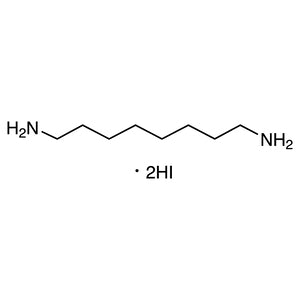
Octane-1,8-diamineDihydroiodide TCI D6069
Regular price From Rp 2.359.350,00Regular price -
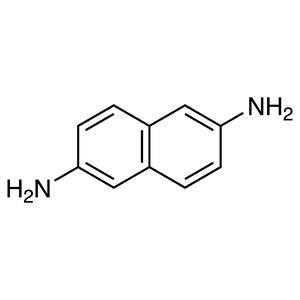
Naphthalene-2,6-diamine TCI D6067
Regular price Rp 3.949.050,00Regular price


![N1-[3',5'-Di-tert-butyl-[1,1'-biphenyl]-2-yl]-N2-[2-(3,5-di-tert-butylphenyl)naphthalen-1-yl]benzene-1,2-diamine (CAS 2897657-05-3) - TCI D6240 - AMI Scientific](http://amiscientific.com/cdn/shop/files/TCI2510D6240.jpg?v=1767109945&width=533)