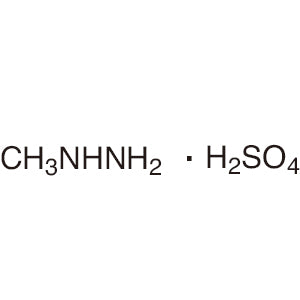
Methylhydrazine Sulfate is a chemical compound widely used in laboratory settings for its unique reactivity and versatility. As a key reagent in organic and inorganic synthesis, it plays a crucial role in the development of complex chemical structures. Its hydrazine group contributes to its high reactivity, making it a valuable tool for chemists seeking to perform reduction reactions or other chemically demanding processes. This compound is particularly useful in environments where specific chemical conditions, such as high temperatures or basic environments, are required.
The compound's chemical properties make it a preferred choice for researchers due to its stability in solid form and its ability to remain active under controlled conditions. Its reactivity allows it to participate in a wide range of chemical transformations, including coupling reactions and functional group modifications. The compound's ability to maintain its integrity during storage and its compatibility with various solvents further enhance its appeal in both academic and industrial laboratories.
In Indonesian laboratories, Methylhydrazine Sulfate is commonly used in chemical research, especially in organic synthesis and analytical chemistry. It is frequently found in university and industrial laboratories where high reactivity and chemical versatility are required. Its availability in the local market supports ongoing research and development efforts, making it an essential component in the chemical supply chain.
Related TCI products
- Organic Synthesis: Methylhydrazine Sulfate is ideal for organic synthesis due to its reactive hydrazine group, which facilitates the formation of complex molecular structures.
- Analytical Chemistry: Its reactivity and solubility make it useful in analytical procedures requiring precise chemical reactions and controlled environments.
- Reductive Reactions: The compound's reducing properties are well-suited for applications where controlled reduction of functional groups is necessary.
- High-Temperature Reactions: Its stability under elevated temperatures allows it to be used in reactions that require thermal activation or decomposition.
- Basic Environment Reactions: Methylhydrazine Sulfate performs effectively in basic conditions, making it a preferred reagent for such chemical processes.
| Brand | TCI |
|---|---|
| CAS number | 302-15-8 |
| Molecular formula | — |
| Purity | — |
| Category | Chemistry > Building Blocks > Non-Heterocyclic Building Blocks |
| Pack sizes | Available in various quantities to suit different laboratory needs |
| Physical form | Solid |
| Storage | Store in a cool, dry place away from moisture and direct sunlight |
Methylhydrazine Sulfate should be stored in a cool, dry place, away from moisture and direct sunlight to maintain its chemical stability. It is recommended to use airtight containers to prevent exposure to air and moisture, which could affect its reactivity. Due to its high reactivity, it should be handled with care, using appropriate personal protective equipment such as gloves and safety goggles. It is important to avoid contact with incompatible materials, such as strong oxidizers, to prevent unintended chemical reactions. Proper labeling and storage conditions ensure safe handling and long-term usability in laboratory settings.
—
Produk Terkait
-
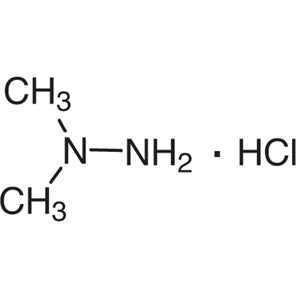
1,1-DimethylhydrazineHydrochloride TCI D0742
Regular price Rp 4.638.900,00Regular price -
1,2-DimethylhydrazineDihydrochloride TCI D0741
Regular price Rp 7.473.900,00Regular price -
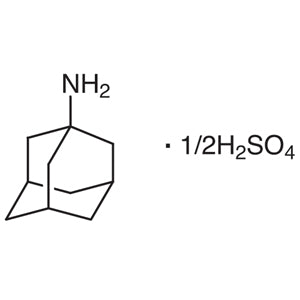
1-AdamantanamineSulfate TCI A1319
Regular price Rp 1.167.600,00Regular price -
AminoacetonitrileSulfate TCI A0912
Regular price From Rp 1.696.800,00Regular price -
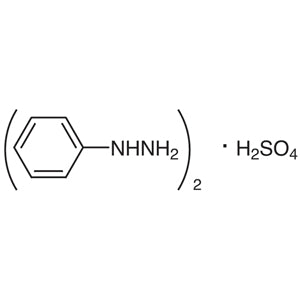
PhenylhydrazineSulfate TCI P0186
Regular price Rp 1.246.350,00Regular price -
1,4-PhenylenediamineSulfate TCI P0175
Regular price Rp 530.250,00Regular price -
1,3-PhenylenediamineSulfate TCI P0174
Regular price Rp 505.050,00Regular price -
1,2-PhenylenediamineSulfate TCI P0173
Regular price Rp 1.458.450,00Regular price