


1,2-Phenylenediamine Sulfate is a chemical compound widely used in laboratory settings for its role in constructing complex molecular structures. As a building block in organic chemistry, it serves as a versatile reagent in various synthetic processes. Its ability to participate in multiple chemical reactions makes it an essential tool for chemists working on the development of new compounds. This compound is particularly valuable in the synthesis of heterocyclic and organic molecules, where its reactivity and structural versatility are highly beneficial.
The compound exhibits strong reactivity, especially toward oxidation and reduction agents, which makes it a preferred choice for high-activity chemical experiments. It is soluble in organic solvents such as ethanol and acetone, facilitating its use in a wide range of reaction conditions. Its chemical stability under specific conditions further enhances its utility in laboratory applications. These properties make it a reliable and effective reagent for both research and industrial chemical synthesis.
In Indonesian laboratories, 1,2-Phenylenediamine Sulfate is commonly used in chemical research, particularly in the synthesis of organic compounds and analytical chemistry. It is a key component in the development of new materials and pharmaceuticals. Many research institutions and universities in Indonesia rely on this compound for its versatility and effectiveness in various experimental setups. Its widespread use underscores its importance in both academic and industrial chemical applications.
Related TCI products
- TCI P0175 16245-77-5 1,4-Phenylenediamine Sulfate
- TCI P0174 541-70-8 1,3-Phenylenediamine Sulfate
- TCI D0782 536-47-0 N,N-Dimethyl-1,4-phenylenediamine Sulfate
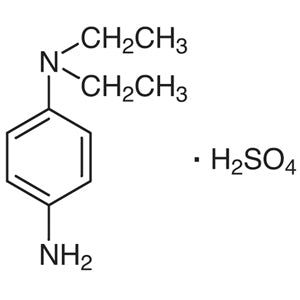
- TCI D0520 6283-63-2 N,N-Diethyl-1,4-phenylenediamine Sulfate
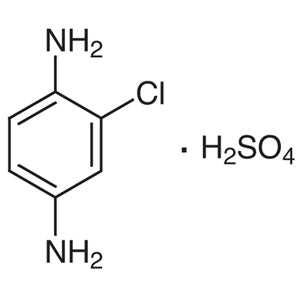
- TCI C0256 61702-44-1 2-Chloro-1,4-phenylenediamine Sulfate
- TCI T3770 485831-34-3 N,N,N',N'-Tetrakis[4-(diisobutylamino)phenyl]-1,4-phenylenediamine
- Organic synthesis applications benefit from its reactivity and structural versatility, enabling the creation of complex molecules.
- Heterocyclic compound synthesis relies on its ability to form stable intermediates and participate in multiple reaction pathways.
- Analytical chemistry uses it as a reagent for detecting and quantifying specific compounds in complex mixtures.
- Pharmaceutical research employs it in the development of new drugs due to its role in synthesizing bioactive molecules.
- Material science applications utilize its chemical properties to create new polymers and functional materials.
| Brand | TCI |
|---|---|
| CAS number | 74710-09-1 |
| Molecular formula | — |
| Purity | — |
| Category | Chemistry > Building Blocks > Non-Heterocyclic Building Blocks |
| Pack sizes | Available in various quantities as per supplier specifications |
| Physical form | Solid powder |
| Storage | Store in a cool, dry place away from direct sunlight and moisture |
1,2-Phenylenediamine Sulfate should be stored in a cool, dry place, away from direct sunlight and moisture to maintain its chemical stability. It is recommended to use airtight containers to prevent exposure to air and humidity, which can affect its reactivity. Due to its reactive nature, it should be handled with care, using appropriate personal protective equipment such as gloves and safety goggles. It is important to store it separately from strong oxidizing or reducing agents to avoid unwanted chemical reactions. Proper labeling and storage conditions ensure the safety of laboratory personnel and the integrity of the compound during experimentation.
—
Produk Terkait
-
1,4-PhenylenediamineSulfate TCI P0175
Regular price Rp 530.250,00Regular price -
1,3-PhenylenediamineSulfate TCI P0174
Regular price Rp 505.050,00Regular price -
N,N-Dimethyl-1,4-phenylenediamineSulfate TCI D0782
Regular price From Rp 1.936.200,00Regular price -
N,N-Diethyl-1,4-phenylenediamineSulfate TCI D0520
Regular price From Rp 1.115.100,00Regular price -
2-Chloro-1,4-phenylenediamineSulfate TCI C0256
Regular price From Rp 477.750,00Regular price -
N,N,N',N'-Tetrakis[4-(diisobutylamino)phenyl]-1,4-phenylenediamine TCI T3770
Regular price From Rp 2.094.750,00Regular price -
5-Trifluoromethyl-1,3-phenylenediamine TCI T3239
Regular price Rp 1.273.650,00Regular price -
2,3,5,6-Tetramethyl-1,4-phenylenediamine TCI T1457
Regular price From Rp 1.881.600,00Regular price


![485831-34-3 N,N,N',N'-Tetrakis[4-(diisobutylamino)phenyl]-1,4-phenylenediamine - AMI Scientific](http://amiscientific.com/cdn/shop/files/TCI2510T3770.jpg?v=1767144326&width=533)

