


1,4-Phenylenediamine Sulfate from TCI (product code P0175) is the sulfate salt of p-phenylenediamine, an aromatic diamine with two amine groups opposite each other at the para positions of a benzene ring. It is classed as a non-heterocyclic building block and matters in dye chemistry, polymer chemistry and redox chemistry. Because the molecule is linear and symmetrical, p-phenylenediamine is widely used as a monomer for aramid polymers and as a precursor for oxidative dyes. In the laboratory it is a dependable starting material for synthesis and mechanistic work.
The sulfate salt is the preferred form for storage and weighing because free p-phenylenediamine oxidises easily in air and quickly turns dark. As a salt, the material is more stable, and solution concentrations are easier to control. Its redox behaviour is also distinctive: p-phenylenediamine readily gives up electrons to form coloured quinonediimine species. This makes the compound useful for electrochemical studies, oxidation reactions and research into how dyes form. Its molecular symmetry also helps in designing polymers and ordered porous materials, where regular structure is often essential.
In Indonesia, this material suits organic chemistry and polymer laboratories at universities, cosmetic research laboratories and research groups working on dyes and functional materials. Lecturers and students can use it in synthesis practicals, final-year projects and graduate research on aromatic amines, condensation polymers and redox reactions. Analytical and electrochemistry laboratories can also use it as a model compound for studying oxidation processes. Because it comes from TCI, Indonesian laboratories can expect consistent quality from batch to batch for routine and research work.
Related TCI products
- TCI P0174 541-70-8 1,3-Phenylenediamine Sulfate
- TCI P0173 74710-09-1 1,2-Phenylenediamine Sulfate
- TCI D0782 536-47-0 N,N-Dimethyl-1,4-phenylenediamine Sulfate
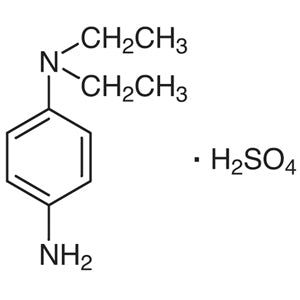
- TCI D0520 6283-63-2 N,N-Diethyl-1,4-phenylenediamine Sulfate
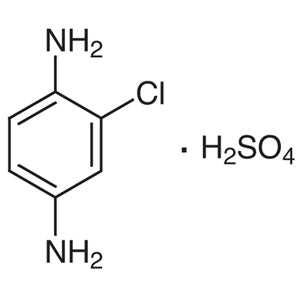
- TCI C0256 61702-44-1 2-Chloro-1,4-phenylenediamine Sulfate
- TCI T3770 485831-34-3 N,N,N',N'-Tetrakis[4-(diisobutylamino)phenyl]-1,4-phenylenediamine
- Aramid and polyamide synthesis: the linear, symmetrical para-diamine structure makes it a suitable monomer for building rigid, well-ordered polymer chains in polymer chemistry research.
- Oxidative dye precursor studies: p-phenylenediamine forms coloured quinonediimine species when oxidised, so it is well suited to studying how oxidative dyes and pigments form.
- Electrochemical and redox research: it readily gives up electrons, which makes it a convenient model compound for voltammetry, oxidation-mechanism studies and electron-transfer experiments.
- Ordered porous materials design: its molecular symmetry helps in building regular frameworks and porous polymer networks, where a predictable geometry is needed for structural control.
- Teaching and synthesis practicals: the stable sulfate salt is easier to store, weigh and dissolve accurately, so it is practical for university courses that teach aromatic amine chemistry.
| Brand | TCI (product code P0175) |
|---|---|
| CAS number | 16245-77-5 |
| Molecular formula | — |
| Purity | — |
| Category | Chemistry > Building Blocks > Non-Heterocyclic Building Blocks |
| Pack sizes | available in standard TCI pack sizes; please confirm the options with AMI Scientific |
| Physical form | sulfate salt of p-phenylenediamine (solid) |
| Storage | keep tightly closed and protected from air and light to limit oxidation |
Store 1,4-Phenylenediamine Sulfate in its original, tightly sealed container in a cool, dry, well-ventilated place, away from direct light, heat sources and strong oxidising agents. The salt is more stable than the free amine, but you should still keep its exposure to air and moisture as low as possible to prevent discolouration and breakdown. Use clean, dry spatulas and close the container right after each use. Handle the material in a fume hood or well-ventilated area, and wear suitable gloves, safety glasses and a laboratory coat. Avoid creating dust, and avoid contact with skin and eyes, because aromatic amines can cause skin sensitisation. Always check the safety data sheet (SDS) from the manufacturer before use, and dispose of waste according to institutional and local regulations.
—
Produk Terkait
-
1,3-PhenylenediamineSulfate TCI P0174
Regular price Rp 505.050,00Regular price -
1,2-PhenylenediamineSulfate TCI P0173
Regular price Rp 1.458.450,00Regular price -
N,N-Dimethyl-1,4-phenylenediamineSulfate TCI D0782
Regular price From Rp 1.936.200,00Regular price -
N,N-Diethyl-1,4-phenylenediamineSulfate TCI D0520
Regular price From Rp 1.115.100,00Regular price -
2-Chloro-1,4-phenylenediamineSulfate TCI C0256
Regular price From Rp 477.750,00Regular price -
N,N,N',N'-Tetrakis[4-(diisobutylamino)phenyl]-1,4-phenylenediamine TCI T3770
Regular price From Rp 2.094.750,00Regular price -
5-Trifluoromethyl-1,3-phenylenediamine TCI T3239
Regular price Rp 1.273.650,00Regular price -
2,3,5,6-Tetramethyl-1,4-phenylenediamine TCI T1457
Regular price From Rp 1.881.600,00Regular price


![485831-34-3 N,N,N',N'-Tetrakis[4-(diisobutylamino)phenyl]-1,4-phenylenediamine - AMI Scientific](http://amiscientific.com/cdn/shop/files/TCI2510T3770.jpg?v=1767144326&width=533)

