

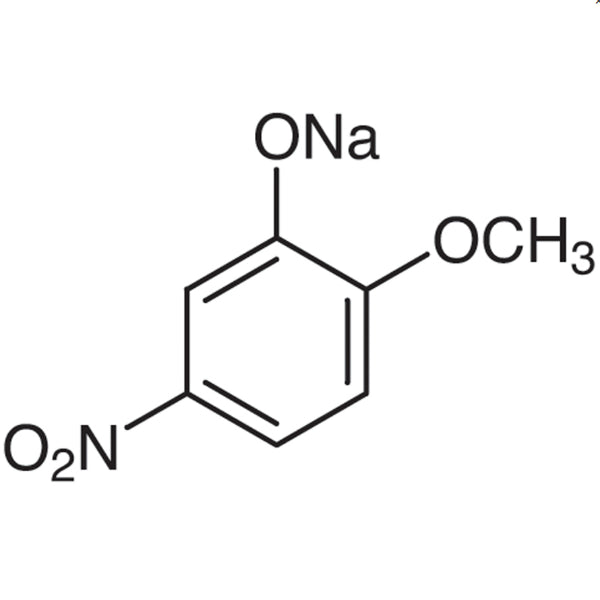
5-Nitroguaiacol Sodium Salt is a chemical compound widely used in laboratory settings for its versatility in organic reactions and synthesis. As a building block in chemistry, it plays a crucial role in the development of various compounds with applications in pharmaceuticals, chemical industries, and scientific research. Its molecular structure allows it to participate in multiple reaction types, making it an essential reagent for chemists and researchers. This compound is particularly valuable in the synthesis of functional molecules, including those used in drug development and industrial chemical production.
The compound is favored for its stability and solubility in organic solvents, which simplifies handling and reaction processes in the laboratory. Its ability to undergo substitution, reduction, and oxidation reactions under controlled conditions makes it a preferred choice for synthetic chemists. The chemical’s predictable behavior and compatibility with various reagents enhance its utility in both academic and industrial research environments. These properties make it a reliable and efficient material for a wide range of chemical applications.
In Indonesian laboratories, 5-Nitroguaiacol Sodium Salt is commonly used by researchers in organic chemistry, pharmaceuticals, and biochemical studies. Its availability in the local market supports scientific investigations and innovation. The compound is essential for experiments requiring precise chemical reactions and is a key component in the development of new compounds and materials. Its consistent performance and reliability make it a trusted reagent in both educational and research institutions across Indonesia.
- Organic synthesis applications benefit from the compound's ability to participate in substitution reactions, enabling the creation of complex molecular structures.
- Pharmaceutical research utilizes this material for the development of functional compounds used in drug formulations and therapeutic agents.
- Industrial chemical processes rely on its solubility and reactivity to facilitate the production of specialized chemical products.
- Biochemical experiments use the compound as a building block in the synthesis of molecules with specific biological functions.
- Analytical chemistry applications take advantage of its stability and reactivity to support various qualitative and quantitative analysis methods.
| Brand | TCI |
|---|---|
| CAS number | 67233-85-6 |
| Molecular formula | — |
| Purity | — |
| Category | Chemistry > Building Blocks > Non-Heterocyclic Building Blocks |
| Pack sizes | Available in standard laboratory quantities |
| Physical form | Solid |
| Storage | Store in a cool, dry place away from moisture and direct sunlight |
5-Nitroguaiacol Sodium Salt should be stored in a cool, dry environment to maintain its chemical stability and prevent degradation. It is recommended to keep the compound in airtight containers to minimize exposure to moisture and air, which can affect its performance. Suitable storage conditions include a controlled temperature range of 15–25°C to ensure long-term usability. Laboratory personnel should handle the compound with care, using appropriate personal protective equipment such as gloves and safety goggles. Proper labeling of storage containers is essential to ensure safe handling and prevent accidental contamination. Regular inspection of storage conditions and container integrity is advised to maintain the compound's quality and safety in the laboratory setting.
—
Produk Terkait
-
4-Nitroguaiacol TCI N0892
Regular price From Rp 1.353.450,00Regular price -
5-Nitroguaiacol TCI N0498
Regular price From Rp 1.590.750,00Regular price -
Nitroguanidine(wettedwithca.25%Water)(unitweightondryweightbasis) TCI N0206
Regular price Rp 477.750,00Regular price


