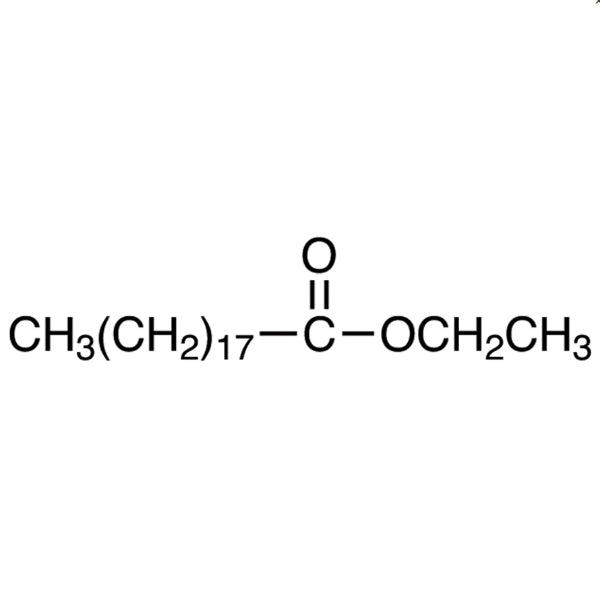
Ethyl Nonadecanoate is a chemical compound classified under the category of lipids, commonly used in scientific experiments, particularly in the fields of biochemistry and life sciences. It is a key reagent in laboratory settings, serving as a building block for the synthesis of various organic compounds. Its molecular structure enables it to participate in a wide range of chemical reactions, making it a versatile tool for researchers. This compound is often employed in the development of new pharmaceuticals, biotechnological applications, and health-related research due to its stability and reactivity.
Ethyl Nonadecanoate is valued for its chemical stability and resistance to degradation under normal conditions, which ensures consistent performance in laboratory processes. It does not readily decompose, making it suitable for long-term storage and use in multiple experimental setups. Additionally, its high purity and reliability contribute to the accuracy and reproducibility of scientific results. The compound is non-toxic and free from hazardous substances, ensuring a safe working environment for laboratory personnel.
In Indonesian laboratories, Ethyl Nonadecanoate is frequently utilized in academic and research institutions. It supports a variety of experimental protocols, including qualitative and quantitative analysis, lipid research, and the development of new compounds. Its availability and reliability make it a preferred choice for scientists working in both educational and industrial research environments.
- Biochemical Synthesis: Ethyl Nonadecanoate is ideal for synthesizing complex organic compounds due to its stable molecular structure and reactivity.
- Lipid Research: It is widely used in lipid-related studies to investigate the behavior and properties of biological membranes and cellular components.
- Pharmaceutical Development: Its role in organic synthesis makes it a valuable reagent in the creation of new drug compounds and therapeutic agents.
- Qualitative and Quantitative Analysis: The compound’s purity and consistency make it suitable for use in analytical procedures requiring high accuracy.
- Biotechnology Applications: It supports the development of biotechnological products by serving as a building block for various biochemical processes.
| Brand | TCI |
|---|---|
| CAS number | 18281-04-4 |
| Molecular formula | — |
| Purity | — |
| Category | Life Science > Biochemicals and Reagents > Lipids |
| Pack sizes | Available in standard laboratory quantities |
| Physical form | Liquid |
| Storage | Store in a cool, dry place away from direct sunlight |
Ethyl Nonadecanoate should be stored in a cool, dry environment to maintain its chemical stability and prevent degradation. It is recommended to keep the compound in a tightly sealed container to avoid exposure to moisture and air. Suitable storage containers include glass or high-density polyethylene bottles, which provide protection against chemical interactions. Due to its non-toxic nature, general laboratory safety precautions are sufficient, but proper labeling and handling are still essential. Avoid storing near incompatible substances to ensure long-term usability and safety in the laboratory setting.
—
Produk Terkait
-
TCI B5774 5,10-Bis(4,4,5,5-tetramethyl-1,3,2-dioxaborolan-2-yl)naphtho[1,2-c:5,6-c']bis([1,2,5]oxadiazole)
Regular price Rp 10.255.350,00Regular price -
Dihydroiodide TCI B6569
Regular price From Rp 1.936.200,00Regular price -
Trifluoromethanesulfonate TCI B7003
Regular price From Rp 1.936.200,00Regular price
![5,10-Bis(4,4,5,5-tetramethyl-1,3,2-dioxaborolan-2-yl)naphtho[1,2-c:5,6-c']bis([1,2,5]oxadiazole) - TCI B5774 - AMI Scientific](http://amiscientific.com/cdn/shop/files/TCI2510B5774.jpg?v=1769180228&width=533)