2-(2-Naphthyl)indole, supplied by TCI under product code N0859 (CAS 23746-81-8), is a heteroaromatic compound in which an indole ring carries a naphthalene group at the 2-position. The molecule has an extended, conjugated π-electron system. TCI classifies it as a material building block for ligands used in functional metal complexes. In practice, researchers use it to design ligands that are then coordinated to transition metals, producing complexes with specific optical, electronic, or catalytic properties. In the laboratory, it serves as a starting point for synthesising advanced organic and organometallic materials.
Researchers choose this compound for its rigid, conjugated aromatic framework, which suits materials that need to absorb and emit light. The indole ring provides an N–H group and several reactive positions that can be functionalised further, for example by N-alkylation, N-arylation, or electrophilic substitution at the 3-position. The naphthyl group extends conjugation and affects the energy levels of the molecular orbitals. Together, these features let researchers tune the photophysical properties of both the ligand and the metal complex made from it. This versatility makes it a practical, adaptable scaffold for systematic structure–property studies in materials chemistry.
In Indonesia, this material is relevant to university research groups, national research institutions, and industrial R&D laboratories working in materials science, coordination chemistry, and organic electronics. Typical projects include synthesising new luminescent metal complexes, exploring ligand design for catalysis, and preparing organic semiconductor candidates for thesis and publication work. Because the compound is a specialised building block rather than a bulk reagent, laboratories usually order it in small research quantities to support multi-step synthetic routes and characterisation studies.
TCI brochures (PDF)
- Ligands 2025-12-01 · p. 17
Related TCI products
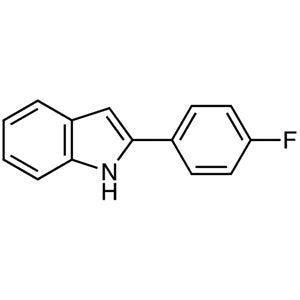
- TCI F0427 782-17-2 2-(4-Fluorophenyl)indole
- TCI A0038 1523-11-1 2-Naphthyl Acetate
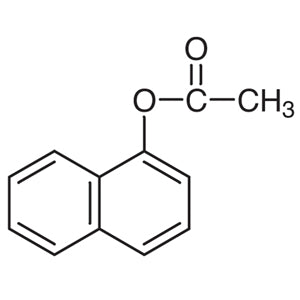
- TCI A0037 830-81-9 1-Naphthyl Acetate
- TCI T3674 922518-84-1 4,4,5,5-Tetramethyl-2-[10-(2-naphthyl)anthracen-9-yl]-1,3,2-dioxaborolane
- TCI T3306 1149804-35-2 4,4,5,5-Tetramethyl-2-[10-(1-naphthyl)anthracen-9-yl]-1,3,2-dioxaborolane
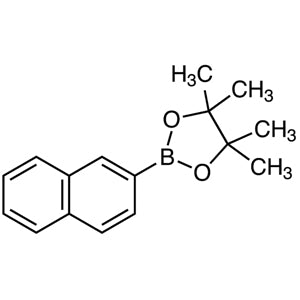
- TCI T3298 256652-04-7 4,4,5,5-Tetramethyl-2-(2-naphthyl)-1,3,2-dioxaborolane
- Ligand synthesis for transition-metal complexes: the indole N–H group and reactive ring positions allow the compound to be built into ligands that coordinate to metal centres, forming functional complexes.
- Development of luminescent and photoactive materials: the extended, rigid π-conjugated framework supports light absorption and emission, which suits research on emissive metal complexes and organic dyes.
- Organic electronics research: the naphthyl group extends conjugation and affects orbital energy levels, so the compound is useful for designing candidate semiconductor or charge-transport materials.
- Structure–property relationship studies: selective N-alkylation, N-arylation, or 3-position substitution lets researchers change one structural feature at a time and measure its effect on photophysical behaviour.
- Catalyst design and screening: ligands made from this indole scaffold can be coordinated to transition metals to create complexes whose electronic environment is adjusted for catalytic performance studies.
| Brand | TCI (product code N0859) |
|---|---|
| CAS number | 23746-81-8 |
| Molecular formula | — |
| Purity | — |
| Category | Materials Science > Material Building Blocks > Ligands for Functional Metal Complexes |
| Pack sizes | available pack sizes are listed on the product page |
| Physical form | see the TCI product specification and Certificate of Analysis |
| Storage | follow the storage conditions on the TCI label and Safety Data Sheet |
Keep 2-(2-Naphthyl)indole in its original, tightly sealed container, in a cool, dry, well-ventilated area away from direct light, heat, and strong oxidising agents, unless the TCI label or Safety Data Sheet (SDS) gives other conditions. After opening, reseal the container promptly to limit exposure to moisture and air. Handle the compound in a fume hood or another well-ventilated area, and avoid creating or breathing in dust. Wear standard personal protective equipment, including a lab coat, safety glasses, and chemical-resistant gloves. Read the SDS before use, label all transferred portions clearly, and dispose of waste according to institutional and local chemical-waste regulations.
—
Produk Terkait
-
2-(4-Fluorophenyl)indole TCI F0427
Regular price Rp 903.000,00Regular price -
2-NaphthylAcetate TCI A0038
Regular price Rp 1.353.450,00Regular price -
1-NaphthylAcetate TCI A0037
Regular price Rp 1.193.850,00Regular price -
4,4,5,5-Tetramethyl-2-[10-(2-naphthyl)anthracen-9-yl]-1,3,2-dioxaborolane TCI T3674
Regular price From Rp 2.625.000,00Regular price -
4,4,5,5-Tetramethyl-2-[10-(1-naphthyl)anthracen-9-yl]-1,3,2-dioxaborolane TCI T3306
Regular price Rp 3.949.050,00Regular price -
4,4,5,5-Tetramethyl-2-(2-naphthyl)-1,3,2-dioxaborolane TCI T3298
Regular price From Rp 823.200,00Regular price -
4,4,5,5-Tetramethyl-2-(1-naphthyl)-1,3,2-dioxaborolane TCI T3218
Regular price From Rp 875.700,00Regular price -
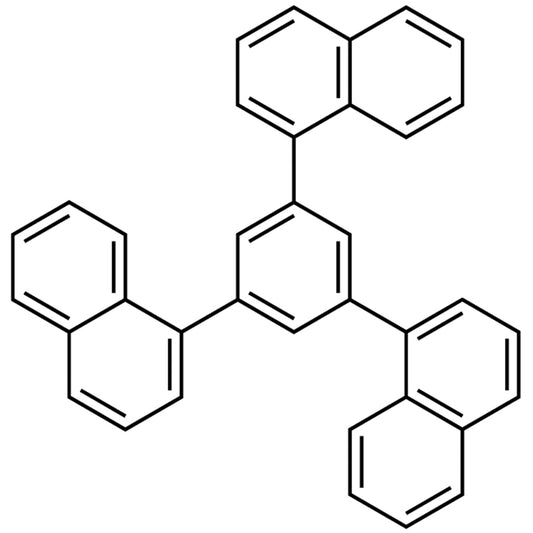
1,3,5-Tri(1-naphthyl)benzene TCI T3193
Regular price From Rp 2.809.800,00Regular price

![922518-84-1 4,4,5,5-Tetramethyl-2-[10-(2-naphthyl)anthracen-9-yl]-1,3,2-dioxaborolane - AMI Scientific](http://amiscientific.com/cdn/shop/files/TCI2510T3674.jpg?v=1769143759&width=533)
![1149804-35-2 4,4,5,5-Tetramethyl-2-[10-(1-naphthyl)anthracen-9-yl]-1,3,2-dioxaborolane - AMI Scientific](http://amiscientific.com/cdn/shop/files/TCI2510T3306.jpg?v=1768206565&width=533)
![1149804-35-2 4,4,5,5-Tetramethyl-2-[10-(1-naphthyl)anthracen-9-yl]-1,3,2-dioxaborolane - AMI Scientific](http://amiscientific.com/cdn/shop/files/TCI2510T3306_761c4e0a-9900-459e-a40d-416dcd317ee9.jpg?v=1769058200&width=533)