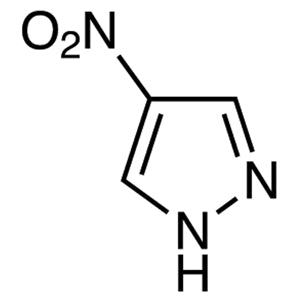
4-Nitropyrazole from TCI, product code N0862, is a five-membered aromatic heterocyclic compound. Its molecule is a pyrazole ring with a nitro group at the 4-position. It is a versatile heterocyclic building block for organic synthesis. In the laboratory, 4-nitropyrazole is used as a starting material for many substituted pyrazole derivatives, including 4-aminopyrazole, which forms when the nitro group is reduced. The pyrazole scaffold appears widely in pharmaceuticals, agrochemicals, and functional materials, so this compound has a useful place in synthetic research.
Chemists choose this material because it has two reactive sites that work well together. The ring N–H nitrogen can be alkylated or arylated to attach a wide range of substituents. The nitro group can be reduced to an amino group, which can then be acylated, sulfonylated, or used in coupling reactions. Because the nitro group withdraws electrons, it also changes the acidity of the N–H and the reactivity of the ring, which gives chemists more control over selectivity during synthesis. The compound's simple, symmetrical structure also makes its products easier to analyse by NMR spectroscopy.
In Indonesia, 4-nitropyrazole is relevant to medicinal chemistry laboratories, university research groups, and industrial research and development teams working on heterocyclic synthesis. Researchers use it to build compound libraries around the pyrazole scaffold, to study structure–activity relationships, and to prepare intermediates for multi-step synthetic routes. Teaching laboratories and postgraduate projects in organic chemistry can also use it to show nitro group reduction and N-functionalization of heteroaromatic rings. Its well-defined structure and predictable reactivity make it a practical building block for routine and exploratory work alike.
- Synthesis of substituted pyrazoles: the reactive ring N–H can be alkylated or arylated, so researchers can attach a wide range of substituents to the pyrazole core in a controlled way.
- Preparation of 4-aminopyrazole: reducing the nitro group gives the corresponding amine, a valuable intermediate for further derivatization in medicinal and synthetic chemistry programmes.
- Amide and sulfonamide formation: once the nitro group is reduced, the resulting amino group can be acylated or sulfonylated to build diverse functionalized pyrazole derivatives for screening.
- Coupling reactions in multi-step synthesis: the amine made from this building block can take part in coupling reactions, which helps build more complex heterocyclic molecules efficiently.
- Medicinal chemistry and scaffold exploration: the pyrazole framework is common in pharmaceuticals and agrochemicals, so this compound supports structure–activity relationship studies and compound library design.
| Brand | TCI (product code N0862) |
|---|---|
| CAS number | 2075-46-9 |
| Molecular formula | — |
| Purity | see the product label and the manufacturer's certificate of analysis |
| Category | Chemistry > Building Blocks > Heterocyclic Building Blocks |
| Pack sizes | see the available options on the product page |
| Physical form | — |
| Storage | follow the storage conditions stated on the manufacturer's label and safety data sheet |
Keep 4-nitropyrazole in its original, tightly closed container in a cool, dry, well-ventilated area away from heat, direct sunlight, and incompatible materials such as strong reducing agents and strong oxidizers. Always follow the specific storage conditions on the manufacturer's label and safety data sheet. Handle the material in a fume hood or another well-ventilated space. Wear suitable personal protective equipment, including a laboratory coat, chemical-resistant gloves, and safety glasses. Avoid breathing in dust and avoid contact with skin and eyes. Label containers clearly and dispose of waste according to local regulations and your institution's chemical waste procedures.
—
Produk Terkait
-
1-Nitropyrazole TCI N0965
Regular price From Rp 505.050,00Regular price -
3-Nitropyrazole TCI N0937
Regular price From Rp 1.246.350,00Regular price -
3-Methyl-4-nitropyrazole TCI M2469
Regular price Rp 2.094.750,00Regular price -
3,5-Dimethyl-4-nitropyrazole TCI D4425
Regular price From Rp 1.035.300,00Regular price -
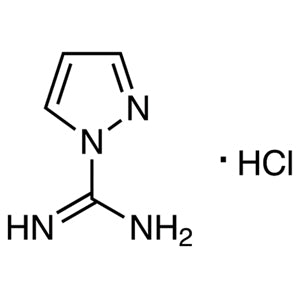
1-AmidinopyrazoleHydrochloride TCI A2055
Regular price From Rp 769.650,00Regular price -
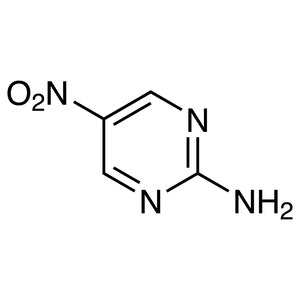
2-Amino-5-nitropyrimidine TCI A2031
Regular price Rp 2.332.050,00Regular price -
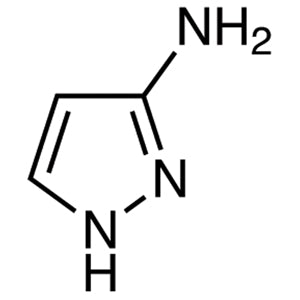
3-Aminopyrazole TCI A1859
Regular price From Rp 1.326.150,00Regular price -
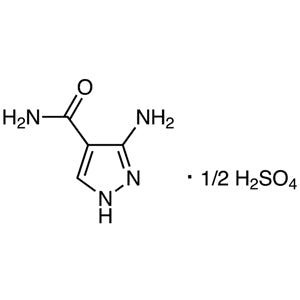
3-Aminopyrazole-4-carboxamideHemisulfate TCI A1532
Regular price Rp 584.850,00Regular price