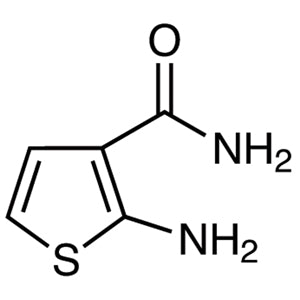
3-Aminopyrazole-4-carboxamide Hemisulfate is a chemical compound widely used in laboratory settings for its role in organic synthesis and heterocyclic chemistry. This compound is a key building block in the development of complex molecules, particularly in pharmaceutical and medicinal research. Its unique molecular structure makes it a valuable tool for chemists aiming to create new compounds with specific biological activities. Due to its versatility, it is frequently used in both academic and industrial research environments.
The compound is prized for its stability and reactivity, allowing it to participate in a variety of chemical reactions such as substitution and coupling processes. Its solubility in organic solvents enhances its usability in diverse experimental setups. These properties make it a preferred choice for researchers seeking to explore new synthetic pathways and develop innovative drug candidates. Additionally, its predictable behavior under different reaction conditions contributes to its reliability in laboratory applications.
In Indonesian laboratories, 3-Aminopyrazole-4-carboxamide Hemisulfate is commonly used in organic chemistry and pharmaceutical research. It plays a crucial role in the synthesis of heterocyclic compounds, which are fundamental in drug discovery and development. Researchers in Indonesia rely on this compound for its consistent performance and its ability to support complex chemical transformations in a controlled environment.
Related TCI products
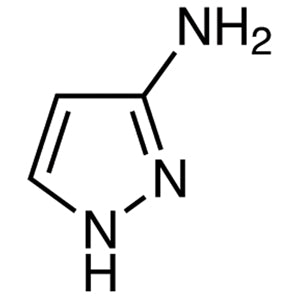
- TCI A1859 1820-80-0 3-Aminopyrazole
- TCI E0766 6994-25-8 Ethyl 3-Aminopyrazole-4-carboxylate
- TCI T2402 3641-08-5 1,2,4-Triazole-3-carboxamide
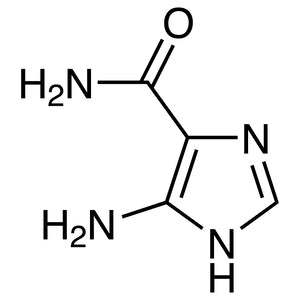
- TCI A3078 360-97-4 5-Amino-1H-imidazole-4-carboxamide
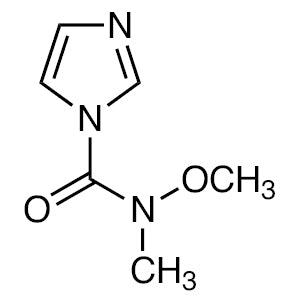
- TCI M2558 862873-06-1 N-Methoxy-N-methyl-1H-imidazole-1-carboxamide
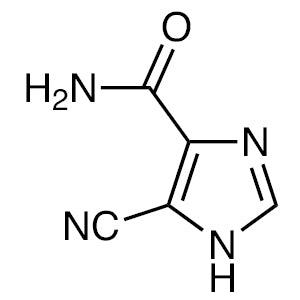
- TCI C1338 5372-23-6 5-Cyano-1H-imidazole-4-carboxamide
- Organic synthesis where heterocyclic compounds are required for drug development due to its structural versatility and reactivity.
- Pharmaceutical research involving the creation of new molecules with specific biological activities because of its ability to participate in substitution reactions.
- Medicinal chemistry experiments that require stable and predictable chemical intermediates for the synthesis of complex drug molecules.
- Academic research in chemistry departments focusing on heterocyclic building blocks for the development of novel compounds.
- Industrial applications in chemical manufacturing where reliable and consistent chemical reagents are essential for large-scale production.
| Brand | TCI |
|---|---|
| CAS number | 27511-79-1 |
| Molecular formula | — |
| Purity | — |
| Category | Chemistry > Building Blocks > Heterocyclic Building Blocks |
| Pack sizes | Available in standard laboratory quantities as per supplier specifications |
| Physical form | Solid, crystalline powder |
| Storage | Store in a cool, dry place away from moisture and direct sunlight |
This compound should be stored in a cool, dry environment to maintain its stability and prevent degradation. It is recommended to use airtight containers to protect it from moisture and humidity. Due to its chemical nature, it should be kept away from incompatible substances such as strong acids or bases. Proper labeling of storage containers is essential for safety and traceability. In laboratory settings, it is advisable to handle the compound with appropriate personal protective equipment to ensure safe handling. Regular inspection of storage conditions ensures the compound remains in optimal condition for use in experiments.
—
Produk Terkait
-
3-Aminopyrazole TCI A1859
Regular price From Rp 1.378.650,00Regular priceRp 979.650,00Sale price From Rp 1.378.650,00 -
Ethyl3-Aminopyrazole-4-carboxylate TCI E0766
Regular price From Rp 1.483.650,00Regular priceRp 1.053.150,00Sale price From Rp 1.483.650,00 -
1,2,4-Triazole-3-carboxamide TCI T2402
Regular price From Rp 2.147.250,00Regular priceRp 1.517.250,00Sale price From Rp 2.147.250,00 -
5-Amino-1H-imidazole-4-carboxamide TCI A3078
Regular price From Rp 1.670.550,00Regular priceRp 1.183.350,00Sale price From Rp 1.670.550,00 -
N-Methoxy-N-methyl-1H-imidazole-1-carboxamide TCI M2558
Regular price Rp 1.326.150,00Regular priceRp 942.900,00Sale price Rp 1.326.150,00 -
5-Cyano-1H-imidazole-4-carboxamide TCI C1338
Regular price From Rp 928.200,00Regular priceRp 664.650,00Sale price From Rp 928.200,00 -
4-Aminopyrazolo[3,4-d]pyrimidine TCI A1041
Regular price From Rp 557.550,00Regular priceRp 405.300,00Sale price From Rp 557.550,00 -
2-Aminothiophene-3-carboxamide TCI A3165
Regular price From Rp 742.350,00Regular priceRp 534.450,00Sale price From Rp 742.350,00