4-Aminopyrazolo[3,4-d]pyrimidine is a chemical compound classified under heterocyclic building blocks, widely used in laboratory settings for the synthesis of complex molecules. This compound plays a crucial role in organic chemistry, particularly in the development of pharmaceuticals and bioactive compounds. Its unique molecular structure provides versatility in chemical reactions, making it an essential component in various synthetic pathways. Due to its structural complexity and reactivity, it is frequently employed in research aimed at creating new drugs and functional organic materials.
The compound's high reactivity and ability to participate in substitution, coupling, and other chemical reactions make it a preferred choice for synthetic chemists. Its chemical properties allow it to be utilized in a wide range of reaction conditions, including both acidic and basic environments. This adaptability enhances its utility in diverse chemical applications. Additionally, its stability under controlled laboratory conditions ensures reliable performance in multiple experimental setups.
In Indonesian laboratories, 4-Aminopyrazolo[3,4-d]pyrimidine is commonly used in organic chemistry research, especially in pharmacology and the synthesis of bioactive compounds. Its availability and broad applications make it a valuable resource for researchers seeking to develop new therapeutic agents and functional materials. Its role in advancing chemical innovation is significant within the scientific community in Indonesia.
TCI brochures (PDF)
- Nucleosides, Nucleotides, Nucleic Acids and Related Reagents 2026-03-23 · p. 9
Related TCI products
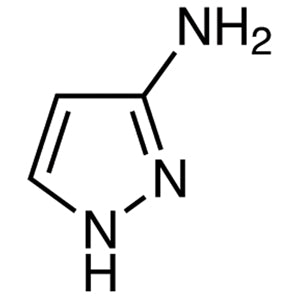
- TCI A1859 1820-80-0 3-Aminopyrazole
- TCI E0766 6994-25-8 Ethyl 3-Aminopyrazole-4-carboxylate
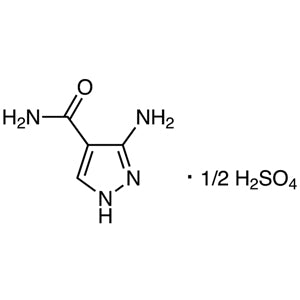
- TCI A1532 27511-79-1 3-Aminopyrazole-4-carboxamide Hemisulfate
- TCI T4348 275-02-5 [1,2,4]Triazolo[1,5-a]pyrimidine
- TCI T3759 77232-13-4 2-(p-Tolyl)pyrimidine
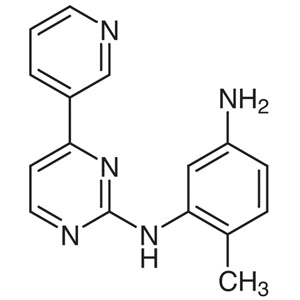
- TCI A2308 152460-10-1 2-(5-Amino-2-methylanilino)-4-(3-pyridyl)pyrimidine
- Pharmaceutical synthesis for the development of new drug molecules due to its reactivity and structural versatility.
- Organic chemistry research to create complex heterocyclic compounds with potential biological activity.
- Bioactive compound development as a key intermediate in the synthesis of pharmaceuticals and medicinal agents.
- Heterocyclic building block applications in the design of novel chemical structures for drug discovery.
- Chemical reaction studies involving substitution and coupling reactions due to its high reactivity and functional group compatibility.
| Brand | TCI |
|---|---|
| CAS number | 2380-63-4 |
| Molecular formula | — |
| Purity | — |
| Category | Chemistry > Building Blocks > Heterocyclic Building Blocks |
| Pack sizes | Available in various quantities as per standard laboratory supply options |
| Physical form | Solid (as per standard chemical product specifications) |
| Storage | Store in a cool, dry place away from moisture and direct sunlight |
This compound should be stored in a cool, dry environment to maintain its chemical integrity. It is recommended to use airtight containers to prevent exposure to moisture and air, which could affect its stability. Due to its reactivity, it should be handled with care, using appropriate personal protective equipment such as gloves and goggles. Storage should be away from incompatible substances to avoid any potential chemical interactions. Regular monitoring of storage conditions ensures the compound remains suitable for use in laboratory applications. Proper labeling and safe handling practices are essential to ensure the safety of laboratory personnel and the integrity of the compound.
—
Produk Terkait
-
3-Aminopyrazole TCI A1859
Regular price From Rp 1.378.650,00Regular priceRp 979.650,00Sale price From Rp 1.378.650,00 -
Ethyl3-Aminopyrazole-4-carboxylate TCI E0766
Regular price From Rp 1.483.650,00Regular priceRp 1.053.150,00Sale price From Rp 1.483.650,00 -
3-Aminopyrazole-4-carboxamideHemisulfate TCI A1532
Regular price Rp 637.350,00Regular priceRp 460.950,00Sale price Rp 637.350,00 -
[1,2,4]Triazolo[1,5-a]pyrimidine TCI T4348
Regular price From Rp 2.544.150,00Regular priceRp 1.794.450,00Sale price From Rp 2.544.150,00 -
2-(p-Tolyl)pyrimidine TCI T3759
Regular price From Rp 1.351.350,00Regular priceRp 960.750,00Sale price From Rp 1.351.350,00 -
2-(5-Amino-2-methylanilino)-4-(3-pyridyl)pyrimidine TCI A2308
Regular price From Rp 557.550,00Regular priceRp 405.300,00Sale price From Rp 557.550,00 -
Pyrimidine-5-carboxylicAcid TCI P1909
Regular price Rp 4.954.950,00Regular priceRp 3.480.750,00Sale price Rp 4.954.950,00 -
Pyrimidinefreebase TCI P0662
Regular price From Rp 822.150,00Regular priceRp 590.100,00Sale price From Rp 822.150,00