


Pyrimidine free base from TCI is pyrimidine, a six-membered aromatic heterocyclic compound containing two nitrogen atoms at positions 1 and 3. Pyrimidine is the structural core of the nucleobases cytosine, thymine, and uracil, and it forms the framework of many drugs, vitamins, and agrochemicals. In the laboratory, this parent compound is used as a heterocyclic building block, as a ligand in coordination chemistry, and as a model compound for physicochemical studies of electron-deficient aromatic systems. The term "free base" means the product is not supplied as a salt.
As an aromatic ring with two nitrogen atoms, pyrimidine is more electron-poor and less basic than pyridine. Because of this, it resists electrophilic substitution but reacts more readily with nucleophiles, which makes it useful for studying heteroaromatic reactivity. Pyrimidine also mixes easily with water and with many organic solvents, so solutions are simple to prepare for a wide range of experiments. Since the parent ring carries no substituents, it is a valuable spectroscopic reference standard and a useful comparison compound when researchers characterize newly synthesized pyrimidine derivatives.
In Indonesia, pyrimidine free base fits the work of university organic chemistry laboratories, pharmaceutical research and development units, and research institutions that study heterocyclic compounds. Graduate students and researchers use it when exploring synthetic routes to nitrogen-containing scaffolds, when studying the coordination behavior of nitrogen ligands, and when building spectroscopic reference libraries. Analytical and teaching laboratories also find it useful for showing how heteroatoms change the properties of an aromatic ring, which supports both research projects and advanced chemistry coursework at local institutions.
Related TCI products
- TCI T4348 275-02-5 [1,2,4]Triazolo[1,5-a]pyrimidine
- TCI T3759 77232-13-4 2-(p-Tolyl)pyrimidine
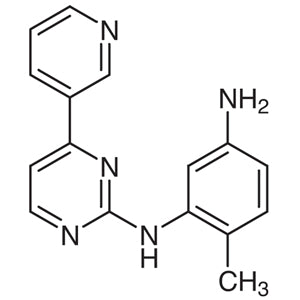
- TCI A2308 152460-10-1 2-(5-Amino-2-methylanilino)-4-(3-pyridyl)pyrimidine
- TCI A1041 2380-63-4 4-Aminopyrazolo[3,4-d]pyrimidine
- TCI P1909 4595-61-3 Pyrimidine-5-carboxylic Acid
- TCI O0541 2188151-68-8 Sodium Pyrimidine-2-sulfinate
- Heterocyclic synthesis: pyrimidine serves as the unsubstituted parent ring, giving chemists a basic starting framework for building nitrogen-containing scaffolds related to drugs, vitamins, and agrochemicals.
- Coordination chemistry: its two ring nitrogen atoms can act as donor sites, so pyrimidine works as a simple ligand for studying how metal complexes form and how they behave.
- Heteroaromatic reactivity studies: because the ring is electron-deficient, it resists electrophilic substitution and is more open to nucleophilic attack, making it a clear model for teaching and research.
- Spectroscopic reference standard: the unsubstituted parent compound provides baseline spectra that researchers can compare against when they characterize synthesized pyrimidine derivatives and confirm structural changes.
- Physicochemical studies of aromatic systems: pyrimidine is less basic and more electron-poor than pyridine, so it is a useful comparison compound for studying how added nitrogen atoms affect aromatic behavior.
| Brand | TCI (product code P0662) |
|---|---|
| CAS number | 289-95-2 |
| Molecular formula | — |
| Purity | — |
| Category | Chemistry > Building Blocks > Heterocyclic Building Blocks |
| Pack sizes | available in the pack sizes offered by TCI for this product code |
| Physical form | — |
| Storage | keep tightly closed in a cool, dry, well-ventilated area, following the manufacturer's label and safety data sheet |
- Form: free base (not a salt); miscible with water and many organic solvents
Store pyrimidine free base in its original, tightly sealed container in a cool, dry, well-ventilated place, away from heat sources, ignition sources, and strong oxidizing agents. Because it mixes readily with water, keep the container closed when not in use to avoid moisture uptake and contamination. Handle the compound in a fume hood while wearing suitable gloves, safety glasses, and a laboratory coat. Avoid inhaling vapors and avoid contact with skin and eyes. Always read the TCI safety data sheet before use, and dispose of waste according to local regulations and your institution's chemical waste procedures.
—
Produk Terkait
-
[1,2,4]Triazolo[1,5-a]pyrimidine TCI T4348
Regular price From Rp 2.491.650,00Regular price -
2-(p-Tolyl)pyrimidine TCI T3759
Regular price From Rp 1.298.850,00Regular price -
2-(5-Amino-2-methylanilino)-4-(3-pyridyl)pyrimidine TCI A2308
Regular price From Rp 505.050,00Regular price -
4-Aminopyrazolo[3,4-d]pyrimidine TCI A1041
Regular price From Rp 505.050,00Regular price -
Pyrimidine-5-carboxylicAcid TCI P1909
Regular price Rp 4.902.450,00Regular price -
SodiumPyrimidine-2-sulfinate TCI O0541
Regular price From Rp 980.700,00Regular price -
2-Methylpyrazolo[1,5-a]pyrimidine-6-carboxylicAcid TCI M2760
Regular price Rp 2.597.700,00Regular price -
MethylPyrimidine-2-carboxylate TCI M2456
Regular price Rp 2.386.650,00Regular price
![275-02-5 [1,2,4]Triazolo[1,5-a]pyrimidine - AMI Scientific](http://amiscientific.com/cdn/shop/files/TCI2510T4348.jpg?v=1767145111&width=533)

![2380-63-4 4-Aminopyrazolo[3,4-d]pyrimidine - AMI Scientific](http://amiscientific.com/cdn/shop/files/TCI2510A1041.jpg?v=1767080566&width=533)


![739364-95-5 2-Methylpyrazolo[1,5-a]pyrimidine-6-carboxylic Acid - AMI Scientific](http://amiscientific.com/cdn/shop/files/TCI2510M2760.jpg?v=1767127156&width=533)
