

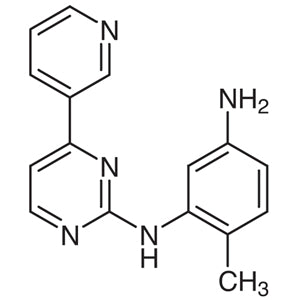
2-(5-Amino-2-methylanilino)-4-(3-pyridyl)pyrimidine is a complex organic compound widely used in laboratory settings for synthetic chemistry applications. This compound serves as a building block in the synthesis of heterocyclic structures, which are essential in pharmaceutical and medicinal research. Its unique molecular structure combines pyrimidine and pyridine rings connected via an amino chain, making it a versatile intermediate in the development of bioactive compounds. Due to its structural complexity, it is a valuable tool for chemists aiming to create molecules with specific biological functions.
The compound's chemical properties make it a preferred choice in synthetic chemistry. Its ability to participate in various reaction pathways allows for the creation of diverse molecular architectures. The presence of amino and pyridyl groups enhances its reactivity, enabling it to be used in multiple synthetic transformations. These features make it an ideal candidate for researchers working on drug discovery and development projects. Its stability under controlled conditions further supports its use in laboratory environments where precision is crucial.
In Indonesian laboratories, this compound is commonly utilized in chemical and pharmaceutical research. It plays a key role in the synthesis of bioactive molecules, particularly in the development of new therapeutic agents. Many research institutions and universities rely on this compound for experiments requiring specific structural components. Its application is especially relevant in the study of heterocyclic compounds with potential medicinal applications.
Related TCI products
- Organic synthesis research benefits from this compound due to its role in creating complex heterocyclic structures essential for pharmaceutical development.
- Medicinal chemistry projects often incorporate this compound to design molecules with targeted biological activities and therapeutic potential.
- Drug discovery initiatives use this material as a key intermediate in the synthesis of bioactive compounds with potential pharmaceutical applications.
- Academic research in chemical sciences frequently employs this compound to explore new synthetic methodologies and molecular architectures.
- Pharmaceutical development laboratories rely on this compound for the creation of novel compounds with specific pharmacological properties.
| Brand | TCI |
|---|---|
| CAS number | 152460-10-1 |
| Molecular formula | — |
| Purity | — |
| Category | Chemistry > Building Blocks > Heterocyclic Building Blocks |
| Pack sizes | As available from supplier |
| Physical form | Solid (as per standard chemical supply) |
| Storage | Store in a cool, dry place away from light |
This compound should be stored in a cool, dry environment, away from direct sunlight and sources of heat. It is recommended to keep it in a sealed container to prevent moisture absorption and contamination. Due to its chemical complexity, it is important to handle it with appropriate personal protective equipment, such as gloves and safety goggles, to ensure laboratory safety. The compound should be stored in a well-ventilated area to minimize exposure to airborne particles. Proper labeling of containers is essential to avoid mix-ups and ensure safe handling. Always follow standard laboratory safety protocols when working with this material.
—
Produk Terkait
-
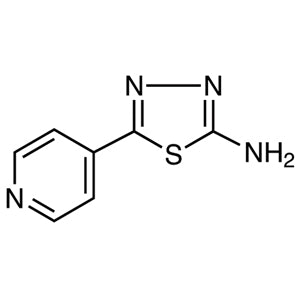
2-Amino-5-(4-pyridyl)-1,3,4-thiadiazole TCI A3038
Regular price From Rp 1.167.600,00Regular price -
2-(2-Pyridyl)benzo[b]thiophene TCI B3561
Regular price Rp 3.340.050,00Regular price -
2-(2-Pyridyl)benzoxazole TCI P2098
Regular price Rp 1.431.150,00Regular price -
1-(4-Pyridyl)piperazine TCI P1863
Regular price Rp 1.008.000,00Regular price -
4-(4-Pyridyl)morpholine TCI P1646
Regular price From Rp 3.605.700,00Regular price -
2-(2-Pyridyl)benzimidazole TCI P1599
Regular price Rp 1.829.100,00Regular price -
1-(2-Pyridyl)piperazine TCI P1033
Regular price Rp 980.700,00Regular price -
trans-1-Methyl-4-carboxy-5-(3-pyridyl)-2-pyrrolidinone TCI M1053
Regular price From Rp 505.050,00Regular price
![38210-35-4 2-(2-Pyridyl)benzo[b]thiophene - AMI Scientific](http://amiscientific.com/cdn/shop/files/TCI2510B3561.jpg?v=1767090055&width=533)


