1-(2-Pyridyl)piperazine (TCI P1033) is a heterocyclic compound made of a piperazine ring attached to the 2-position of a pyridine ring. One of the piperazine nitrogens is a free secondary amine. That makes the molecule nucleophilic and easy to modify. Laboratories use it as a building block in medicinal chemistry and organic synthesis. Arylpiperazine structures like this one appear often in active molecules that act on the central nervous system. This makes it a familiar starting point for researchers who design and prepare new compounds.
Researchers choose this compound because it has two kinds of nitrogen with different properties. The pyridine nitrogen is aromatic and can act as a hydrogen-bond acceptor or bind to metals. The secondary nitrogen on the piperazine ring is reactive enough for alkylation, acylation, reductive amination and sulfonamide formation. Because of this, a chemist can attach the whole pyridylpiperazine fragment to a target molecule in a single step. This is especially useful in structure–activity relationship studies and in building compound libraries, where many related analogues need to be made efficiently from one shared starting material.
In Indonesia, this product is relevant to pharmaceutical, medicinal chemistry and organic synthesis laboratories at universities and research institutions. Researchers can use it to design and prepare new derivatives for structure–activity studies, to set up teaching and research reactions on amine chemistry, and to support graduate projects focused on heterocyclic synthesis. As a TCI building block, it suits laboratories that need a consistent starting material for repeated synthetic work and for comparing analogues across a series of experiments.
Related TCI products
- TCI P1863 1008-91-9 1-(4-Pyridyl)piperazine
- TCI B3561 38210-35-4 2-(2-Pyridyl)benzo[b]thiophene
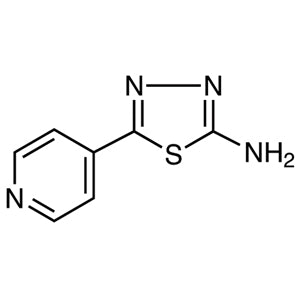
- TCI A3038 2002-04-2 2-Amino-5-(4-pyridyl)-1,3,4-thiadiazole
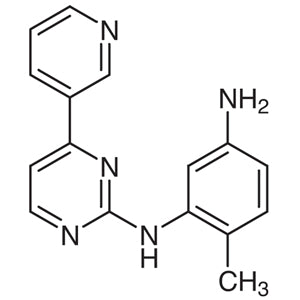
- TCI A2308 152460-10-1 2-(5-Amino-2-methylanilino)-4-(3-pyridyl)pyrimidine
- TCI P2098 32959-62-9 2-(2-Pyridyl)benzoxazole
- TCI P1646 2767-91-1 4-(4-Pyridyl)morpholine
- Medicinal chemistry building block: the arylpiperazine core is common in active molecules targeting the central nervous system, so it is a useful starting point for new candidate structures.
- Structure–activity relationship studies: the reactive secondary amine lets researchers attach the pyridylpiperazine fragment to many scaffolds in one step and compare how analogues behave.
- Compound library synthesis: its predictable reactivity in alkylation, acylation and reductive amination supports parallel preparation of many related derivatives from one shared building block.
- Sulfonamide and amide formation: the nucleophilic piperazine nitrogen reacts readily with sulfonyl and acyl reagents, which makes it practical for adding functional groups in organic synthesis.
- Coordination and ligand studies: the aromatic pyridine nitrogen can bind metals or accept hydrogen bonds, which makes the molecule interesting for exploring ligand design and molecular interactions.
| Brand | TCI (product code P1033) |
|---|---|
| CAS number | 34803-66-2 |
| Molecular formula | — |
| Purity | — |
| Category | Chemistry > Building Blocks > Heterocyclic Building Blocks |
| Pack sizes | as listed in the available options on the product page |
| Physical form | see the TCI product label and Safety Data Sheet |
| Storage | follow the conditions on the TCI label and Safety Data Sheet |
Keep 1-(2-Pyridyl)piperazine in its original, tightly closed container in a cool, dry and well-ventilated place, away from direct sunlight, heat sources and incompatible substances such as strong oxidizing agents and acids. Follow any specific storage temperature or inert-atmosphere instructions on the TCI label. Handle it in a fume hood while wearing gloves, safety glasses and a lab coat. Avoid breathing in vapours or dust and avoid contact with skin and eyes. Read the Safety Data Sheet before use, and dispose of waste according to institutional and local regulations.
—
Produk Terkait
-
1-(4-Pyridyl)piperazine TCI P1863
Regular price Rp 1.008.000,00Regular price -
2-(2-Pyridyl)benzo[b]thiophene TCI B3561
Regular price Rp 3.340.050,00Regular price -
2-Amino-5-(4-pyridyl)-1,3,4-thiadiazole TCI A3038
Regular price From Rp 1.167.600,00Regular price -
2-(5-Amino-2-methylanilino)-4-(3-pyridyl)pyrimidine TCI A2308
Regular price From Rp 505.050,00Regular price -
2-(2-Pyridyl)benzoxazole TCI P2098
Regular price Rp 1.431.150,00Regular price -
4-(4-Pyridyl)morpholine TCI P1646
Regular price From Rp 3.605.700,00Regular price -
2-(2-Pyridyl)benzimidazole TCI P1599
Regular price Rp 1.829.100,00Regular price -
trans-1-Methyl-4-carboxy-5-(3-pyridyl)-2-pyrrolidinone TCI M1053
Regular price From Rp 505.050,00Regular price

![38210-35-4 2-(2-Pyridyl)benzo[b]thiophene - AMI Scientific](http://amiscientific.com/cdn/shop/files/TCI2510B3561.jpg?v=1767090055&width=533)