

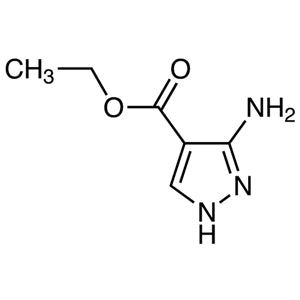
Ethyl 3-Aminopyrazole-4-carboxylate is a chemical compound widely used in organic synthesis reactions. It serves as a key building block in the development of complex molecules, particularly in the fields of pharmaceuticals, pesticides, and industrial chemicals. Its heterocyclic structure, consisting of a pyrazole ring and a carboxylate group attached to an ethyl chain, makes it a versatile intermediate in synthetic pathways. In laboratory settings, this compound is essential for constructing more complex molecular frameworks through substitution or condensation reactions.
This compound is valued for its chemical stability under controlled conditions and its ability to dissolve in polar organic solvents such as ethyl acetate and acetone. Its high reactivity, driven by the presence of an amino group, allows it to participate in a wide range of chemical transformations. The polarity of the molecule and its functional groups make it a preferred choice for researchers aiming to develop new compounds with specific biological or chemical properties.
In Indonesian laboratories, Ethyl 3-Aminopyrazole-4-carboxylate is a crucial reagent for organic chemistry, pharmaceutical, and chemical research. It is commonly used in academic and research institutions to support the synthesis of novel compounds. Its availability and chemical properties make it a reliable material for both teaching and experimental purposes in the chemical sciences.
Related TCI products
- Organic synthesis is a primary application where this compound is used to build complex molecular structures through various reaction mechanisms.
- Pharmaceutical research benefits from its role as a building block in the development of new drug molecules and active pharmaceutical ingredients.
- Pesticide formulation relies on this compound for the synthesis of compounds with specific biological activity against pests and pathogens.
- Industrial chemical production utilizes its reactivity and stability to create a wide range of chemical products.
- Academic research in chemistry and pharmacology frequently incorporates this compound for teaching and experimental studies.
| Brand | TCI |
|---|---|
| CAS number | 6994-25-8 |
| Molecular formula | — |
| Purity | — |
| Category | Chemistry > Building Blocks > Heterocyclic Building Blocks |
| Pack sizes | Available in various quantities as per supplier specifications |
| Physical form | Solid or crystalline, depending on the batch |
| Storage | Requires controlled temperature and humidity conditions |
Ethyl 3-Aminopyrazole-4-carboxylate should be stored in a cool, dry place away from direct sunlight and sources of heat. It is recommended to keep the compound in airtight containers to prevent moisture absorption and maintain its chemical integrity. Due to its polar nature and reactivity, it is important to handle the compound with appropriate personal protective equipment, such as gloves and safety goggles. Storage should be in a well-ventilated area to minimize exposure to vapors. Avoid contact with incompatible materials to ensure safe handling and long-term stability.
—
Produk Terkait
-
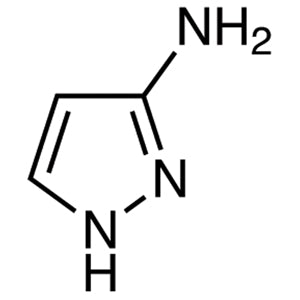
3-Aminopyrazole TCI A1859
Regular price From Rp 1.326.150,00Regular price -
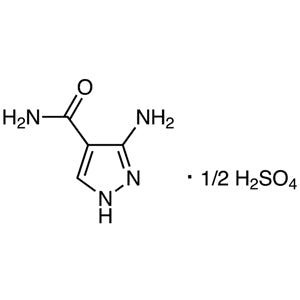
3-Aminopyrazole-4-carboxamideHemisulfate TCI A1532
Regular price Rp 584.850,00Regular price -
4-Aminopyrazolo[3,4-d]pyrimidine TCI A1041
Regular price From Rp 505.050,00Regular price -
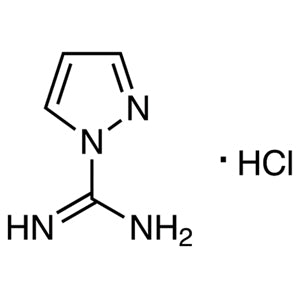
1-AmidinopyrazoleHydrochloride TCI A2055
Regular price From Rp 769.650,00Regular price -
Methyl3-Aminopyrazine-2-carboxylate TCI A1186
Regular price Rp 477.750,00Regular price -
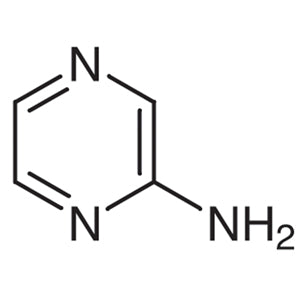
2-Aminopyrazine TCI A0989
Regular price From Rp 823.200,00Regular price -
3-Aminopyrazine-2-carboxylicAcid TCI A0848
Regular price From Rp 1.273.650,00Regular price -
tert-Butyl1-Oxa-6-azaspiro[2.5]octane-6-carboxylate TCI B5501
Regular price From Rp 3.021.900,00Regular price
![2380-63-4 4-Aminopyrazolo[3,4-d]pyrimidine - AMI Scientific](http://amiscientific.com/cdn/shop/files/TCI2510A1041.jpg?v=1767080566&width=533)


![147804-30-6 tert-Butyl 1-Oxa-6-azaspiro[2.5]octane-6-carboxylate - AMI Scientific](http://amiscientific.com/cdn/shop/files/TCI2510B5501_08674994-ba62-46fc-acd1-54c812460ed8.jpg?v=1767862194&width=533)