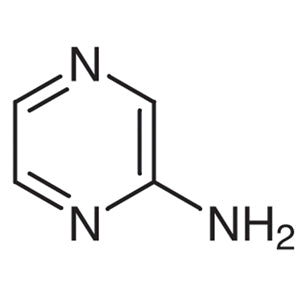
2-Aminopyrazine is a chemical compound classified under the heterocyclic category, commonly used as a building block in the synthesis of complex molecules. This compound is derived from the pyrazine ring with an amino group at the 2-position, providing it with high reactivity. In laboratory settings, it plays a crucial role in organic synthesis and pharmaceutical research, where it serves as a versatile intermediate. Its structural versatility allows chemists to create a wide range of derivatives with specific functional groups, making it an essential tool for molecular design.
The compound exhibits chemical stability under controlled conditions but remains highly reactive towards acids, bases, and organic solvents. This reactivity makes it ideal for substitution and coupling reactions, where precise control over reaction conditions is necessary. Its ability to participate in various reaction mechanisms, such as electrophilic and nucleophilic attacks, further enhances its utility. These properties make 2-Aminopyrazine a preferred choice for researchers seeking to develop new compounds with specific biological or industrial applications.
In Indonesian laboratories, 2-Aminopyrazine is widely used in pharmaceutical, organic chemistry, and industrial chemical research. It supports the development of new compounds with potential medical or industrial applications. Its availability and quality ensure that research activities in these fields can proceed with confidence and precision. The compound is a key component in the advancement of chemical innovation within the Indonesian scientific community.
Related TCI products
- TCI A1186 16298-03-6 Methyl 3-Aminopyrazine-2-carboxylate
- TCI A0848 5424-01-1 3-Aminopyrazine-2-carboxylic Acid
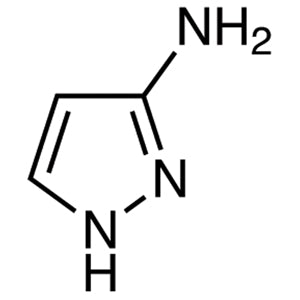
- TCI A1859 1820-80-0 3-Aminopyrazole
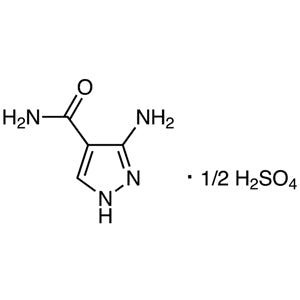
- TCI A1532 27511-79-1 3-Aminopyrazole-4-carboxamide Hemisulfate
- TCI A1041 2380-63-4 4-Aminopyrazolo[3,4-d]pyrimidine
- TCI E0766 6994-25-8 Ethyl 3-Aminopyrazole-4-carboxylate
- Organic synthesis: 2-Aminopyrazine is widely used in the synthesis of complex organic molecules due to its reactivity and structural versatility.
- Pharmaceutical research: It serves as a building block for the development of new drugs and medicinal compounds.
- Heterocyclic chemistry: Its pyrazine ring structure makes it valuable in the study and synthesis of heterocyclic compounds.
- Industrial chemical development: It is used in the production of various industrial chemicals requiring precise molecular design.
- Analytical chemistry: It is utilized as a standard or reagent in analytical procedures for compound identification and quantification.
| Brand | TCI |
|---|---|
| CAS number | 5049-61-6 |
| Molecular formula | — |
| Purity | — |
| Category | Chemistry > Building Blocks > Heterocyclic Building Blocks |
| Pack sizes | Available in various quantities as per supplier specifications |
| Physical form | Solid |
| Storage | Store in a cool, dry place away from light and moisture |
2-Aminopyrazine should be stored in a cool, dry place, away from direct light and moisture to maintain its chemical stability. It is recommended to use airtight containers made of glass or polyethylene to prevent contamination and degradation. Due to its reactivity, it should be handled with care, using appropriate personal protective equipment such as gloves and safety goggles. It is important to avoid exposure to strong acids, bases, and organic solvents to prevent unwanted chemical reactions. Proper ventilation should be maintained in the laboratory when handling this compound to ensure a safe working environment. Always follow standard laboratory safety protocols to minimize risks associated with its handling and storage.
—
Produk Terkait
-
Methyl3-Aminopyrazine-2-carboxylate TCI A1186
Regular price Rp 530.250,00Regular priceRp 386.400,00Sale price Rp 530.250,00 -
3-Aminopyrazine-2-carboxylicAcid TCI A0848
Regular price Rp 1.326.150,00Regular priceRp 942.900,00Sale price Rp 1.326.150,00 -
3-Aminopyrazole TCI A1859
Regular price Rp 1.378.650,00Regular priceRp 979.650,00Sale price Rp 1.378.650,00 -
3-Aminopyrazole-4-carboxamideHemisulfate TCI A1532
Regular price Rp 637.350,00Regular priceRp 460.950,00Sale price Rp 637.350,00 -
4-Aminopyrazolo[3,4-d]pyrimidine TCI A1041
Regular price Rp 557.550,00Regular priceRp 405.300,00Sale price Rp 557.550,00 -
Ethyl3-Aminopyrazole-4-carboxylate TCI E0766
Regular price Rp 1.483.650,00Regular priceRp 1.053.150,00Sale price Rp 1.483.650,00 -
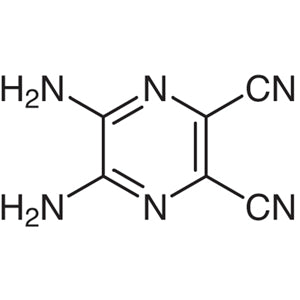
5,6-Diamino-2,3-dicyanopyrazine TCI D2270
Regular price Rp 10.627.050,00Regular priceRp 7.446.600,00Sale price Rp 10.627.050,00 -
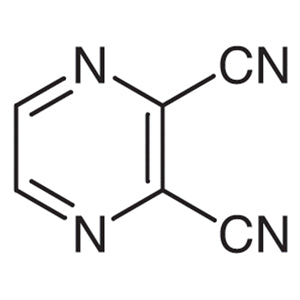
2,3-Dicyanopyrazine TCI D1751
Regular price Rp 1.881.600,00Regular priceRp 1.331.400,00Sale price Rp 1.881.600,00


![2380-63-4 4-Aminopyrazolo[3,4-d]pyrimidine - AMI Scientific](http://amiscientific.com/cdn/shop/files/TCI2510A1041.jpg?v=1767080566&width=533)