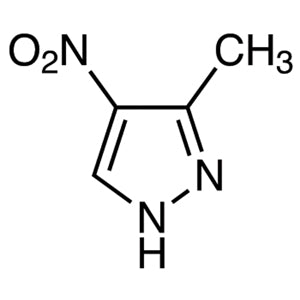
3-Methyl-4-nitropyrazole is a chemical compound widely used in organic reactions for the synthesis of heterocyclic compounds. It serves as a versatile building block in laboratory settings, enabling the creation of complex molecular structures with potential applications in various scientific fields. Its unique chemical structure, featuring a pyrazole ring modified with a methyl and nitro group, makes it a valuable reagent for chemists seeking to explore new synthetic pathways. This compound is particularly useful in the development of pharmaceuticals, advanced materials, and organic chemistry research due to its reactivity and functional group versatility.
The compound exhibits favorable solubility in organic solvents such as ethyl acetate and methanol, which enhances its usability in a wide range of chemical processes. Its ability to participate in substitution and electrophilic reactions makes it a preferred choice for researchers aiming to manipulate molecular structures with precision. Additionally, its stability under certain conditions allows for consistent performance in laboratory experiments, making it a reliable component in chemical synthesis workflows. These properties collectively contribute to its popularity among scientists working with heterocyclic compounds.
In Indonesian laboratories, 3-Methyl-4-nitropyrazole is commonly utilized in organic chemistry research, particularly in the synthesis of new compounds with potential medical or industrial applications. It is frequently found in projects that require the development of complex molecular structures, supporting both academic and industrial research initiatives. Its role in advancing chemical innovation makes it an essential material for researchers in the field.
- Organic synthesis of heterocyclic compounds due to its reactive pyrazole core and functional groups.
- Development of pharmaceuticals and medicinal chemistry applications through structural modification.
- Creation of advanced materials with tailored chemical properties for industrial applications.
- Research in chemical reactivity and reaction mechanisms involving electrophilic and substitution reactions.
- Support for academic and industrial projects requiring complex molecular building blocks.
| Brand | TCI |
|---|---|
| CAS number | 5334-39-4 |
| Molecular formula | — |
| Purity | — |
| Category | Chemistry > Building Blocks > Heterocyclic Building Blocks |
| Pack sizes | — |
| Physical form | — |
| Storage | Store in a cool, dry place away from light and incompatible materials. |
This compound should be stored in a cool, dry environment, away from direct sunlight and sources of heat. It is recommended to keep it in a sealed container to prevent exposure to moisture and air. Due to its chemical nature, it should be stored separately from incompatible substances such as strong oxidizers or acids. In laboratory settings, it is important to handle the material with appropriate personal protective equipment, including gloves and safety goggles, to ensure safe handling. Proper ventilation should be maintained when working with this compound to minimize inhalation risks. Always follow standard chemical safety protocols to ensure a safe and controlled working environment.
—
Produk Terkait
-
1-Nitropyrazole TCI N0965
Regular price From Rp 505.050,00Regular price -
3-Nitropyrazole TCI N0937
Regular price From Rp 1.246.350,00Regular price -
4-Nitropyrazole TCI N0862
Regular price From Rp 1.510.950,00Regular price -
3,5-Dimethyl-4-nitropyrazole TCI D4425
Regular price From Rp 1.035.300,00Regular price -
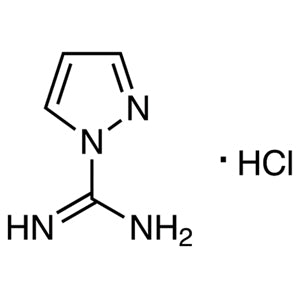
1-AmidinopyrazoleHydrochloride TCI A2055
Regular price From Rp 769.650,00Regular price -
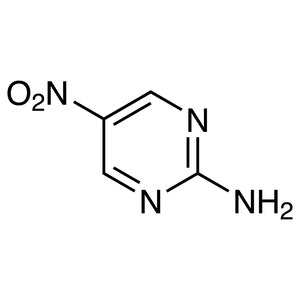
2-Amino-5-nitropyrimidine TCI A2031
Regular price Rp 2.332.050,00Regular price -
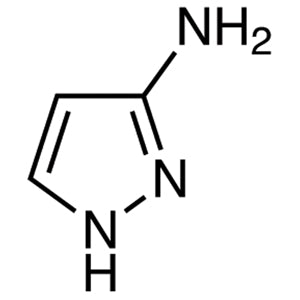
3-Aminopyrazole TCI A1859
Regular price From Rp 1.326.150,00Regular price -
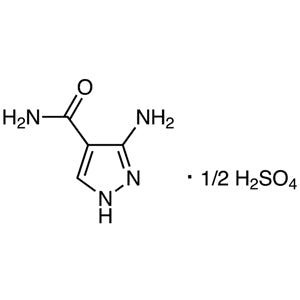
3-Aminopyrazole-4-carboxamideHemisulfate TCI A1532
Regular price Rp 584.850,00Regular price