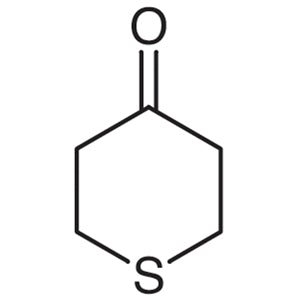
4-Oxothiane from TCI, also known as tetrahydro-4H-thiopyran-4-one, is a six-membered heterocyclic ketone with one sulfur atom in its ring. It is a widely used heterocyclic building block in medicinal chemistry and organic synthesis, where it serves to introduce the thiane ring into target molecules. The carbonyl group at the 4-position is the main reactive site. The ring sulfur can be oxidized to change the polarity and solubility of the final compounds developed in the laboratory, which makes this compound a flexible starting point for designing new synthetic routes.
The appeal of 4-oxothiane comes from its two reactive centres, which complement each other. The cyclic ketone can undergo reductive amination, Grignard addition, Wittig olefination, condensation reactions and spirocycle formation, and the sulfur atom can be oxidized to a sulfoxide or a sulfone. The thiane ring is often used as a bioisostere of cyclohexane, piperidine or tetrahydropyran rings, so medicinal chemists can use it to adjust lipophilicity, metabolic behaviour and how a molecule interacts with its biological target. Its rigid ring shape also helps chemists design molecules with a defined three-dimensional orientation.
In Indonesia, 4-oxothiane is used by medicinal chemistry laboratories, university organic synthesis research groups and pharmaceutical research and development teams working on new bioactive compounds. Researchers use it to build compound libraries, run structure-activity relationship studies, and prepare intermediates for multi-step syntheses. Because it comes from TCI, a brand trusted in research laboratories, local teams can expect consistent material quality from batch to batch. This consistency matters for experiments that need to be reproduced and for method development projects that run over long periods.
- Reductive amination: the ketone at the 4-position reacts readily with amines, so researchers can make 4-aminothiane derivatives, which are useful scaffolds in medicinal chemistry programs.
- Grignard and organometallic addition: the cyclic carbonyl accepts carbon nucleophiles and gives tertiary alcohols on the thiane ring, which extends the structural diversity of synthesized compounds.
- Wittig olefination and condensation reactions: the ketone can be converted into exocyclic alkenes or condensed products, which gives chemists more ways to build complex heterocyclic target molecules.
- Spirocyclic compound synthesis: the rigid six-membered ring with a reactive carbonyl is a good starting point for spirocycles, which give target molecules a distinct three-dimensional shape.
- Bioisostere design and sulfur oxidation studies: the thiane ring can replace cyclohexane, piperidine or tetrahydropyran rings, and oxidizing the sulfur to a sulfoxide or sulfone lets researchers fine-tune polarity and solubility.
| Brand | TCI (product code O0112) |
|---|---|
| CAS number | 1072-72-6 |
| Molecular formula | — |
| Purity | — |
| Category | Chemistry > Building Blocks > Heterocyclic Building Blocks |
| Pack sizes | available in the pack sizes supplied by TCI; please contact AMI Scientific to confirm current options |
| Physical form | — |
| Storage | keep in a tightly closed original container, and follow the storage conditions stated on the TCI label and Safety Data Sheet |
- Synonym: tetrahydro-4H-thiopyran-4-one
Store 4-oxothiane in its original, tightly sealed container in a cool, dry, well-ventilated area, away from heat, direct sunlight and ignition sources. Keep it apart from strong oxidizing agents, because the sulfur atom in the ring is prone to oxidation. Once a container has been opened, reseal it promptly to limit exposure to moisture and air. Use a fume hood when handling the material and wear standard personal protective equipment, including safety glasses, chemical-resistant gloves and a lab coat. Avoid breathing vapours and avoid contact with skin and eyes. Always read the TCI Safety Data Sheet before use, and dispose of waste in line with your institution's chemical waste procedures.
—
Produk Terkait
-
TCI B5774 5,10-Bis(4,4,5,5-tetramethyl-1,3,2-dioxaborolan-2-yl)naphtho[1,2-c:5,6-c']bis([1,2,5]oxadiazole)
Regular price Rp 10.255.350,00Regular price -
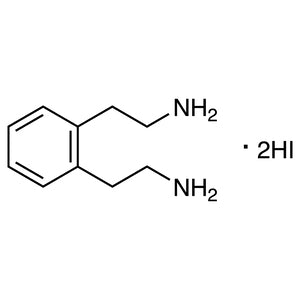
Dihydroiodide TCI B6569
Regular price From Rp 1.936.200,00Regular price -
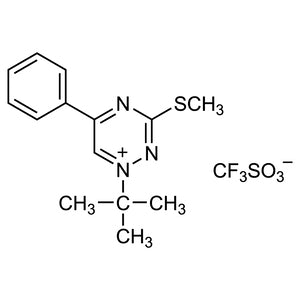
Trifluoromethanesulfonate TCI B7003
Regular price From Rp 1.936.200,00Regular price
![5,10-Bis(4,4,5,5-tetramethyl-1,3,2-dioxaborolan-2-yl)naphtho[1,2-c:5,6-c']bis([1,2,5]oxadiazole) - TCI B5774 - AMI Scientific](http://amiscientific.com/cdn/shop/files/TCI2510B5774.jpg?v=1769180228&width=533)