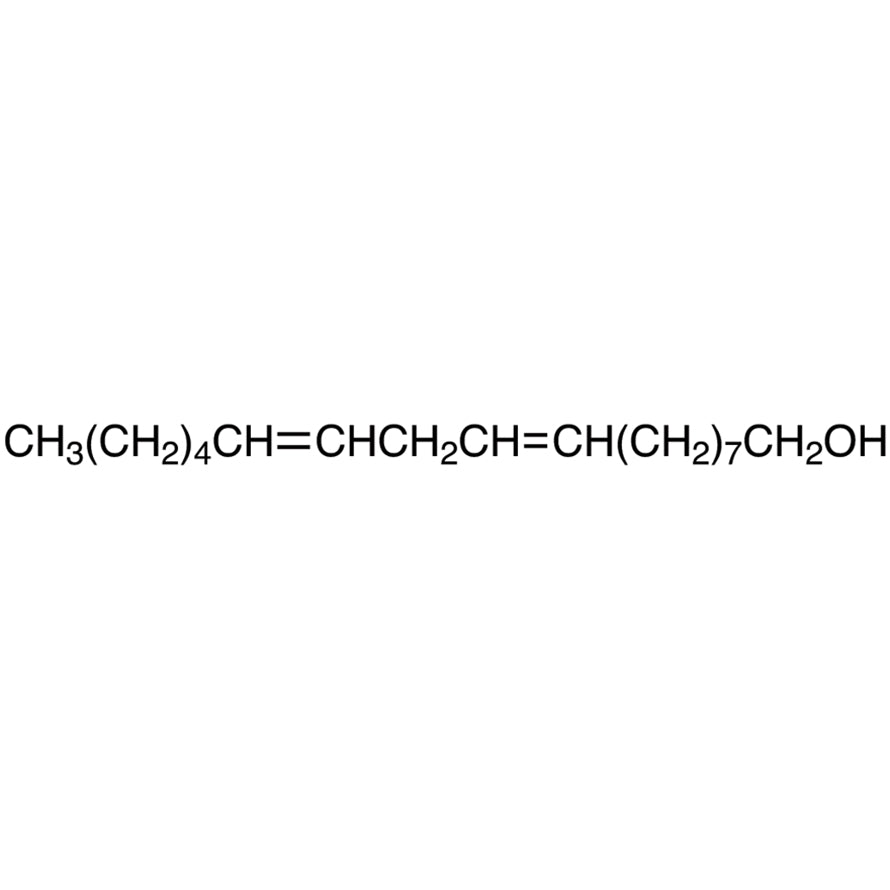
TCI O0225 506-43-4 cis,cis-9,12-Octadecadien-1-ol is a chemical compound widely used in organic synthesis as a building block in laboratory settings. It serves as a foundational material for creating more complex organic molecules through various chemical reactions. This compound is particularly valued for its versatility and stability, making it a key component in both academic and industrial research. Its molecular structure, featuring two alkyl groups connected by a hydrocarbon chain, allows for a range of chemical modifications, enhancing its utility in synthetic chemistry.
The compound’s chemical properties make it a preferred choice for laboratory applications. It exhibits good solubility in organic solvents, which simplifies processing and purification steps. Its non-reactive nature under normal conditions ensures safety and reliability during experiments. Additionally, its ability to undergo substitution and addition reactions allows chemists to tailor its structure for specific applications. These characteristics make it a reliable and efficient material for synthetic processes in controlled environments.
In Indonesian laboratories, this compound is commonly used in organic chemistry research, especially in educational institutions and research centers. It plays a vital role in the development of new chemical products and the study of molecular structures. Its availability and consistent performance make it a go-to material for chemists working on complex synthesis projects. The compound’s reliability and adaptability contribute to its widespread use in both teaching and research settings.
- Organic synthesis is a primary application where this compound is used to build complex molecules through controlled chemical reactions.
- Research in chemical development benefits from its stability and reactivity, enabling the creation of new compounds for pharmaceutical or industrial use.
- Educational institutions utilize it for teaching synthetic chemistry techniques, providing students with hands-on experience in molecular construction.
- Industrial laboratories incorporate it into the production of specialty chemicals, leveraging its chemical versatility for product innovation.
- Analytical chemistry applications take advantage of its solubility and reactivity for testing and modifying molecular structures in various experiments.
| Brand | TCI |
|---|---|
| CAS number | 506-43-4 |
| Molecular formula | — |
| Purity | — |
| Category | Chemistry > Building Blocks > Non-Heterocyclic Building Blocks |
| Pack sizes | Available in various quantities as per supplier specifications |
| Physical form | Liquid |
| Storage | Store in a cool, dry place away from direct sunlight |
This compound should be stored in a cool, dry environment, away from direct sunlight and sources of heat. It is recommended to use airtight containers to prevent exposure to moisture and air, which could affect its stability. Since it is a liquid, it should be kept in properly sealed glass or plastic containers to avoid spills and contamination. In laboratory settings, it is important to handle it with care, using appropriate personal protective equipment such as gloves and safety goggles. Due to its non-reactive nature, it is generally safe to handle under standard laboratory conditions, but proper ventilation should be maintained to ensure a safe working environment.
—
Produk Terkait
-
TCI B5774 5,10-Bis(4,4,5,5-tetramethyl-1,3,2-dioxaborolan-2-yl)naphtho[1,2-c:5,6-c']bis([1,2,5]oxadiazole)
Regular price Rp 10.255.350,00Regular price -
Dihydroiodide TCI B6569
Regular price From Rp 1.936.200,00Regular price -
Trifluoromethanesulfonate TCI B7003
Regular price From Rp 1.936.200,00Regular price
![5,10-Bis(4,4,5,5-tetramethyl-1,3,2-dioxaborolan-2-yl)naphtho[1,2-c:5,6-c']bis([1,2,5]oxadiazole) - TCI B5774 - AMI Scientific](http://amiscientific.com/cdn/shop/files/TCI2510B5774.jpg?v=1769180228&width=533)