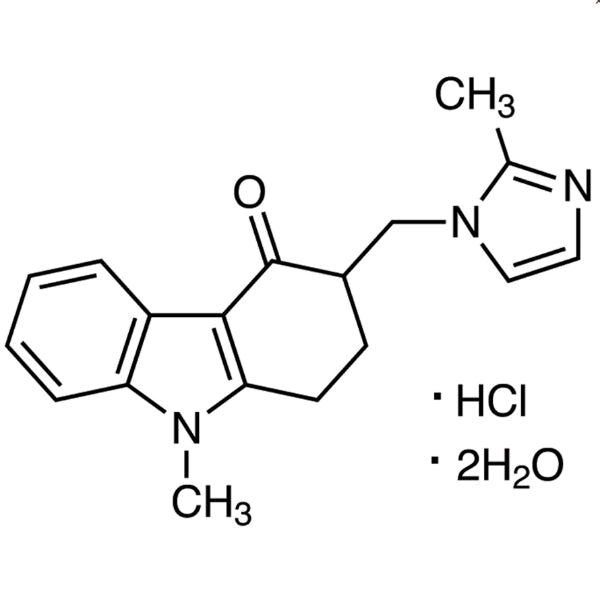
Ondansetron Hydrochloride Dihydrate is a chemical compound widely utilized in pharmaceutical research and biochemical experiments. It plays a crucial role in laboratory settings where the study of nausea and vomiting mechanisms is required, particularly in post-surgical or chemotherapy-related research. This compound is essential for understanding the pharmacological effects of drugs on the human body and their interaction with the central nervous system. Its presence in experimental studies helps researchers evaluate the efficacy and side effects of various medications, making it a fundamental reagent in pharmacological and biochemical investigations.
The compound is known for its chemical stability and solubility in organic solvents such as ethyl acetate and acetone, which makes it highly suitable for a range of chemical reactions and analytical procedures. These properties ensure consistent performance in laboratory experiments, allowing for accurate and reproducible results. Additionally, its high purity and well-defined chemical structure contribute to its reliability in research applications. These characteristics make it a preferred choice for scientists conducting experiments that require precision and consistency.
In Indonesian laboratories, Ondansetron Hydrochloride Dihydrate is commonly used by researchers in pharmacology, biochemistry, and health sciences. Its application is widespread in both academic and industrial research settings, where it supports the development of new therapeutic strategies and the evaluation of existing treatments. The compound’s availability and reliability have made it a go-to material for many research institutions in Indonesia, facilitating high-quality scientific work.
- Pharmacological research on antiemetic effects in post-operative and chemotherapy patients, due to its well-documented mechanism of action and stability in experimental conditions.
- Biochemical studies involving the central nervous system and gastrointestinal tract, as it interacts with serotonin receptors and influences neurotransmission pathways.
- Drug development and screening programs, where its chemical properties allow for consistent performance in assays measuring drug efficacy and toxicity.
- Clinical research applications in health sciences, supporting investigations into nausea management and the pharmacokinetics of antiemetic drugs.
- Analytical chemistry experiments requiring a stable and soluble reagent for chromatographic and spectroscopic analyses, ensuring accurate data collection and interpretation.
| Brand | TCI |
|---|---|
| CAS number | 103639-04-9 |
| Molecular formula | — |
| Purity | — |
| Category | Life Science > Biochemicals and Reagents > Pharmaceutical Research Reagents |
| Pack sizes | Available in various quantities as per standard laboratory reagent packaging |
| Physical form | White crystalline powder |
| Storage | Store in a cool, dry place away from moisture and direct sunlight |
Ondansetron Hydrochloride Dihydrate should be stored in a cool, dry environment to maintain its chemical stability and prevent degradation. It is recommended to keep the compound in airtight containers to minimize exposure to moisture and air, which can affect its purity and effectiveness. Laboratory personnel should handle the material with care, using appropriate personal protective equipment such as gloves and safety goggles to ensure safety during handling. The compound is not classified as hazardous under standard laboratory conditions, but it should be stored separately from incompatible substances to avoid any potential chemical interactions. Proper labeling and storage practices are essential to maintain the integrity of the reagent and ensure safe usage in research settings.
—
Produk Terkait
-
TCI B5774 5,10-Bis(4,4,5,5-tetramethyl-1,3,2-dioxaborolan-2-yl)naphtho[1,2-c:5,6-c']bis([1,2,5]oxadiazole)
Regular price Rp 10.255.350,00Regular price -
Dihydroiodide TCI B6569
Regular price From Rp 1.936.200,00Regular price -
Trifluoromethanesulfonate TCI B7003
Regular price From Rp 1.936.200,00Regular price
![5,10-Bis(4,4,5,5-tetramethyl-1,3,2-dioxaborolan-2-yl)naphtho[1,2-c:5,6-c']bis([1,2,5]oxadiazole) - TCI B5774 - AMI Scientific](http://amiscientific.com/cdn/shop/files/TCI2510B5774.jpg?v=1769180228&width=533)