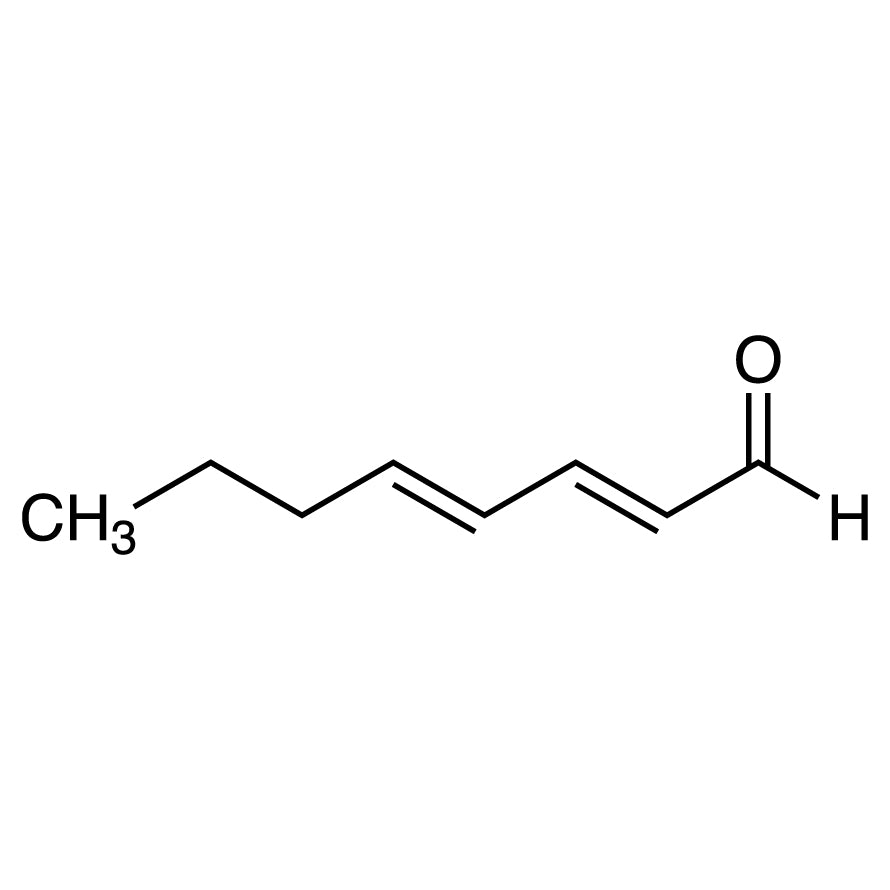
TCI O0685 (2E,4E)-Octa-2,4-dienal is an unsaturated aliphatic aldehyde with an eight-carbon chain. Its molecule has two trans-configured double bonds that are conjugated with the carbonyl group. As a non-heterocyclic building block, it combines the reactivity of an aldehyde with that of a conjugated diene system. Laboratories use it in organic synthesis. It also serves as a reference compound in aroma studies and lipid oxidation research, because related dienals form naturally when unsaturated fatty acids oxidize.
Researchers choose this compound because its conjugated α,β,γ,δ-unsaturated carbonyl system offers several reactive sites in one molecule. The aldehyde group can undergo Wittig reactions, aldol condensations, reductive amination, or reduction to the corresponding dienyl alcohol. The conjugated diene can act as a component in Diels–Alder reactions. Both double bonds have a defined (2E,4E) configuration, so researchers have better control over product geometry. This matters in the synthesis of polyenes, pheromones, and natural products that need a specific stereochemistry.
In Indonesia, this compound is useful to university organic synthesis laboratories, food and flavour research groups, and institutions that study lipid oxidation in edible oils and food products. Graduate students and researchers can use it as a starting material in multi-step synthetic routes, or as a reference standard when identifying oxidation products in chromatographic analyses. Its defined stereochemistry also makes it a good teaching and research model for showing how conjugated systems behave in classic carbon–carbon bond-forming reactions.
- Wittig and olefination reactions: the reactive aldehyde group lets researchers extend the conjugated chain while keeping the defined (2E,4E) geometry of the existing double bonds.
- Diels–Alder cycloadditions: the conjugated diene can react with suitable dienophiles to build six-membered carbocyclic rings, making the compound a useful model for cycloaddition studies.
- Synthesis of polyenes, pheromones, and natural products: the defined trans configuration of both double bonds helps researchers control product stereochemistry in targets that need a specific geometry.
- Lipid oxidation research: related dienals form naturally when unsaturated fatty acids oxidize, so this compound is a suitable reference for identifying and studying oxidation products in oils and foods.
- Aroma and flavour studies: as a reference compound, it helps analytical laboratories compare and characterise volatile aldehydes that contribute to the sensory profile of food samples.
| Brand | TCI |
|---|---|
| CAS number | 30361-28-5 |
| Molecular formula | — |
| Purity | — |
| Category | Chemistry > Building Blocks > Non-Heterocyclic Building Blocks |
| Pack sizes | available in the pack sizes offered by TCI; please confirm current options with AMI Scientific |
| Physical form | — |
| Storage | follow the conditions on the TCI label and Safety Data Sheet |
- Product code: O0685
Store (2E,4E)-Octa-2,4-dienal in its original tightly sealed container, following the storage conditions on the TCI label and Safety Data Sheet. Keep it away from heat, ignition sources, direct light, and oxidising agents. Conjugated unsaturated aldehydes can degrade when exposed to air, so close the container promptly after each use. Handle the material in a well-ventilated area or a fume hood. Wear suitable gloves, safety glasses, and a laboratory coat. Avoid contact with skin and eyes, and avoid breathing vapours. Dispose of waste according to local regulations and institutional laboratory procedures.
—
Produk Terkait
-
TCI B5774 5,10-Bis(4,4,5,5-tetramethyl-1,3,2-dioxaborolan-2-yl)naphtho[1,2-c:5,6-c']bis([1,2,5]oxadiazole)
Regular price Rp 10.255.350,00Regular price -
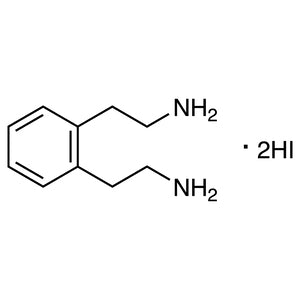
Dihydroiodide TCI B6569
Regular price From Rp 1.936.200,00Regular price -
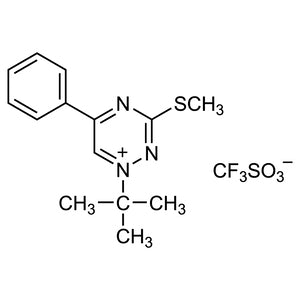
Trifluoromethanesulfonate TCI B7003
Regular price From Rp 1.936.200,00Regular price
![5,10-Bis(4,4,5,5-tetramethyl-1,3,2-dioxaborolan-2-yl)naphtho[1,2-c:5,6-c']bis([1,2,5]oxadiazole) - TCI B5774 - AMI Scientific](http://amiscientific.com/cdn/shop/files/TCI2510B5774.jpg?v=1769180228&width=533)