Sodium Arsenite is an inorganic compound of trivalent arsenic in the form of a sodium salt. In the TCI catalog it is listed under main-group element chemistry, within catalysis and inorganic chemistry. It has a fairly specific role in the laboratory. It serves as a reagent in analytical chemistry, as a reference material in arsenic contamination research, and as an agent that induces oxidative stress in cell biology research. This compound is highly toxic and carcinogenic, so only trained personnel should use it, under strict safety controls.
Laboratories choose sodium arsenite because trivalent arsenic has distinctive chemical and biological reactivity. In cell biology it is widely known as a trigger of cellular stress responses and stress granule formation. For this reason it is often used as a positive control in studies of cellular defence mechanisms. In analytical chemistry, the reducing properties of arsenite are used in several classical titration methods. The compound dissolves in water, which makes it easy to prepare solutions of controlled concentration for experimental work. These properties make it a well-characterised and reproducible choice for researchers who need a reliable source of trivalent arsenic.
In Indonesia, arsenic contamination of groundwater, mining areas and the wider environment is a relevant research topic. This makes sodium arsenite useful to university laboratories, environmental research institutions and analytical testing facilities. Researchers studying water quality, environmental toxicology and pollutant remediation may use it as a reference material. Cell and molecular biology groups use it in experiments on stress responses. In every case, it belongs in well-equipped laboratories that follow strict procedures for handling hazardous chemicals and disposing of toxic waste.
- Cellular stress induction: sodium arsenite is a well-known trigger of oxidative stress and stress granule formation, so it suits controlled cell biology experiments.
- Positive control in cell defence studies: its widely reported effect on cellular stress pathways makes it a dependable positive control when studying how cells protect themselves.
- Classical analytical titration: the reducing properties of arsenite are used in several established titration methods, which makes it a practical reagent for classical analytical chemistry.
- Arsenic contamination research: as a defined source of trivalent arsenic, it serves as a reference material for studying arsenic behaviour in water, soil and mining environments.
- Environmental toxicology studies: its water solubility allows precise preparation of test solutions, which supports reproducible studies of how arsenic species affect biological systems.
| Brand | TCI (product code O0715) |
|---|---|
| CAS number | 7784-46-5 |
| Molecular formula | — |
| Purity | — |
| Category | Chemistry > Catalysis and Inorganic Chemistry > Main-group Elements |
| Pack sizes | as listed in the TCI catalog; please confirm available packaging with our team |
| Physical form | water-soluble solid sodium salt |
| Storage | keep tightly sealed in a cool, dry, secured location for highly toxic substances |
Store sodium arsenite in its original, tightly closed container in a cool, dry, well-ventilated area. Keep it in a locked cabinet for toxic substances, away from acids, oxidising agents, food and drink. Only trained personnel should handle this compound, because it is highly toxic and carcinogenic. Always work inside a fume hood and wear chemical-resistant gloves, a laboratory coat and eye protection. Do not create dust and do not let the material touch your skin. Label all prepared solutions clearly. Collect arsenic-containing waste separately and dispose of it according to institutional and local hazardous waste regulations. Always read the supplier's Safety Data Sheet before use.
—
Produk Terkait
-
TCI B5774 5,10-Bis(4,4,5,5-tetramethyl-1,3,2-dioxaborolan-2-yl)naphtho[1,2-c:5,6-c']bis([1,2,5]oxadiazole)
Regular price Rp 10.307.850,00Regular priceRp 7.224.000,00Sale price Rp 10.307.850,00 -
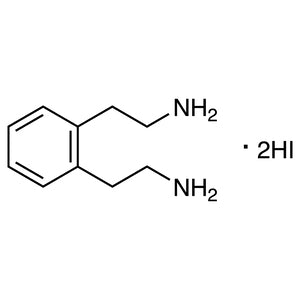
Dihydroiodide TCI B6569
Regular price From Rp 1.988.700,00Regular priceRp 1.405.950,00Sale price From Rp 1.988.700,00 -
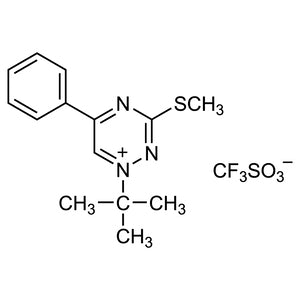
Trifluoromethanesulfonate TCI B7003
Regular price From Rp 1.988.700,00Regular priceRp 1.405.950,00Sale price From Rp 1.988.700,00
![TCI B5774 5,10-Bis(4,4,5,5-tetramethyl-1,3,2-dioxaborolan-2-yl)naphtho[1,2-c:5,6-c']bis([1,2,5]oxadiazole)](http://amiscientific.com/cdn/shop/files/TCI2510B5774_be9c865d-73eb-4f12-b46e-1d82cdef8e32.jpg?v=1792630870&width=533)
![5,10-Bis(4,4,5,5-tetramethyl-1,3,2-dioxaborolan-2-yl)naphtho[1,2-c:5,6-c']bis([1,2,5]oxadiazole) - TCI B5774 - AMI Scientific](http://amiscientific.com/cdn/shop/files/TCI2510B5774.jpg?v=1769180228&width=533)