4-Hydroxybenzenesulfonic Acid from TCI (product code P0104), also known as p-phenolsulfonic acid, is an aromatic compound with a phenolic hydroxyl group and a sulfonic acid group in the para positions of a benzene ring. In the laboratory it is used as a non-heterocyclic building block for synthesizing dyes, polymers, and other intermediates. It is also a well-known strong organic acid, used as a catalyst and as a component of electroplating solutions.
Chemists choose this material because it combines the strong acidity of a sulfonic acid group with the reactivity of a phenol. The sulfonic acid group makes the compound highly soluble in water and gives it strong acidic character. The phenolic hydroxyl group allows further reactions, such as condensation with aldehydes. Phenolsulfonic acid products like this one are often supplied as aqueous solutions. Check the label and the Certificate of Analysis for the exact form and concentration before you calculate reaction quantities, so your stoichiometry is based on the material you actually have.
In Indonesia, this material is relevant to research laboratories working in organic chemistry, polymer chemistry, and electrochemical engineering, including work on metal coatings such as tin plating. University teaching and research groups can use it to study aromatic substitution and condensation chemistry. Industrial and process-development laboratories can use it to test acid-catalyzed reactions and plating bath formulations. The reliable TCI catalog identity and CAS number 98-67-9 make it easy to document in research records and quality procedures.
Related TCI products
- TCI A0265 121-47-1 3-Aminobenzenesulfonic Acid
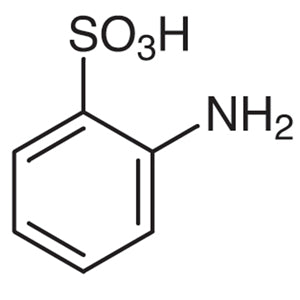
- TCI A0266 88-21-1 2-Aminobenzenesulfonic Acid
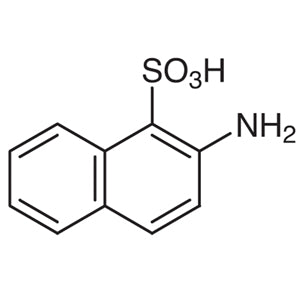
- TCI A0343 81-16-3 2-Amino-1-naphthalenesulfonic Acid
- TCI A0346 119-79-9 5-Amino-2-naphthalenesulfonic Acid
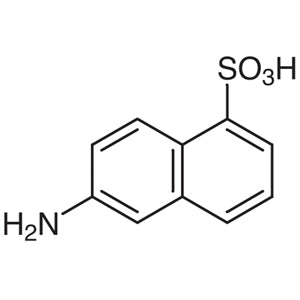
- TCI A0347 81-05-0 6-Amino-1-naphthalenesulfonic Acid
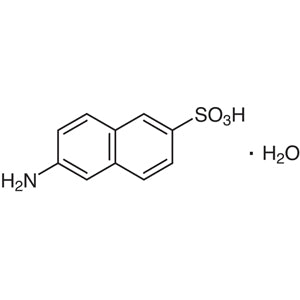
- TCI A0348 93-00-5 6-Amino-2-naphthalenesulfonic Acid Monohydrate
- Dye synthesis: the sulfonated aromatic ring and the reactive phenol group make it a useful non-heterocyclic building block for preparing water-soluble dyes and related colored intermediates.
- Polymer and resin research: its phenolic hydroxyl group can condense with aldehydes, so researchers can use it to build sulfonated phenolic polymers with improved water solubility.
- Acid catalysis: as a strong, water-soluble organic acid, it can catalyze acid-promoted reactions where a sulfonic acid catalyst is preferred over mineral acids.
- Electroplating solution development: it is known as a component of electroplating baths, which makes it relevant for laboratories developing and testing metal coatings such as tin plating.
- Synthesis of organic intermediates: having both sulfonic acid and phenol groups on one ring gives chemists two separate reactive sites for building more complex aromatic intermediates.
| Brand | TCI (product code P0104) |
|---|---|
| CAS number | 98-67-9 |
| Molecular formula | — |
| Purity | — |
| Category | Chemistry > Building Blocks > Non-Heterocyclic Building Blocks |
| Pack sizes | see the available options on the product listing |
| Physical form | often supplied as an aqueous solution; check the label and Certificate of Analysis for the exact form and concentration |
| Storage | follow the conditions on the product label and the Safety Data Sheet |
Keep the container tightly closed in a cool, dry, well-ventilated area, away from bases, strong oxidizing agents, and reactive metals. Keep the material in its original container or in a chemically resistant, acid-compatible container that is clearly labeled. As a strong acid, it can be corrosive to skin, eyes, and some metals. Wear chemical-resistant gloves, safety goggles, and a lab coat, and handle it in a fume hood or another well-ventilated area. Avoid breathing vapors or mists. Clean up spills promptly using suitable absorbent materials. Always read the Safety Data Sheet before use, and dispose of waste according to local regulations.
—
Produk Terkait
-
3-AminobenzenesulfonicAcid TCI A0265
Regular price From Rp 505.050,00Regular price -
2-AminobenzenesulfonicAcid TCI A0266
Regular price From Rp 769.650,00Regular price -
2-Amino-1-naphthalenesulfonicAcid TCI A0343
Regular price From Rp 477.750,00Regular price -
5-Amino-2-naphthalenesulfonicAcid TCI A0346
Regular price From Rp 717.150,00Regular price -
6-Amino-1-naphthalenesulfonicAcid TCI A0347
Regular price From Rp 955.500,00Regular price -
6-Amino-2-naphthalenesulfonicAcidMonohydrate TCI A0348
Regular price From Rp 1.405.950,00Regular price -
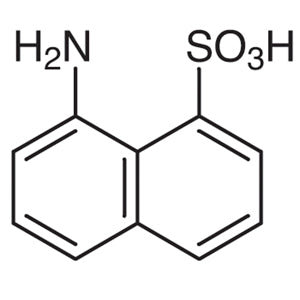
8-Amino-1-naphthalenesulfonicAcid TCI A0350
Regular price From Rp 1.008.000,00Regular price -
2-IodobenzenesulfonicAcid TCI I0758
Regular price Rp 3.100.650,00Regular price