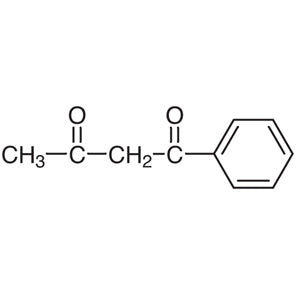
1-Phenyl-1,3-butanedione from TCI, also known as benzoylacetone, is an aromatic β-diketone. Its structure is a phenyl group attached to a 1,3-dicarbonyl chain. In organic chemistry laboratories it is a versatile non-heterocyclic building block, used mainly to build more complex molecular frameworks. The two carbonyl groups are separated by a single methylene carbon, which makes that central position fairly acidic and easy to work with. For this reason, researchers often use it as a starting material for synthesis, as a metal-chelating ligand, and as a model compound for studying keto-enol tautomerism.
Researchers choose this compound mainly for its characteristic β-diketone reactivity. In solution, the molecule exists in equilibrium between its keto and enol forms, and the enol form is stabilised by an intramolecular hydrogen bond. This behaviour makes it a useful subject for spectroscopic studies. The oxygen atoms of both carbonyl groups can bind metal ions in a bidentate fashion, forming stable chelate complexes. Because the phenyl group sits at only one end of the molecule, the structure is asymmetric, which gives researchers room to control regioselectivity in condensation and cyclisation reactions.
In Indonesian laboratories, 1-Phenyl-1,3-butanedione is typically found in university organic and inorganic chemistry research groups, pharmaceutical and fine-chemical development laboratories, and analytical teaching laboratories. Postgraduate researchers use it to prepare intermediates and metal complexes for thesis projects. Lecturers use it in instrumental analysis courses to demonstrate keto-enol equilibrium. Industrial R&D teams use it when they need a well-characterised dicarbonyl starting material from an established brand such as TCI, so results can be reproduced reliably from one batch to the next.
TCI brochures (PDF)
- Ligands 2025-12-01 · p. 18
Related TCI products
- TCI B4754 4023-81-8 1-(4-Bromophenyl)-1,3-butanedione
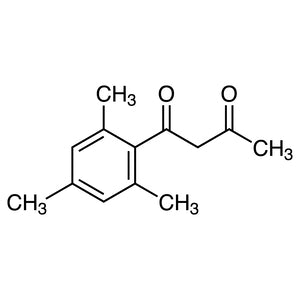
- TCI M1272 6450-57-3 1-(2-Mesitylene)-1,3-butanedione
- TCI D3179 495-71-6 1,4-Diphenyl-1,4-butanedione
- TCI D0258 933-52-8 Tetramethyl-1,3-cyclobutanedione [Precursor to Dimethyl Ketene]
- TCI B1065 1189-08-8 1,3-Butanediol Dimethacrylate (stabilized with MEHQ)
- TCI T3283 15191-68-1 4,4,4-Trifluoro-1-(4-methoxyphenyl)-1,3-butanedione
- Organic synthesis starting material: the acidic methylene position between the two carbonyl groups is easy to functionalise, so chemists can use it to build larger and more complex molecular frameworks.
- Metal chelation and coordination chemistry: both carbonyl oxygen atoms bind metal ions in a bidentate fashion, forming stable chelate complexes suitable for studies in coordination and inorganic chemistry.
- Keto-enol tautomerism studies: the compound exists in equilibrium between keto and enol forms, with the enol stabilised by an intramolecular hydrogen bond, which makes it a clear model system.
- Spectroscopic analysis and teaching: its tautomeric behaviour in solution gives distinct, observable features, so it works well for spectroscopy research and for demonstrations in instrumental analysis courses.
- Regioselective condensation and cyclisation reactions: the single phenyl group makes the molecule asymmetric, so researchers can explore and control regioselectivity when forming new ring systems and condensation products.
| Brand | TCI (product code P0160) |
|---|---|
| CAS number | 93-91-4 |
| Molecular formula | — |
| Purity | — |
| Category | Chemistry > Building Blocks > Non-Heterocyclic Building Blocks |
| Pack sizes | available pack sizes from TCI can be confirmed with AMI Scientific |
| Physical form | — |
| Storage | follow the conditions on the TCI product label and Safety Data Sheet |
- Synonym: Benzoylacetone
Store 1-Phenyl-1,3-butanedione in its original, tightly closed container in a cool, dry, well-ventilated area, away from direct sunlight, heat sources, and incompatible materials such as strong oxidising agents. Always follow the storage conditions given on the TCI label and Safety Data Sheet. Handle the compound in a fume hood or well-ventilated workspace, and wear suitable protective gloves, safety glasses, and a laboratory coat. Avoid inhaling dust or vapour and avoid contact with skin and eyes. Use clean, dry tools to keep the material free of contamination, label any secondary containers clearly, and dispose of waste according to local regulations and your institution's chemical waste procedures.
—
Produk Terkait
-
1-(4-Bromophenyl)-1,3-butanedione TCI B4754
Regular price From Rp 4.929.750,00Regular price -
1-(2-Mesitylene)-1,3-butanedione TCI M1272
Regular price From Rp 4.479.300,00Regular price -
1,4-Diphenyl-1,4-butanedione TCI D3179
Regular price Rp 3.021.900,00Regular price -
Tetramethyl-1,3-cyclobutanedione[PrecursortoDimethylKetene] TCI D0258
Regular price From Rp 610.050,00Regular price -
1,3-ButanediolDimethacrylate(stabilizedwithMEHQ) TCI B1065
Regular price From Rp 505.050,00Regular price -
4,4,4-Trifluoro-1-(4-methoxyphenyl)-1,3-butanedione TCI T3283
Regular price From Rp 2.359.350,00Regular price -
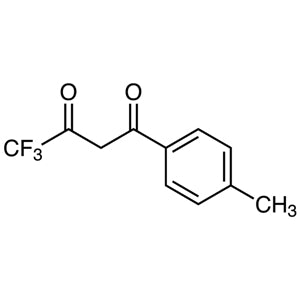
4,4,4-Trifluoro-1-(p-tolyl)-1,3-butanedione TCI T2997
Regular price From Rp 769.650,00Regular price -
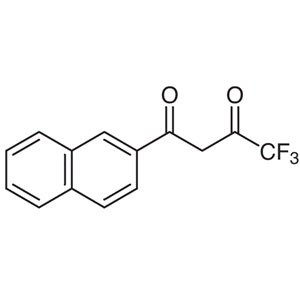
4,4,4-Trifluoro-1-(2-naphthyl)-1,3-butanedione TCI T1583
Regular price From Rp 1.060.500,00Regular price

![Tetramethyl-1,3-cyclobutanedione [Precursor to Dimethyl Ketene] (CAS 933-52-8) - TCI D0258 - AMI Scientific](http://amiscientific.com/cdn/shop/files/TCI2510D0258.jpg?v=1767101066&width=533)