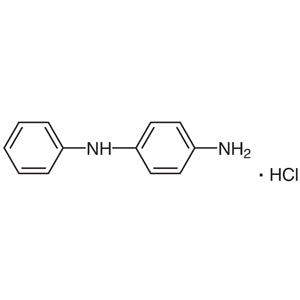
4-Aminodiphenylamine Hydrochloride is a chemical compound widely used in synthetic laboratory reactions, particularly in the synthesis of heterocyclic compounds and amino derivatives. Its molecular structure consists of two phenyl groups connected by an amine group, making it a versatile building block for creating compounds with specific biological activities. This compound is valued for its ability to participate in various chemical interactions, making it essential in both organic and pharmaceutical research. Due to its stability and controlled reactivity, it is a reliable choice for a range of chemical transformations, including substitution and condensation reactions.
The compound is known for its good solubility in organic solvents, which facilitates its use in purification and isolation processes. Its availability in dry crystalline form ensures ease of handling and storage, making it a practical option for laboratory use. The stability of 4-Aminodiphenylamine Hydrochloride under normal conditions further enhances its reliability in experimental settings. These properties make it a preferred material for researchers looking to explore complex molecular structures and develop new chemical compounds.
In Indonesian laboratories, 4-Aminodiphenylamine Hydrochloride is commonly used in organic chemistry research, especially in the development of pharmaceutical compounds and industrial chemicals. Local researchers frequently rely on this compound for experiments requiring a complex structural base. Its role in drug discovery and chemical synthesis underscores its importance in the scientific community. The compound's versatility and reliability make it a staple in both academic and industrial research environments.
- Organic synthesis applications benefit from 4-Aminodiphenylamine Hydrochloride due to its ability to participate in various chemical reactions and form complex molecular structures.
- Pharmaceutical research utilizes this compound to develop new drugs and medicinal compounds by leveraging its structural versatility and reactivity.
- Industrial chemical production incorporates this material for the synthesis of derivatives and compounds with specific functional properties.
- Analytical chemistry experiments use this compound as a reference standard for identifying and quantifying related chemical species in samples.
- Material science studies employ it to investigate the chemical behavior and reactivity of complex aromatic compounds in different environments.
| Brand | TCI |
|---|---|
| CAS number | 2198-59-6 |
| Molecular formula | — |
| Purity | — |
| Category | Chemistry > Building Blocks > Non-Heterocyclic Building Blocks |
| Pack sizes | Available in various quantities as per standard laboratory supply |
| Physical form | Dry crystalline powder |
| Storage | Store in a cool, dry place away from direct sunlight and moisture |
4-Aminodiphenylamine Hydrochloride should be stored in a cool, dry place, away from direct sunlight and moisture to maintain its chemical stability. It is recommended to use airtight containers to prevent exposure to humidity and air, which could affect its purity and reactivity. As a chemical compound, it should be handled with care in a well-ventilated laboratory environment to minimize inhalation risks. Proper personal protective equipment, such as gloves and safety goggles, should be worn when handling this material. Its crystalline form makes it easy to store and transport, but it should be kept out of reach of children and not mixed with incompatible substances. Regular inspection of storage conditions ensures the compound remains suitable for use in laboratory experiments.
—
Produk Terkait
-
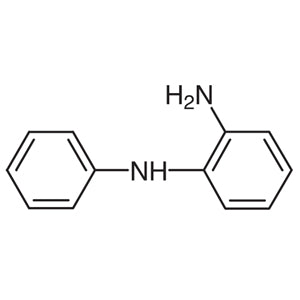
2-Aminodiphenylamine TCI A2129
Regular price From Rp 980.700,00Regular price -
4-Isopropylaminodiphenylamine TCI P0327
Regular price From Rp 477.750,00Regular price -
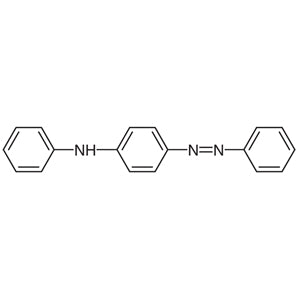
4-(Phenylazo)diphenylamine TCI P0146
Regular price From Rp 1.140.300,00Regular price -
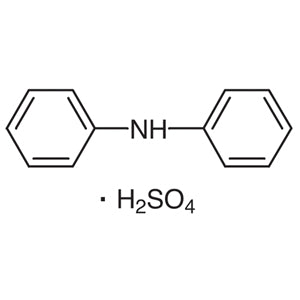
DiphenylamineSulfate TCI D0875
Regular price From Rp 1.590.750,00Regular price -
DiphenylamineHydrochloride TCI D0874
Regular price Rp 1.273.650,00Regular price -
2,4-Diaminodiphenylamine TCI D0087
Regular price From Rp 3.976.350,00Regular price -
4,4'-DiaminodiphenylamineSulfate TCI D0041
Regular price From Rp 1.829.100,00Regular price -
4-(2-Octylamino)diphenylamine TCI O0166
Regular price From Rp 477.750,00Regular price