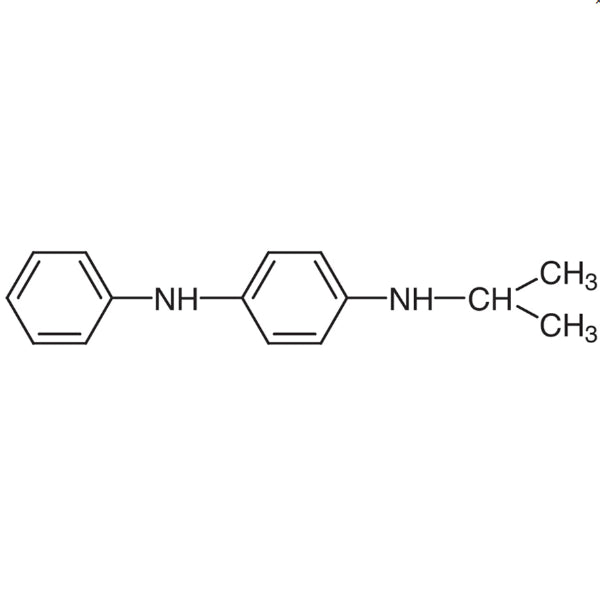
4-Isopropylaminodiphenylamine (4-IPADPA) is a chemical compound widely used as a building block in the synthesis of complex organic molecules. It plays a crucial role in laboratory settings where precise chemical reactions and molecular modifications are required. This compound is particularly valuable for its ability to participate in various reaction mechanisms, making it a versatile tool for chemists. Its structural composition includes two phenyl groups connected by an amine group and an isopropyl chain, which contributes to its reactivity and functional versatility.
The unique chemical properties of 4-IPADPA make it a preferred choice in synthetic chemistry. It exhibits stability under certain conditions but remains highly reactive to environmental factors such as high temperatures and oxidizing agents. This dual nature allows it to be used in controlled reactions where specific reactivity is needed. Additionally, its solubility in organic solvents facilitates easy integration into laboratory procedures, enhancing its utility in both research and development settings.
In Indonesian laboratories, 4-IPADPA is commonly used in the study of pharmacological compounds, chemical materials, and polymers. Its ability to undergo structural modifications and functional group substitutions makes it an essential component in various research projects. The compound's properties make it ideal for applications requiring both stability and reactivity, supporting a wide range of scientific investigations.
- Organic synthesis applications benefit from 4-IPADPA due to its reactivity and ability to participate in multiple reaction pathways.
- Pharmaceutical research utilizes this compound for the development of new drug molecules requiring specific functional group modifications.
- Polymer science applications leverage 4-IPADPA for its capacity to form stable chemical bonds and enhance material properties.
- Material chemistry studies use 4-IPADPA to create novel compounds with tailored chemical and physical characteristics.
- Analytical chemistry procedures incorporate 4-IPADPA as a reference standard for accurate molecular identification and structural analysis.
| Brand | TCI |
|---|---|
| CAS number | 101-72-4 |
| Molecular formula | — |
| Purity | — |
| Category | Chemistry > Building Blocks > Non-Heterocyclic Building Blocks |
| Pack sizes | Available in various quantities as per standard laboratory supply |
| Physical form | Solid, typically in crystalline or powder form |
| Storage | Store in a cool, dry place away from direct sunlight and incompatible substances |
4-IPADPA should be stored in a cool, dry environment to maintain its chemical stability. It is recommended to keep the compound in airtight containers to prevent exposure to moisture and air. Due to its reactivity, it should be stored away from strong oxidizing agents and high-temperature sources. Laboratory personnel should handle the compound with appropriate personal protective equipment, such as gloves and safety goggles, to ensure safe handling. Regular monitoring of storage conditions is advised to maintain the integrity of the material. Proper labeling and storage practices help minimize risks and ensure safe usage in laboratory settings.
—
Produk Terkait
-
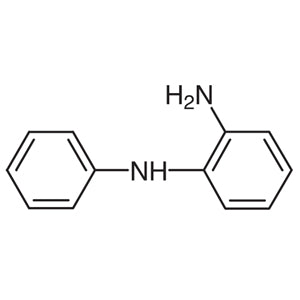
2-Aminodiphenylamine TCI A2129
Regular price From Rp 980.700,00Regular price -
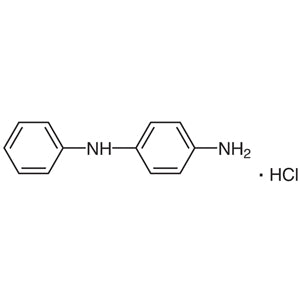
4-AminodiphenylamineHydrochloride TCI P0189
Regular price Rp 7.154.700,00Regular price -
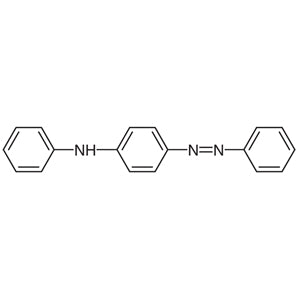
4-(Phenylazo)diphenylamine TCI P0146
Regular price From Rp 1.140.300,00Regular price -
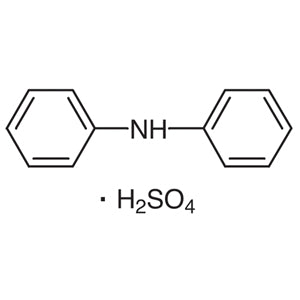
DiphenylamineSulfate TCI D0875
Regular price From Rp 1.590.750,00Regular price -
DiphenylamineHydrochloride TCI D0874
Regular price Rp 1.273.650,00Regular price -
2,4-Diaminodiphenylamine TCI D0087
Regular price From Rp 3.976.350,00Regular price -
4,4'-DiaminodiphenylamineSulfate TCI D0041
Regular price From Rp 1.829.100,00Regular price -
4-(2-Octylamino)diphenylamine TCI O0166
Regular price From Rp 477.750,00Regular price