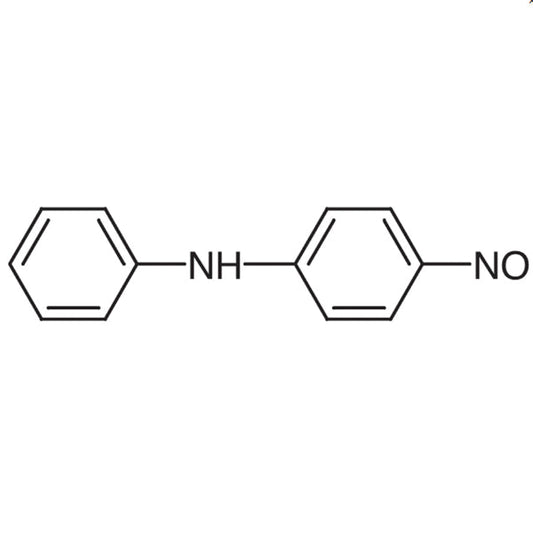
4-(2-Octylamino)diphenylamine, also known as N-(1-methylheptyl)-N'-phenyl-p-phenylenediamine, is a p-phenylenediamine derivative. One nitrogen atom carries a phenyl group and the other carries a secondary octyl group. TCI lists this compound under its non-heterocyclic building blocks. The p-phenylenediamine class is widely known for its antioxidant and antiozonant action in rubber and elastomers. In the laboratory, researchers use this material for polymer stabilization studies, organic synthesis, and the analysis of additives in finished products and formulations.
Researchers choose this compound because its aromatic amine groups readily donate hydrogen atoms and electrons. This lets it trap free radicals and react with ozone faster than the polymer chains it protects, which is how it slows oxidative and ozone-induced degradation. The branched octyl chain makes it more soluble in nonpolar matrices such as rubber, oils, and fuels, and it also reduces migration of the additive out of the material. Because it oxidizes easily, the compound is also useful for electrochemical studies and for work on quinonediimine formation. That same ease of oxidation means it needs careful storage.
Indonesia is one of the world's largest producers of natural rubber, so this material is relevant to many local laboratories. These include rubber research laboratories, plantation research institutes, and tire industry laboratories that develop and test rubber compounds. University chemistry and polymer departments can use it for teaching and research on antioxidant mechanisms and degradation. Quality control laboratories can use it as a reference material when they identify and measure p-phenylenediamine additives in rubber goods, lubricants, and fuel formulations.
- Polymer and rubber stabilization research: the compound traps free radicals and reacts with ozone before the polymer chains do, so it suits studies of antioxidant and antiozonant protection in elastomers.
- Organic synthesis as a building block: its two substituted aromatic amine nitrogens give reactive sites for making new p-phenylenediamine derivatives and related non-heterocyclic compounds.
- Additive analysis and reference work: laboratories can use it as a reference compound when identifying or measuring p-phenylenediamine type additives in rubber, oil, and fuel samples.
- Electrochemical studies: it oxidizes easily, so it is a practical model compound for studying the redox behavior of aromatic amines by voltammetry and related electrochemical techniques.
- Quinonediimine formation studies: its oxidation leads to quinonediimine species, which lets researchers study the transformation products that form when p-phenylenediamine antioxidants are used up.
| Brand | TCI (product code O0166) |
|---|---|
| CAS number | 15233-47-3 |
| Molecular formula | — |
| Purity | — |
| Category | Chemistry > Building Blocks > Non-Heterocyclic Building Blocks |
| Pack sizes | available in the pack sizes TCI supplies; please see the product listing for current options |
| Physical form | see the TCI certificate of analysis or safety data sheet |
| Storage | oxidizes easily; keep tightly sealed and protected from air and light |
This compound oxidizes easily, so store it with care. Keep it in the original, tightly closed container in a cool, dry, well-ventilated area, away from direct light, heat, and oxidizing agents. After each use, reseal the container quickly to limit contact with air and moisture. Amber glass or other light-protective containers are suitable if the material is repacked. Follow the storage conditions on the TCI label and safety data sheet. Handle it in a fume hood or well-ventilated area. Wear gloves, safety glasses, and a lab coat, and avoid skin contact, eye contact, and breathing in dust or vapor. Dispose of waste according to local regulations.
—
Produk Terkait
-
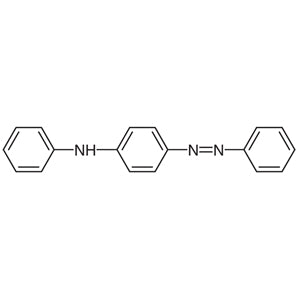
4-(Phenylazo)diphenylamine TCI P0146
Regular price From Rp 1.140.300,00Regular price -
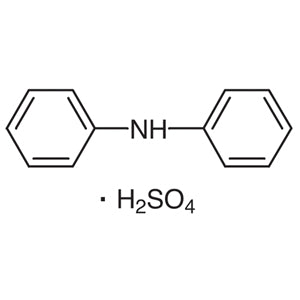
DiphenylamineSulfate TCI D0875
Regular price From Rp 1.590.750,00Regular price -
DiphenylamineHydrochloride TCI D0874
Regular price Rp 1.273.650,00Regular price -
4-Bromodiphenylamine TCI B3949
Regular price From Rp 1.378.650,00Regular price -
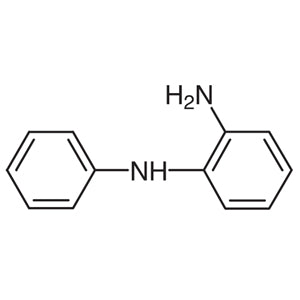
2-Aminodiphenylamine TCI A2129
Regular price From Rp 980.700,00Regular price -
4-Isopropylaminodiphenylamine TCI P0327
Regular price From Rp 477.750,00Regular price -
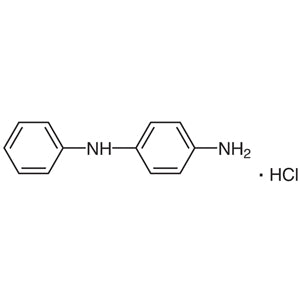
4-AminodiphenylamineHydrochloride TCI P0189
Regular price Rp 7.154.700,00Regular price -
4-Nitrosodiphenylamine TCI N0263
Regular price Rp 4.877.250,00Regular price