

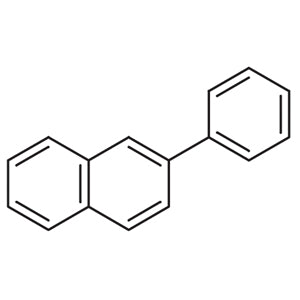
2-Phenylnaphthalene is an organic compound widely used in chemical reactions for the synthesis of complex molecules. It serves as a foundational building block in laboratory settings, acting as either a substrate or a reactant in substitution or aromatic reactions. This compound is particularly valued for its versatility and stability, making it a key component in various synthetic pathways. Its chemical structure allows for predictable and controllable modifications through targeted chemical reactions, which is essential for research involving functional group transformations.
The compound exhibits unique chemical properties that make it a preferred choice in laboratory applications. It demonstrates resistance to oxidation, ensuring stability under various reaction conditions. Additionally, it has the ability to form bonds with a range of functional groups, enhancing its utility in synthetic chemistry. These characteristics contribute to its reliability and effectiveness in both academic and industrial research environments. Its high melting and boiling points also make it suitable for use in high-temperature laboratory procedures.
In Indonesian laboratories, 2-Phenylnaphthalene is commonly used in pure and applied chemical research, especially in the synthesis of aromatic compounds and the development of new chemical materials. It is frequently utilized by research institutions and universities across Indonesia for experimental purposes. Its role in advancing chemical synthesis and material science makes it an essential reagent in the chemical industry and academic research.
Related TCI products
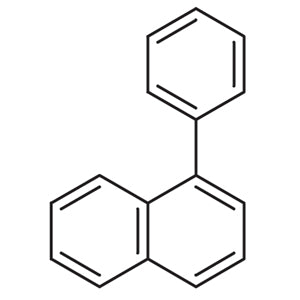
- TCI P0632 605-02-7 1-Phenylnaphthalene
- TCI B6606 2897656-97-0 N1-([1,1'-Biphenyl]-2-yl)-N2-(2-phenylnaphthalen-1-yl)benzene-1,2-diamine
- TCI E0147 939-27-5 2-Ethylnaphthalene
- TCI E0146 1127-76-0 1-Ethylnaphthalene
- TCI D2370 10275-58-8 2,7-Di-tert-butylnaphthalene
- TCI D2369 3905-64-4 2,6-Di-tert-butylnaphthalene
- Aromatic Compound Synthesis: 2-Phenylnaphthalene is ideal for creating complex aromatic structures due to its stable and reactive nature.
- Functional Group Modification: Its ability to form bonds with various functional groups makes it suitable for targeted chemical transformations.
- Organic Reaction Substrates: It serves as a reliable substrate in substitution reactions, providing a stable starting point for further chemical modifications.
- Material Development Research: Its chemical properties support the creation of new chemical materials, especially in polymer and pharmaceutical applications.
- Teaching and Research Experiments: It is commonly used in academic settings to demonstrate fundamental chemical reactions and synthetic techniques.
| Brand | TCI |
|---|---|
| CAS number | 612-94-2 |
| Molecular formula | — |
| Purity | — |
| Category | Chemistry > Building Blocks > Non-Heterocyclic Building Blocks |
| Pack sizes | Available in various quantities as per standard laboratory supply |
| Physical form | Solid |
| Storage | Store in a cool, dry place away from direct sunlight and incompatible materials |
2-Phenylnaphthalene should be stored in a cool, dry place away from direct sunlight and incompatible substances. It is recommended to use airtight containers to prevent exposure to moisture and air. Due to its chemical stability, it does not require refrigeration but should be kept in a secure location to avoid contamination. Laboratory personnel should handle the compound with care, using appropriate personal protective equipment when necessary. It is important to ensure that storage conditions are consistent with general laboratory safety protocols to maintain the integrity of the compound.
—
Produk Terkait
-
1-Phenylnaphthalene TCI P0632
Regular price Rp 2.862.300,00Regular price -
N1-([1,1'-Biphenyl]-2-yl)-N2-(2-phenylnaphthalen-1-yl)benzene-1,2-diamine TCI B6606
Regular price From Rp 2.041.200,00Regular price -
2-Ethylnaphthalene TCI E0147
Regular price Rp 5.089.350,00Regular price -
1-Ethylnaphthalene TCI E0146
Regular price From Rp 2.279.550,00Regular price -
2,7-Di-tert-butylnaphthalene TCI D2370
Regular price From Rp 2.916.900,00Regular price -
2,6-Di-tert-butylnaphthalene TCI D2369
Regular price From Rp 2.227.050,00Regular price -
5,6,11,12-Tetraphenylnaphthacene(purifiedbysublimation) TCI T2233
Regular price From Rp 2.279.550,00Regular price -
5,6,11,12-Tetraphenylnaphthacene TCI T0561
Regular price From Rp 1.008.000,00Regular price
![N1-([1,1'-Biphenyl]-2-yl)-N2-(2-phenylnaphthalen-1-yl)benzene-1,2-diamine (CAS 2897656-97-0) - TCI B6606 - AMI Scientific](http://amiscientific.com/cdn/shop/files/TCI2510B6606.jpg?v=1767094008&width=533)


