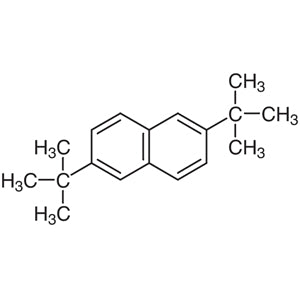
2,6-Di-tert-butylnaphthalene is a chemical compound widely used in laboratory settings for the synthesis of complex organic molecules. As a building block in chemical reactions, it serves as a foundational component for the development of substituted aromatic compounds. Its structural stability and compatibility with various functional groups make it a versatile reagent in synthetic chemistry. This compound is particularly valuable for reactions that require a naphthalene core, such as substitution, oxidation, and reduction processes. Its role in organic synthesis is critical for researchers aiming to create new compounds with specific functional properties.
The compound’s non-polar nature and high boiling point make it an ideal choice for reactions that require elevated temperatures. Its ability to interact with a wide range of functional groups enhances its utility in diverse synthetic pathways. Additionally, its chemical inertness under controlled conditions ensures reliable performance in laboratory experiments. These properties contribute to its popularity among chemists working on aromatic compound synthesis and functional group modification.
In Indonesian laboratories, 2,6-Di-tert-butylnaphthalene is commonly used in organic chemistry research, particularly in academic and research institutions. It is a key component in experiments involving substituted aromatic compounds and is frequently employed in the development of new chemical entities. Its availability and reliability make it a preferred choice for both teaching and research purposes in the chemical sciences.
- Synthesis of aromatic compounds with tert-butyl substitution for organic chemistry research due to its stable naphthalene core and compatibility with functional groups.
- Support in substitution reactions for the development of new chemical entities by providing a reliable aromatic scaffold.
- Use in oxidation reactions where high thermal stability and non-polar characteristics are required for maintaining reaction efficiency.
- Application in reduction processes that benefit from the compound’s inertness and structural integrity under varying reaction conditions.
- Contribution to functional group modification experiments by offering a versatile base for further chemical transformations.
| Brand | TCI |
|---|---|
| CAS number | 3905-64-4 |
| Molecular formula | — |
| Purity | — |
| Category | Chemistry > Building Blocks > Non-Heterocyclic Building Blocks |
| Pack sizes | Available in various quantities as per standard laboratory supply options |
| Physical form | Liquid |
| Storage | Store in a cool, dry place away from direct sunlight and incompatible substances |
This compound should be stored in a cool, dry environment, away from direct sunlight and sources of heat. It is recommended to use sealed containers made of materials compatible with organic solvents to prevent evaporation and contamination. Due to its non-polar nature, it should be kept separate from reactive or corrosive substances. In laboratory settings, proper ventilation is essential to ensure safe handling. Always wear appropriate personal protective equipment, such as gloves and safety goggles, when working with this material to minimize exposure risks. Regular inspection of storage containers is advised to maintain the integrity of the compound and ensure safe laboratory practices.
—
Produk Terkait
-
2,7-Di-tert-butylnaphthalene TCI D2370
Regular price From Rp 2.916.900,00Regular price -
1,4,5-Trimethylnaphthalene TCI T1711
Regular price Rp 2.889.600,00Regular price -
2,3,5-Trimethylnaphthalene TCI T0772
Regular price Rp 2.942.100,00Regular price -
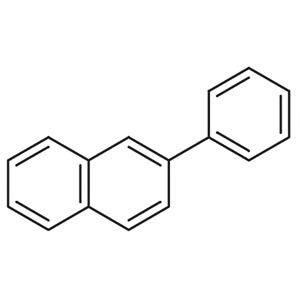
2-Phenylnaphthalene TCI P0679
Regular price Rp 2.359.350,00Regular price -
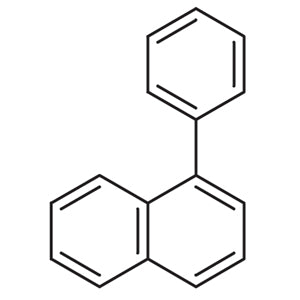
1-Phenylnaphthalene TCI P0632
Regular price Rp 2.862.300,00Regular price -
2-Methylnaphthalene TCI M0372
Regular price From Rp 557.550,00Regular price -
1-Methylnaphthalene TCI M0371
Regular price From Rp 530.250,00Regular price -
1-Isopropylnaphthalene TCI I0578
Regular price From Rp 1.988.700,00Regular price