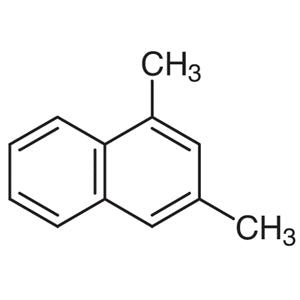
2,3,5-Trimethylnaphthalene is an organic compound widely utilized as a foundational material in various chemical reactions. This compound is derived from naphthalene, with three methyl groups strategically positioned, which imparts it with distinct chemical properties. Its role in the laboratory is crucial, particularly in the synthesis of complex molecules. Due to its structural stability and controlled reactivity, it is a reliable component in organic chemistry research. This compound is especially valuable for its ability to participate in a range of chemical transformations, making it a versatile tool in the hands of chemists.
The compound's chemical stability and resistance to spontaneous reactions make it a preferred choice for laboratory use. Its non-heterocyclic nature ensures that it does not introduce unwanted elements into chemical reactions, maintaining the integrity of the synthetic process. Additionally, its molecular structure allows for participation in substitution and cyclic reactions, enhancing its utility in diverse chemical applications. These properties make it ideal for experiments requiring precision and control, particularly in the development of specialized chemical structures.
In Indonesian laboratories, 2,3,5-Trimethylnaphthalene is commonly used in organic chemistry research. It is particularly favored for its purity and consistent performance in synthetic processes. Its application is widespread in academic and industrial settings, supporting the creation of complex compounds with specific functional groups. The compound's reliability and chemical stability make it an essential component in the chemical research toolkit of Indonesian laboratories.
- Organic Synthesis: This compound is ideal for the synthesis of complex organic molecules due to its stable structure and ability to participate in various chemical reactions.
- Chemical Research: Its non-heterocyclic nature makes it suitable for research requiring high chemical purity and minimal interference in synthetic pathways.
- Reagent Compatibility: It is well-suited for use in reactions where compatibility with other reagents is essential, ensuring predictable and controlled outcomes.
- Structural Analysis: Its distinct molecular structure allows for accurate identification and analysis in spectroscopic and chromatographic studies.
- Industrial Applications: It is used in industrial chemical processes where controlled reactivity and stability are critical for product consistency.
| Brand | TCI |
|---|---|
| CAS number | 2245-38-7 |
| Molecular formula | — |
| Purity | — |
| Category | Chemistry > Building Blocks > Non-Heterocyclic Building Blocks |
| Pack sizes | Available in standard laboratory quantities |
| Physical form | Solid |
| Storage | Store in a cool, dry place away from direct sunlight |
This compound should be stored in a cool, dry environment to maintain its chemical stability. It is recommended to use airtight containers to prevent exposure to moisture and air, which could affect its integrity. Due to its non-reactive nature, it does not require special handling beyond standard laboratory safety protocols. However, it is advisable to keep it away from heat sources and potential contaminants. Proper labeling and storage in designated chemical cabinets are essential to ensure safe handling and prevent accidental exposure. Always follow standard laboratory safety procedures when working with this compound to ensure a secure and controlled environment.
—
Produk Terkait
-
1,4,5-Trimethylnaphthalene TCI T1711
Regular price Rp 2.889.600,00Regular priceRp 2.020.200,00Sale price Rp 2.889.600,00 -
2-Methylnaphthalene TCI M0372
Regular price From Rp 557.550,00Regular priceRp 389.550,00Sale price From Rp 557.550,00 -
1-Methylnaphthalene TCI M0371
Regular price From Rp 530.250,00Regular priceRp 370.650,00Sale price From Rp 530.250,00 -
2-Ethylnaphthalene TCI E0147
Regular price Rp 5.089.350,00Regular priceRp 3.558.450,00Sale price Rp 5.089.350,00 -
1-Ethylnaphthalene TCI E0146
Regular price From Rp 2.279.550,00Regular priceRp 1.593.900,00Sale price From Rp 2.279.550,00 -
1,5-Dimethylnaphthalene TCI D2764
Regular price From Rp 1.644.300,00Regular priceRp 1.149.750,00Sale price From Rp 1.644.300,00 -
1,4-Dimethylnaphthalene TCI D1006
Regular price From Rp 3.287.550,00Regular priceRp 2.298.450,00Sale price From Rp 3.287.550,00 -
1,3-Dimethylnaphthalene TCI D0830
Regular price Rp 1.590.750,00Regular priceRp 1.111.950,00Sale price Rp 1.590.750,00