

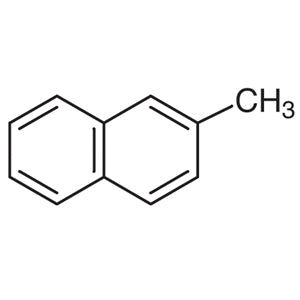
2-Methylnaphthalene is an organic compound widely used in various chemical applications within laboratory settings. As a key component in chemical synthesis, it serves as a building block for the creation of more complex molecules. This compound is part of the non-heterocyclic building blocks category, making it essential for researchers working on organic synthesis and analytical chemistry. Its structural characteristics allow it to participate in a variety of chemical reactions, contributing to the development of new compounds and materials.
The properties of 2-Methylnaphthalene make it a preferred choice in laboratory environments. It has an aromatic structure and is non-polar, which enhances its stability and reactivity in chemical processes. Its relatively high melting and boiling points facilitate isolation and purification procedures, ensuring reliable results. Additionally, its resistance to degradation under normal conditions ensures long-term usability and consistency in experimental outcomes. These features make it a valuable tool for chemists seeking reliable and stable reagents.
In Indonesian laboratories, 2-Methylnaphthalene is commonly used in chemical research, particularly in organic synthesis and analytical studies. It is frequently found in academic and industrial research settings where the development of complex organic compounds is required. Its availability and chemical properties make it a staple in laboratories focused on synthetic chemistry and material science. Its role in supporting scientific innovation is significant and well-established in the Indonesian scientific community.
- Organic synthesis experiments benefit from 2-Methylnaphthalene due to its stable aromatic structure and reactivity, enabling the formation of complex organic molecules.
- Analytical chemistry applications use this compound as a standard for chromatographic and spectroscopic analyses due to its well-defined chemical properties.
- Polymer research often incorporates 2-Methylnaphthalene as a building block for creating novel materials with specific functional properties.
- Environmental chemistry studies may utilize this compound to investigate the behavior of aromatic hydrocarbons in various chemical environments.
- Industrial chemical processes leverage 2-Methylnaphthalene for the production of dyes, pharmaceuticals, and other specialty chemicals due to its versatile chemical profile.
| Brand | TCI |
|---|---|
| CAS number | 91-57-6 |
| Molecular formula | — |
| Purity | — |
| Category | Chemistry > Building Blocks > Non-Heterocyclic Building Blocks |
| Pack sizes | Available in various quantities as per standard laboratory supply formats |
| Physical form | Liquid |
| Storage | Store in a cool, dry place away from direct sunlight |
2-Methylnaphthalene should be stored in a cool, dry location, away from direct sunlight and sources of heat. It is recommended to use sealed containers made of materials compatible with organic solvents, such as glass or high-density polyethylene. Due to its non-polar nature, it is important to ensure proper ventilation when handling to avoid inhalation of vapors. Avoid contact with skin and eyes, and use appropriate personal protective equipment when handling. Keep the compound away from incompatible materials, such as strong oxidizing agents, to prevent any potential chemical reactions. Proper storage ensures the compound remains stable and usable for extended periods in laboratory settings.
—
Produk Terkait
-
1-Methylnaphthalene TCI M0371
Regular price From Rp 530.250,00Regular price -
1,4,5-Trimethylnaphthalene TCI T1711
Regular price Rp 2.889.600,00Regular price -
2,3,5-Trimethylnaphthalene TCI T0772
Regular price Rp 2.942.100,00Regular price -
2-Ethylnaphthalene TCI E0147
Regular price Rp 5.089.350,00Regular price -
1-Ethylnaphthalene TCI E0146
Regular price From Rp 2.279.550,00Regular price -
1,5-Dimethylnaphthalene TCI D2764
Regular price From Rp 1.644.300,00Regular price -
1,4-Dimethylnaphthalene TCI D1006
Regular price From Rp 3.287.550,00Regular price -
1,3-Dimethylnaphthalene TCI D0830
Regular price Rp 1.590.750,00Regular price


