

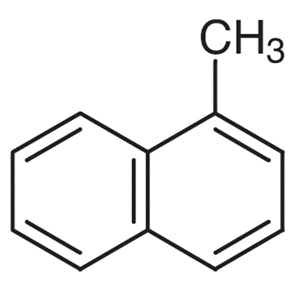
1-Methylnaphthalene is a chemical compound widely used in laboratory settings for its versatility in chemical experiments and molecular synthesis. As a non-heterocyclic building block, it plays a crucial role in the development of more complex molecular structures. This compound is commonly employed in substitution and oxidation reactions, making it an essential tool for chemists working on organic synthesis. Its stability and controlled reactivity allow it to be a reliable choice for various research applications in both academic and industrial laboratories.
The chemical properties of 1-Methylnaphthalene make it a preferred choice for laboratory use. It exhibits a relatively stable chemical profile while maintaining sufficient reactivity for a range of chemical processes. The compound has a distinct aroma and is typically supplied as a colorless liquid. Its resistance to degradation under normal laboratory conditions ensures consistent performance over time. These characteristics contribute to its reliability and make it suitable for long-term storage and repeated use in research environments.
In Indonesian laboratories, 1-Methylnaphthalene is frequently used in organic chemistry research, particularly in the development of new compounds and the synthesis of complex molecules. It is also found in various industrial applications, supporting both academic and applied research. Its availability and chemical properties make it a valuable resource for scientists working on diverse chemical projects in Indonesia.
- Organic synthesis applications benefit from 1-Methylnaphthalene due to its ability to participate in substitution and oxidation reactions, making it ideal for constructing complex molecular structures.
- It is widely used in pharmaceutical research for the development of new compounds, as its reactivity allows for the modification of molecular frameworks.
- In analytical chemistry, 1-Methylnaphthalene serves as a reference standard for identifying and quantifying other compounds through chromatographic techniques.
- It is commonly employed in environmental studies for the analysis of organic pollutants in soil and water samples due to its detectability and stability.
- The compound is also used in polymer chemistry to modify the properties of synthetic materials, enhancing their thermal and mechanical characteristics.
| Brand | TCI |
|---|---|
| CAS number | 90-12-0 |
| Molecular formula | — |
| Purity | — |
| Category | Chemistry > Building Blocks > Non-Heterocyclic Building Blocks |
| Pack sizes | Available in various quantities as per supplier specifications |
| Physical form | Colorless liquid |
| Storage | Store in a cool, dry place away from direct sunlight and incompatible materials |
1-Methylnaphthalene should be stored in a cool, dry environment to maintain its chemical stability. It is recommended to keep the compound in tightly sealed containers to prevent exposure to air and moisture. Due to its potential reactivity, it should be stored away from strong oxidizing agents and incompatible substances. Proper ventilation is essential when handling the compound to minimize inhalation risks. Laboratory personnel should wear appropriate personal protective equipment, including gloves and safety goggles, to ensure safe handling. Regular inspection of storage conditions is advised to ensure the compound remains in optimal condition for use.
—
Produk Terkait
-
2-Methylnaphthalene TCI M0372
Regular price From Rp 557.550,00Regular price -
1,4,5-Trimethylnaphthalene TCI T1711
Regular price Rp 2.889.600,00Regular price -
2,3,5-Trimethylnaphthalene TCI T0772
Regular price Rp 2.942.100,00Regular price -
2-Ethylnaphthalene TCI E0147
Regular price Rp 5.089.350,00Regular price -
1-Ethylnaphthalene TCI E0146
Regular price From Rp 2.279.550,00Regular price -
1,5-Dimethylnaphthalene TCI D2764
Regular price From Rp 1.644.300,00Regular price -
1,4-Dimethylnaphthalene TCI D1006
Regular price From Rp 3.287.550,00Regular price -
1,3-Dimethylnaphthalene TCI D0830
Regular price Rp 1.590.750,00Regular price


