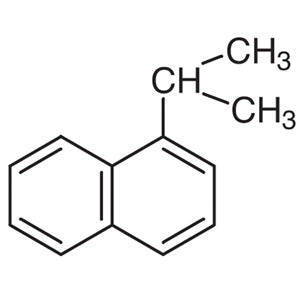
TCI I0578 1-Isopropylnaphthalene is a simple polycyclic aromatic hydrocarbon consisting of a naphthalene skeleton bearing an isopropyl group at the alpha position, namely position 1. As a non-heterocyclic building block, this compound provides a rigid, electron-rich bicyclic aromatic framework that can be elaborated further through a variety of substitution and oxidation reactions. In the laboratory, besides serving as a synthetic intermediate, it is also frequently used as a high-boiling organic medium, as a model compound in hydrocarbon reaction studies, and as a reference material in the development of analytical methods for aromatic compounds.
The characteristics that make this compound a preferred choice are the combination of thermal stability and practical physical properties. Unlike the parent naphthalene, which is a readily subliming solid, the addition of the isopropyl group disrupts crystal packing so that this compound is a liquid at room temperature, making it far easier to transfer by pipette and to mix. Its vapour pressure is low and its boiling point is high, so it is well suited to high-temperature experiments without meaningful loss of material. The electron-rich naphthalene framework also makes it reactive toward electrophilic reagents, giving synthetic chemists a dependable starting point for further functionalisation.
In Indonesian laboratories, this material is typically handled in university research groups, institutional chemistry facilities, and industrial R&D units working on organic synthesis and analytical method development. Its liquid form at ambient temperature suits local working conditions, where warm and humid environments make volatile solid aromatics awkward to weigh and transfer. Analysts also value it as a well-defined aromatic reference substance when establishing or verifying chromatographic procedures for hydrocarbon mixtures.
- Organic synthesis intermediate: the alpha-substituted naphthalene core serves as a starting framework that can be extended through substitution or oxidation into more elaborate aromatic target molecules.
- High-boiling reaction medium: its high boiling point and low vapour pressure allow it to hold reaction mixtures at elevated temperature without appreciable evaporative loss during extended heating.
- Model compound for hydrocarbon reaction studies: the defined single-substituent structure gives researchers a clean, interpretable system for observing how alkyl-substituted aromatics behave under reaction conditions.
- Reference material in analytical method development: it provides a consistent aromatic standard when chemists establish, calibrate, or validate procedures for separating and identifying aromatic compounds.
- Electrophilic substitution research: the electron-rich bicyclic ring system reacts readily with electrophilic reagents, making it a convenient substrate for studying regioselectivity on naphthalene frameworks.
| Brand | TCI |
|---|---|
| CAS number | 6158-45-8 |
| Molecular formula | — |
| Purity | — |
| Category | Chemistry > Building Blocks > Non-Heterocyclic Building Blocks |
| Pack sizes | — |
| Physical form | liquid at room temperature |
| Storage | keep in a tightly closed container, protected from heat and direct sunlight |
- Product code: I0578
Store this product in a tightly closed original container in a cool, dry, well-ventilated area away from heat sources, open flames, direct sunlight, and strong oxidising agents. Glass bottles with chemically resistant closures are appropriate, and the container should be resealed immediately after each transfer to limit contamination and air exposure. Handle the material inside a fume hood, wearing safety goggles, a laboratory coat, and chemical-resistant gloves. Avoid inhaling vapours and prevent skin or eye contact. Transfer volumes with a clean pipette or dispenser, keep containers clearly labelled, and dispose of residues and contaminated materials in accordance with applicable laboratory waste procedures.
—
Produk Terkait
-
2-Isopropylnaphthalene TCI I0327
Regular price Rp 3.843.000,00Regular price -
2,7-Diisopropylnaphthalene TCI D2422
Regular price Rp 2.068.500,00Regular price -
2-Ethylnaphthalene TCI E0147
Regular price Rp 5.089.350,00Regular price -
1-Ethylnaphthalene TCI E0146
Regular price From Rp 2.279.550,00Regular price -
2,7-Di-tert-butylnaphthalene TCI D2370
Regular price From Rp 2.916.900,00Regular price -
2,6-Di-tert-butylnaphthalene TCI D2369
Regular price From Rp 2.227.050,00Regular price -
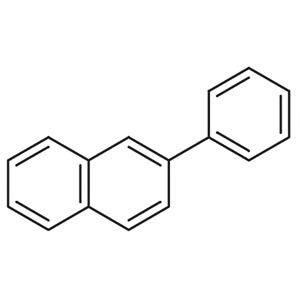
2-Phenylnaphthalene TCI P0679
Regular price Rp 2.359.350,00Regular price -
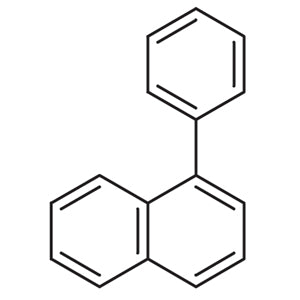
1-Phenylnaphthalene TCI P0632
Regular price Rp 2.862.300,00Regular price