

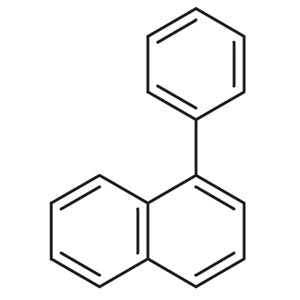
1-Phenylnaphthalene is an organic compound widely used as a foundational material in various chemical reactions. It is a key component in synthetic chemistry due to its unique molecular structure, which combines naphthalene with a phenyl group. This compound plays a crucial role in laboratory settings, particularly in the synthesis of complex organic molecules. Its presence allows chemists to manipulate molecular structures effectively, making it an essential tool in both research and educational environments.
The compound is valued for its stable chemical properties and controlled reactivity, which make it a reliable choice for experimental work. Its relatively inert nature under normal conditions ensures safe handling and storage, reducing the risk of unwanted side reactions. This stability contributes to its popularity in analytical techniques such as spectroscopy, where precise molecular identification is required. Its predictable behavior also simplifies integration into various chemical protocols.
In Indonesian laboratories, 1-Phenylnaphthalene is commonly used in organic chemistry research, especially in academic and research institutions. Its versatility and ease of use make it a standard component in chemical laboratories across the country. It supports a wide range of applications, from basic chemical synthesis to advanced analytical procedures, making it a fundamental material in the chemical supply chain.
Related TCI products
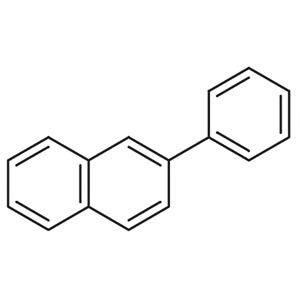
- TCI P0679 612-94-2 2-Phenylnaphthalene
- TCI B6606 2897656-97-0 N1-([1,1'-Biphenyl]-2-yl)-N2-(2-phenylnaphthalen-1-yl)benzene-1,2-diamine
- TCI E0147 939-27-5 2-Ethylnaphthalene
- TCI E0146 1127-76-0 1-Ethylnaphthalene
- TCI D2370 10275-58-8 2,7-Di-tert-butylnaphthalene
- TCI D2369 3905-64-4 2,6-Di-tert-butylnaphthalene
- Organic synthesis applications benefit from 1-Phenylnaphthalene's structural versatility, enabling the creation of complex molecules with high precision.
- Spectroscopic analysis relies on its distinct molecular structure, which facilitates accurate identification through techniques like NMR and IR spectroscopy.
- Teaching laboratories use it as an educational tool to demonstrate fundamental chemical reactions and molecular manipulation techniques.
- Research institutions incorporate it into studies focused on aromatic substitution and molecular reactivity in synthetic pathways.
- Analytical chemistry labs utilize it as a reference standard for compound identification and purity testing in complex mixtures.
| Brand | TCI |
|---|---|
| CAS number | 605-02-7 |
| Molecular formula | — |
| Purity | — |
| Category | Chemistry > Building Blocks > Non-Heterocyclic Building Blocks |
| Pack sizes | Available in various quantities as per standard laboratory supply options |
| Physical form | Solid |
| Storage | Store in a cool, dry place away from direct light and incompatible materials |
1-Phenylnaphthalene should be stored in a cool, dry environment to maintain its chemical stability. It is recommended to keep it in a sealed container to prevent exposure to moisture and air. The compound is generally non-hazardous under normal conditions but should be handled with care to avoid direct contact with skin or inhalation. It is advisable to store it away from strong oxidizers and reactive materials to ensure safety. In laboratory settings, it is important to follow standard safety protocols, including the use of personal protective equipment when handling or transferring the compound. Proper labeling and storage conditions help maintain the integrity and usability of the material over time.
—
Produk Terkait
-
2-Phenylnaphthalene TCI P0679
Regular price Rp 2.359.350,00Regular price -
N1-([1,1'-Biphenyl]-2-yl)-N2-(2-phenylnaphthalen-1-yl)benzene-1,2-diamine TCI B6606
Regular price From Rp 2.041.200,00Regular price -
2-Ethylnaphthalene TCI E0147
Regular price Rp 5.089.350,00Regular price -
1-Ethylnaphthalene TCI E0146
Regular price From Rp 2.279.550,00Regular price -
2,7-Di-tert-butylnaphthalene TCI D2370
Regular price From Rp 2.916.900,00Regular price -
2,6-Di-tert-butylnaphthalene TCI D2369
Regular price From Rp 2.227.050,00Regular price -
5,6,11,12-Tetraphenylnaphthacene(purifiedbysublimation) TCI T2233
Regular price From Rp 2.279.550,00Regular price -
5,6,11,12-Tetraphenylnaphthacene TCI T0561
Regular price From Rp 1.008.000,00Regular price
![N1-([1,1'-Biphenyl]-2-yl)-N2-(2-phenylnaphthalen-1-yl)benzene-1,2-diamine (CAS 2897656-97-0) - TCI B6606 - AMI Scientific](http://amiscientific.com/cdn/shop/files/TCI2510B6606.jpg?v=1767094008&width=533)


