5,6,11,12-Tetraphenylnaphthacene is an organic compound widely used in laboratory research, particularly in the field of electronic materials. This compound plays a crucial role in the development of Organic Light-Emitting Diode (OLED) devices, where it serves as a key component in the production of active layers. Its molecular structure enables efficient light emission, making it a vital material for optoelectronic studies. In laboratory settings, it is often employed as a building block for creating materials with specific optical properties, supporting the advancement of display technologies and optical sensors.
The compound is favored for its excellent chemical stability and its ability to emit light at specific wavelengths, which is essential for achieving desired optical performance in OLED applications. Additionally, it demonstrates good conductivity under vacuum conditions, making it suitable for use in high-performance electronic systems. These properties make it a preferred choice for researchers working on advanced optoelectronic materials, where precision and reliability are critical. Its versatility and performance characteristics ensure its continued use in both academic and industrial research environments.
In Indonesian laboratories, 5,6,11,12-Tetraphenylnaphthacene is commonly used by researchers in educational institutions and research organizations. It supports the development of display technologies, optical sensors, and other organic electronic devices. Its availability in the local market facilitates access for scientists conducting experiments in these fields. The compound is integral to advancing material science research in Indonesia, contributing to the growth of the country’s scientific and technological capabilities.
TCI brochures (PDF)
- Organic Transistor (OFET) Materials 2026-05-07 · p. 15
- Nanocarbon Materials 2026-09-30 · p. 9
- Organic Light-Emitting Diode (OLED) Materials 2026-08-18 · p. 2
- Solar Cell Materials 2026-04-21 · p. 9
Related TCI products
- TCI T2233 517-51-1 5,6,11,12-Tetraphenylnaphthacene (purified by sublimation)
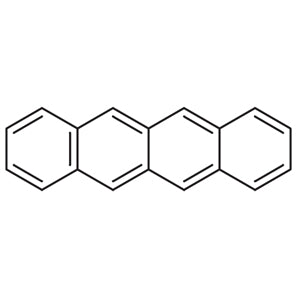
- TCI N0951 92-24-0 Naphthacene (purified by sublimation)
- TCI N0001 92-24-0 Naphthacene
- TCI T0168 1450-63-1 1,1,4,4-Tetraphenyl-1,3-butadiene
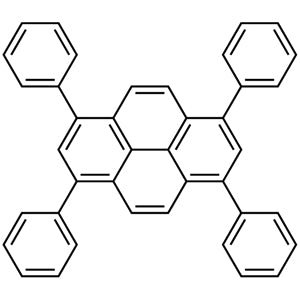
- TCI T3042 13638-82-9 1,3,6,8-Tetraphenylpyrene
- TCI Z0037 14320-04-8 Zinc Phthalocyanine (purified by sublimation)
- OLED Device Development: This compound is ideal for creating active layers in OLEDs due to its high light emission efficiency and stable molecular structure.
- Optical Sensor Fabrication: Its ability to emit light at specific wavelengths makes it suitable for use in optical sensors, enhancing detection accuracy.
- Display Technology Research: It supports the development of next-generation display technologies by providing a reliable light-emitting material.
- Electronic Material Synthesis: Researchers use it as a base material for synthesizing other organic electronic compounds with tailored properties.
- Vacuum Conduction Studies: Its conductivity under vacuum conditions makes it valuable for studying material behavior in specialized environments.
From the TCI brochure
- Red dopant
| Brand | TCI |
|---|---|
| CAS number | 517-51-1 |
| Molecular formula | — |
| Purity | — |
| Category | Materials Science > Electronic Materials > Organic Light-Emitting Diode (OLED) Materials |
| Pack sizes | Available in various quantities as per supplier specifications |
| Physical form | Solid, typically in crystalline form |
| Storage | Store in a cool, dry place away from light and moisture |
This compound should be stored in a cool, dry environment, away from direct light and moisture to maintain its stability and prevent degradation. It is recommended to use airtight containers made of glass or high-density polyethylene to minimize exposure to air and contaminants. Due to its organic nature, it should be handled with care, using appropriate personal protective equipment such as gloves and safety goggles. It is important to ensure proper ventilation in the laboratory when working with this material. Avoid contact with incompatible substances and follow standard laboratory safety protocols to ensure safe handling and storage.
—
Product Categories
- Electronic MaterialsOrganic Light-Emitting Diode (OLED) MaterialsLight Emitters and Dopants [Organic Light-Emitting Diode (OLED) Materials]
- Electronic MaterialsOrganic Transistor (OFET) Materialsp-Type Organic Semiconductors [Organic Transistor (OFET) Materials]
- Electronic MaterialsPerovskite Solar Cell (PSC) MaterialsCarrier Transport Materials [Perovskite Solar Cell (PSC) Materials]
- Nanocarbon MaterialsNanocarbon Unit Structures
Produk Terkait
-
5,6,11,12-Tetraphenylnaphthacene(purifiedbysublimation) TCI T2233
Regular price From Rp 2.279.550,00Regular priceRp 1.593.900,00Sale price From Rp 2.279.550,00 -
Naphthacene(purifiedbysublimation) TCI N0951
Regular price From Rp 2.439.150,00Regular priceRp 1.705.200,00Sale price From Rp 2.439.150,00 -
Naphthacene TCI N0001
Regular price From Rp 980.700,00Regular priceRp 685.650,00Sale price From Rp 980.700,00 -
1,1,4,4-Tetraphenyl-1,3-butadiene TCI T0168
Regular price From Rp 1.035.300,00Regular priceRp 723.450,00Sale price From Rp 1.035.300,00 -
1,3,6,8-Tetraphenylpyrene TCI T3042
Regular price From Rp 2.837.100,00Regular priceRp 1.983.450,00Sale price From Rp 2.837.100,00 -
ZincPhthalocyanine(purifiedbysublimation) TCI Z0037
Regular price Rp 4.954.950,00Regular priceRp 3.480.750,00Sale price Rp 4.954.950,00 -
Poly(3-hexylthiophene-2,5-diyl)(regioregular)[fororganicelectronics] TCI P2513
Regular price From Rp 4.056.150,00Regular priceRp 2.836.050,00Sale price From Rp 4.056.150,00 -
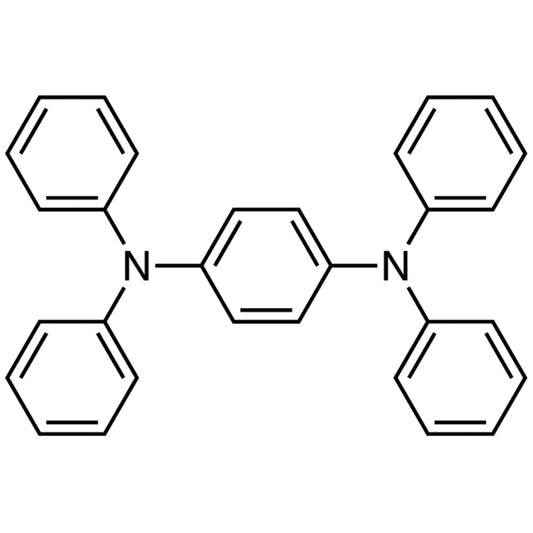
N,N,N',N'-Tetraphenyl-1,4-phenylenediamine TCI T3309
Regular price From Rp 1.035.300,00Regular priceRp 723.450,00Sale price From Rp 1.035.300,00