1,1,4,4-Tetraphenyl-1,3-butadiene is an organic compound widely used in material science research, particularly in the development of optoelectronic devices such as OLEDs. This compound is essential for scientists working on advanced materials that require high light emission properties. Its unique molecular structure, featuring four phenyl rings attached to a butadiene backbone, provides exceptional optical characteristics that make it a key component in the synthesis of light-emitting materials. In laboratory settings, this compound serves as a fundamental building block for creating materials with tailored optical properties.
The compound's ability to absorb and emit light within specific wavelength ranges makes it a preferred choice for researchers aiming to enhance the efficiency of optoelectronic devices. Its chemical stability allows for consistent performance during synthesis and processing, reducing the risk of degradation. Additionally, its molecular structure enables precise control over the optical behavior of the final material, making it ideal for applications requiring tunable light emission. These properties make it a versatile and reliable material in both academic and industrial research environments.
In Indonesian laboratories, 1,1,4,4-Tetraphenyl-1,3-butadiene is commonly used in material science research, especially in the development of OLEDs and other optoelectronic applications. Researchers at universities and research institutions rely on this compound to advance their studies in light-emitting materials. Its availability and reliability make it a standard component in the toolkit of material scientists working on next-generation display technologies and lighting solutions.
TCI brochures (PDF)
- 1,3-Butadiene Derivatives 2025-08-07 · p. 1
- MALDI Matrix 2025-01-17 · p. 1
- Organic Light-Emitting Diode (OLED) Materials 2026-08-18 · p. 7
- Building Blocks for Organic Semiconductor 2026-03-24 · p. 34
Related TCI products
- TCI T3657 145898-89-1 N,N,N',N'-Tetraphenyl[1,1':4',1'':4'',1'''-quaterphenyl]-4,4'''-diamine
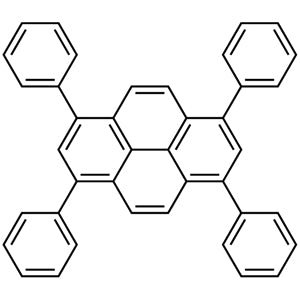
- TCI T3042 13638-82-9 1,3,6,8-Tetraphenylpyrene
- TCI T2233 517-51-1 5,6,11,12-Tetraphenylnaphthacene (purified by sublimation)
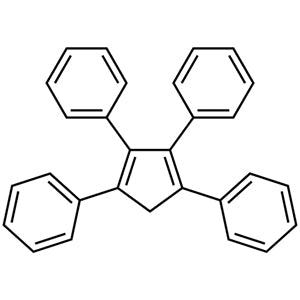
- TCI T1333 15570-45-3 1,2,3,4-Tetraphenyl-1,3-cyclopentadiene
- TCI T0561 517-51-1 5,6,11,12-Tetraphenylnaphthacene
- TCI D6033 175606-05-0 5,10,15,20-Tetraphenylbenzo[5,6]indeno[1,2,3-cd]benzo[5,6]indeno[1,2,3-lm]perylene
- OLED Material Synthesis: This compound is ideal for creating organic light-emitting materials due to its unique optical properties and stability.
- Optoelectronic Device Development: Its ability to emit light at specific wavelengths makes it suitable for designing high-efficiency optoelectronic components.
- Photonic Material Research: The compound's molecular structure allows for precise tuning of light emission, making it valuable in photonic applications.
- Organic Semiconductor Studies: Its chemical stability and optical behavior make it a useful material for studying organic semiconductors.
- Light-Emitting Polymer Development: It is often used as a core component in the synthesis of polymers that emit light efficiently.
| Brand | TCI |
|---|---|
| CAS number | 1450-63-1 |
| Molecular formula | — |
| Purity | — |
| Category | Materials Science > Electronic Materials > Organic Light-Emitting Diode (OLED) Materials |
| Pack sizes | Available in various quantities as per supplier specifications |
| Physical form | Solid |
| Storage | Store in a cool, dry place away from light and moisture |
This compound should be stored in a cool, dry environment, away from direct light and moisture to maintain its stability and effectiveness. It is recommended to use airtight containers to prevent exposure to air and humidity, which could affect its optical properties. In laboratory settings, it should be handled with care, using appropriate personal protective equipment such as gloves and safety goggles to ensure safety. Due to its chemical stability, it does not require special handling beyond standard laboratory protocols. Regular monitoring of storage conditions is advised to ensure the material remains in optimal condition for research applications.
—
Product Categories
Produk Terkait
-
N,N,N',N'-Tetraphenyl[1,1':4',1'':4'',1'''-quaterphenyl]-4,4'''-diamine TCI T3657
Regular price From Rp 1.908.900,00Regular priceRp 1.350.300,00Sale price From Rp 1.908.900,00 -
1,3,6,8-Tetraphenylpyrene TCI T3042
Regular price From Rp 2.837.100,00Regular priceRp 1.983.450,00Sale price From Rp 2.837.100,00 -
5,6,11,12-Tetraphenylnaphthacene(purifiedbysublimation) TCI T2233
Regular price From Rp 2.279.550,00Regular priceRp 1.593.900,00Sale price From Rp 2.279.550,00 -
1,2,3,4-Tetraphenyl-1,3-cyclopentadiene TCI T1333
Regular price From Rp 2.757.300,00Regular priceRp 1.927.800,00Sale price From Rp 2.757.300,00 -
5,6,11,12-Tetraphenylnaphthacene TCI T0561
Regular price From Rp 1.008.000,00Regular priceRp 704.550,00Sale price From Rp 1.008.000,00 -
5,10,15,20-Tetraphenylbenzo[5,6]indeno[1,2,3-cd]benzo[5,6]indeno[1,2,3-lm]perylene TCI D6033
Regular price Rp 7.924.350,00Regular priceRp 5.540.850,00Sale price Rp 7.924.350,00 -
1,5-Diaminonaphthalene(purifiedbysublimation) TCI D5689
Regular price From Rp 1.881.600,00Regular priceRp 1.331.400,00Sale price From Rp 1.881.600,00 -
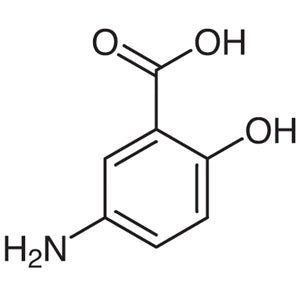
5-AminosalicylicAcid TCI A0317
Regular price From Rp 1.008.000,00Regular priceRp 720.300,00Sale price From Rp 1.008.000,00