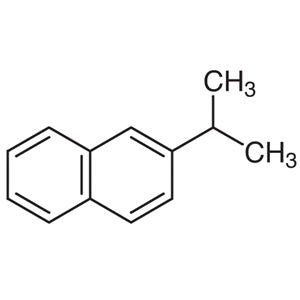
2-Isopropylnaphthalene is a chemical compound widely used as a foundational material in various chemical reactions and molecular synthesis processes. It serves as a key building block in organic chemistry, particularly in the development of complex aromatic compounds. Its unique reactivity stems from the isopropyl group attached to the naphthalene ring, making it a versatile reagent in synthetic pathways. This compound is essential for researchers aiming to create new organic molecules with specific structural features.
The compound's stable molecular structure and controlled reactivity make it a preferred choice for laboratory applications. It exhibits well-defined physical properties, including a clear boiling point and melting point, which facilitate its isolation and purification in experimental settings. These characteristics ensure consistent performance across different synthetic protocols. Additionally, its documented physical and chemical properties allow for accurate identification and reliable use under various experimental conditions.
In Indonesian laboratories, 2-Isopropylnaphthalene is commonly found in organic chemistry research, especially in studies related to aromatic compound synthesis and the development of new chemical products. It is also used in university-level education to train students in synthetic techniques and analytical methods. Its presence in academic and industrial research underscores its importance in advancing chemical innovation.
- Organic synthesis is a primary application where 2-Isopropylnaphthalene is used to create complex aromatic compounds through substitution and electrophilic reactions.
- Pharmaceutical research benefits from this compound as it is used in the development of aromatic-based drugs and chemical intermediates.
- Chemical education in Indonesian universities incorporates this material to teach students about molecular structure and synthetic pathways.
- Industrial chemical development relies on this compound for the creation of new products with specific functional groups and properties.
- Analytical chemistry applications use 2-Isopropylnaphthalene as a reference standard for identifying and quantifying aromatic compounds in samples.
| Brand | TCI |
|---|---|
| CAS number | 2027-17-0 |
| Molecular formula | — |
| Purity | — |
| Category | Chemistry > Building Blocks > Non-Heterocyclic Building Blocks |
| Pack sizes | Available in standard laboratory quantities |
| Physical form | Solid or liquid depending on the specific product variant |
| Storage | Store in a cool, dry place away from direct sunlight |
This compound should be stored in a cool, dry environment, away from direct sunlight and sources of heat. It is recommended to use airtight containers to prevent exposure to moisture and air, which may affect its stability. Laboratory personnel should handle it with care, using appropriate personal protective equipment such as gloves and safety goggles. Due to its chemical nature, it should be stored separately from incompatible substances to avoid any potential reactions. Regular monitoring of storage conditions ensures the material remains in optimal condition for use in experimental procedures.
—
Produk Terkait
-
1-Isopropylnaphthalene TCI I0578
Regular price From Rp 1.988.700,00Regular price -
2,7-Diisopropylnaphthalene TCI D2422
Regular price Rp 2.068.500,00Regular price -
2-Ethylnaphthalene TCI E0147
Regular price Rp 5.089.350,00Regular price -
1-Ethylnaphthalene TCI E0146
Regular price From Rp 2.279.550,00Regular price -
2,7-Di-tert-butylnaphthalene TCI D2370
Regular price From Rp 2.916.900,00Regular price -
2,6-Di-tert-butylnaphthalene TCI D2369
Regular price From Rp 2.227.050,00Regular price -
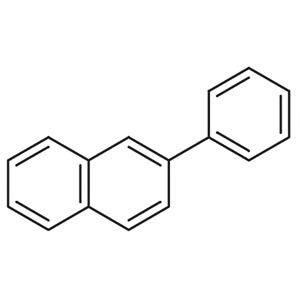
2-Phenylnaphthalene TCI P0679
Regular price Rp 2.359.350,00Regular price -
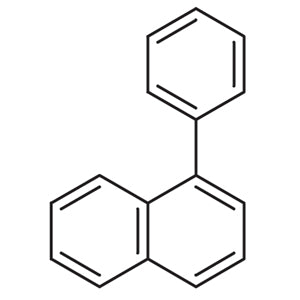
1-Phenylnaphthalene TCI P0632
Regular price Rp 2.862.300,00Regular price